
A Glimpse into Ancient Life: Harappan Art, Adornments-Culture Explained
Sometimes, when you walk on Indian soil, you can almost feel the whispers of history beneath your feet. It’s a land that has cradled civilizations for millennia, and among the grandest of these is the Harappan or Indus Valley Civilization. Flourishing over 4,500 years ago, this wasn't just a collection of cities; it was a vibrant, thinking, and feeling society. Their story isn't just in history books; it’s etched into the beautiful things they left behind. Let's take a walk through their world, not as historians, but as fellow travellers connecting with our own deep past.
The Heartbeat of Harappan Art: Creativity in Clay and Stone
The art of the Harappan people is like a window into their souls. It shows a deep reverence for nature, a sense of order, and a remarkable eye for beauty. They didn't build grand palaces for kings, but they poured their hearts into creating small, meaningful objects that tell a thousand tales.
- Terracotta Treasures: Imagine a Harappan artist, sitting by the river, shaping wet clay with their hands. They weren't just making toys or idols; they were breathing life into figures of mother goddesses, bulls, and monkeys. These small terracotta figurines were probably part of their daily rituals or home decorations, each a humble yet powerful expression of their beliefs.
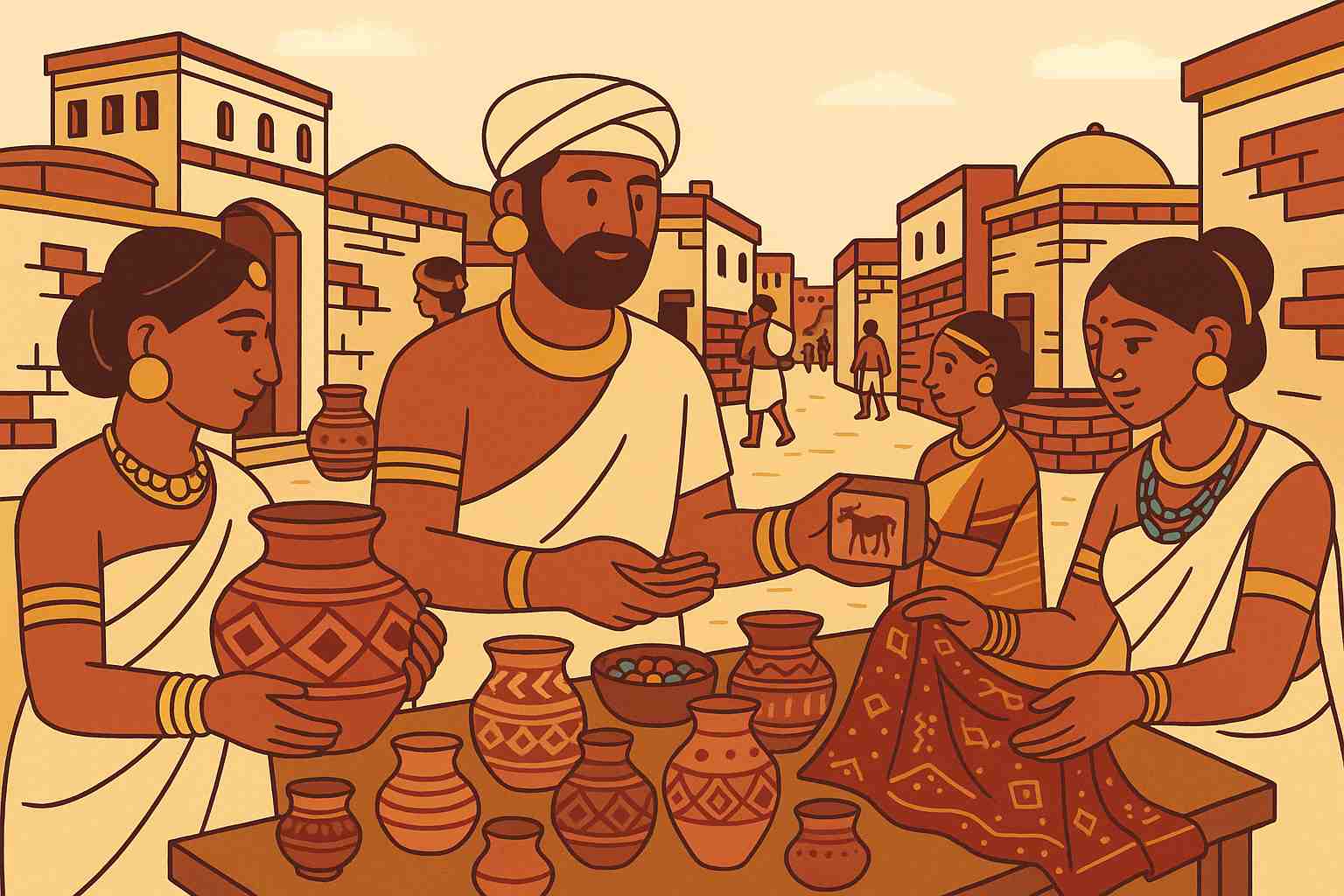
- The Mystery of the Seals: The most fascinating artifacts are perhaps the steatite seals. Carved with incredible precision, they feature animals like the unicorn, bull, and elephant, alongside a script we still can't read. These weren't just stamps for trade; they were symbols of identity and authority, a testament to a highly organized society with a vast trade network stretching across ancient lands.
- Sculptures that Speak Volumes: Who can forget the iconic bronze statue of the "Dancing Girl" from Mohenjo-Daro? Her confident, relaxed posture speaks volumes about the status of arts and artists in their society. It’s a beautiful reminder that our subcontinent's love for dance and art is ancient. This legacy of craftsmanship echoes through the ages, forming the bedrock of India's rich artistic traditions, much like the intricate narratives found in Pattachitra art.
Adornments that Told a Story: Jewellery in the Indus Valley
For the Harappan people, jewellery was more than just decoration. It was a language of status, belief, and personal identity. Worn by both men and women, these adornments reflect a sophisticated taste and incredible skill.
- Crafted from Earth’s Finest: They created beautiful ornaments from a variety of materials. Gold and silver were used for the wealthy, but the real beauty lay in their use of semi-precious stones like carnelian, lapis lazuli, and agate. The discovery of materials from as far as Afghanistan shows they were part of a bustling international trade network.
- A Symphony of Skill and Design: The craftsmanship was simply breathtaking. They mastered techniques like drilling tiny holes in beads and polishing stones to a brilliant shine. From elaborate necklaces and elegant bangles to intricate headdresses and earrings, their jewellery showcases a deep appreciation for aesthetics that has been passed down through generations, reflecting a rich heritage of traditional arts that continues to thrive in India.
A Glimpse into Harappan Childhood: More Than Just Playthings
Even the toys of the Harappan civilization offer a touching insight into their world. These were not mass-produced plastic items but lovingly crafted playthings that nurtured creativity and taught children about the life ahead.
- Learning Through Play: Children played with miniature terracotta carts, whistles shaped like birds, and animal figurines with movable heads. These toys weren’t just for fun; a small bullock cart taught a child about transport and farming, while animal figures connected them to the world of nature.
- Fostering Community and Creativity: Archaeologists have also found dice and board game pieces, suggesting that children and adults alike engaged in games that fostered social interaction and strategic thinking. These simple objects highlight a society that valued community and the holistic development of its youngest members.
Weaving Together Daily Life and Beliefs
By looking at these artifacts, we can piece together a picture of Harappan life, their values, and their spiritual world.
What their Art Reveals About their Spirituality
Interestingly, no grand temples have been found in Harappan cities. Their spirituality seems to have been more personal and connected to the worship of nature. The frequent depiction of a mother goddess suggests a deep respect for fertility and the earth, while figures of a male deity seated in a yogic posture hint at early forms of spiritual practices that resonate even today.
The Story Told by Their Pottery
The Harappans were master potters. They created beautiful red-and-black pottery, often decorated with intricate geometric designs or motifs from nature like pipal leaves and fish. This pottery wasn't just functional for storing grain and water; it was a canvas for their artistic expression, bringing beauty into everyday life.
The Genius in their Hands: Advanced Craftsmanship
The level of technical skill was truly advanced for its time. They perfected the lost-wax casting technique for creating bronze sculptures and developed incredibly precise methods for making beads. This focus on quality and innovation in everything they did, from city planning to personal adornments, is a powerful part of their legacy.
Preserving and understanding these ancient stories is at the heart of what we do. Our heritage is a vast ocean of art, literature, and devotion. At Bhaktilipi, we strive to bring these timeless tales to you in a way that feels personal and inspiring.
Just as the Harappan seals carried stories across lands, we aim to share the sacred texts and devotional literature of India with the world. If you feel a connection to our shared past and wish to explore it further, explore our collection of devotional works that reflect these timeless traditions on Bhaktilipi.in.
Our Enduring Connection to the Harappan Legacy
The Harappan civilization didn't just disappear; its spirit lives on within us. Their innovative spirit in urban planning, their respect for nature, and their profound love for artistry are threads woven into the fabric of Indian culture. Exploring their world is not just a history lesson; it's a way of understanding ourselves better.
They are a powerful reminder that our roots run deep, nourished by intelligence, creativity, and a strong sense of community. Let us honour this incredible inheritance by continuing to celebrate craftsmanship, live in harmony with our surroundings, and cherish the stories that connect us to our ancient past.
A passionate group of people dedicated to preserving India's knowledge of Dharma, Karma, and Bhakti for ourselves and the world 🙏.