
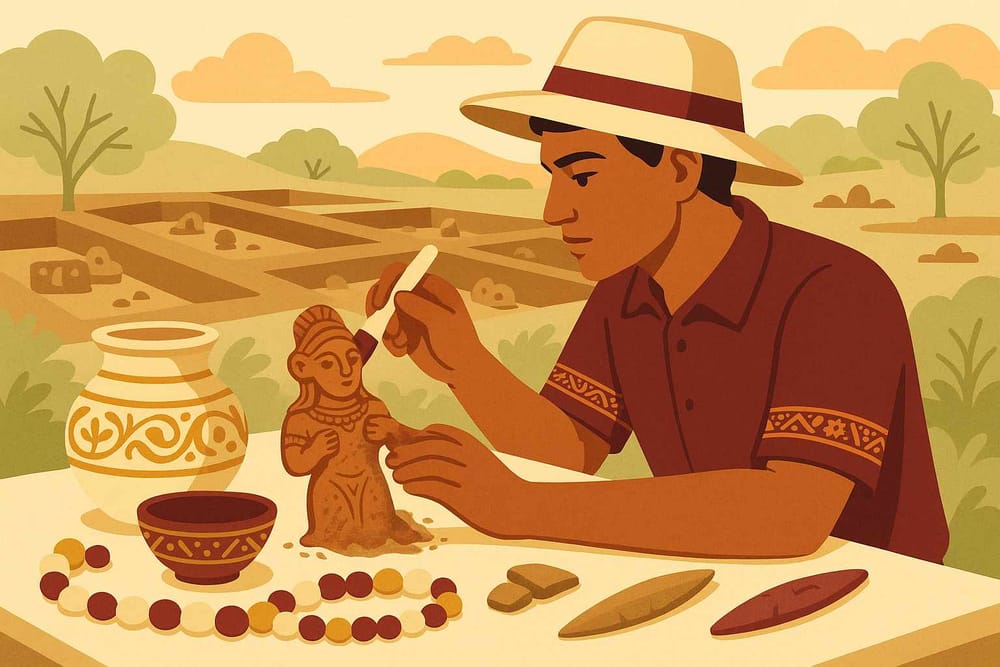
Chirand's Artifacts: Excavation Reveals Ancient Heritage
Have you ever stood on a piece of land and felt the weight of centuries beneath your feet? In Bihar's Saran district, nestled on the banks of the mighty Ganga, lies a place that holds such power. This place is Chirand. It isn't just a location on a map; it's a doorway to a time long forgotten, a cradle of one of India's earliest settled cultures. The stories here aren't written in books but are etched in pottery shards, carved into bone tools, and whispered by the very soil that nourished our ancestors thousands of years ago.
Exploring Chirand feels like a pilgrimage back in time. It connects us to the very first chapters of our Indian story, reminding us of the resilience, creativity, and spirit of the people who laid the foundations of life in the Gangetic plains. Let's journey together into this remarkable archaeological treasure and listen to the tales it has to tell.
Chirand: A Beacon of India's Neolithic Dawn
Chirand is often lovingly called the "rising sun of India's Neolithic culture," and for good reason. Its location was a gift from nature—the fertile land where the Ghaghara river meets the Ganga provided everything early humans needed to transition from a life of wandering to one of a settled community. The history unearthed here is not just of one era, but a continuous story spanning multiple cultural periods. Archaeologists have identified layers from the Neolithic (New Stone Age), Chalcolithic (Copper Age), Iron Age, and even the Kushana and Gupta periods.
Imagine, for a moment, a bustling village around 2500 BCE. The homes weren't made of brick and mortar, but of circular walls of reed plastered with mud. The air was filled with the sounds of community life. This wasn't a primitive settlement; it was a society on the cusp of great change. They were among the first farmers in this region, cultivating crops like rice, wheat, barley, and lentils. This shift to agriculture was a revolutionary step, paving the way for the great civilisations that would follow.
Treasures from the Soil: What the Artifacts Whisper to Us
The real magic of Chirand lies in the objects that have been carefully brought to light after millennia of slumber. These are not just artifacts; they are fragments of lives lived, of joys celebrated, and of challenges overcome. Each piece tells a powerful story of the ingenuity and artistry of our ancestors.
- Tools of Life and Ingenuity: The people of Chirand were master craftsmen. They fashioned an incredible variety of tools from bone and stone. Antlers were shaped into sharp points and sturdy agricultural implements, showcasing a deep understanding of their environment. These tools were used for everything from farming and hunting to crafting delicate ornaments, reflecting a life of resourcefulness and skill.
- The Art of Clay: The pottery found here is simply breathtaking. From simple red ware to the sophisticated and glossy Northern Black Polished Ware, the pottery tells a story of evolving techniques and aesthetics. These pots and vessels were used for cooking, storing grains, and perhaps even for rituals, giving us a tangible connection to the daily routines of their homes.
- Glimpses of a Flourishing Society: Beyond tools and pots, excavations have revealed terracotta figures of humans and animals, beautiful ornaments, and even a remarkable discovery of 88 Kushan-period coins. This suggests a society that was not just surviving but thriving, with a rich cultural life, an eye for beauty, and a functioning trade economy.
A Legacy to Protect, A Story to Share
The story of Chirand is still being written. With each new excavation, like the one in 2019 that revealed a Gupta-period layer, we learn more about our past. However, this precious site faces a grave threat from the erosive power of the Ganga river. Preserving Chirand is not just an archaeological necessity; it is our collective responsibility. It is about honouring the memory of our ancestors and ensuring that future generations can also learn from their wisdom.
Understanding our roots, like the story of Chirand, is at the heart of what we do at Bhaktilipi. We believe that these ancient stories and traditions are not just relics of the past but living threads that enrich our present. They provide a sense of belonging and connect us to something much larger than ourselves.
At Bhaktilipi.in, we strive to bring you these timeless tales and devotional insights in a way that feels both authentic and accessible. We are dedicated to helping you explore the profound spiritual and cultural heritage of India, conveniently from your home. If you feel a connection to these stories, we invite you to join our community.
Stay connected with us for more inspiring articles, videos, and updates. You can follow our journey on Facebook, Instagram, and YouTube.
Your Questions About Chirand's Legacy Answered
Many people often wonder what makes an ancient site like Chirand so special. It’s significant because it provides some of the earliest evidence of a settled, agricultural community in the Gangetic plains. It’s a crucial piece of the puzzle that helps us understand how early Indian society developed, showcasing our rich and ancient heritage from its very dawn.
You might be curious about the actual treasures that have been unearthed from its soil. Archaeologists have discovered a wide range of artifacts, including beautifully crafted pottery, sharp and effective tools made from stone and bone, intricate terracotta figurines, and personal ornaments. These items paint a vivid picture of the lifestyle and culture of the people who lived there thousands of years ago.
The age of these findings is truly astounding. The earliest artifacts from Chirand date back to the Neolithic period, around 2500 BCE. This makes it one of the most important early human settlements discovered in India, offering a rare glimpse into a time of great transformation.
These ancient objects are more than just historical items; they are storytellers. The artifacts reveal that the people of Chirand were incredibly advanced for their time. They were skilled farmers, talented potters, and expert tool-makers. The evidence points to a well-established lifestyle with social structures, artistic expression, and even early trade networks.
The incredible work of bringing this lost world to light was primarily led by the Archaeological Survey of India (ASI). In recent years, collaborative efforts, such as those with Deccan College, have continued to uncover new layers of history, further cementing the site's immense historical and cultural importance.
For those who wish to connect with this history firsthand, you can indeed visit the excavation site at Chirand. While the site itself is open for visitors to explore and feel its ancient vibrations, many of the most delicate and valuable artifacts are housed in museums to ensure they are preserved for generations to come.
A passionate group of people dedicated to preserving India's knowledge of Dharma, Karma, and Bhakti for ourselves and the world 🙏.