
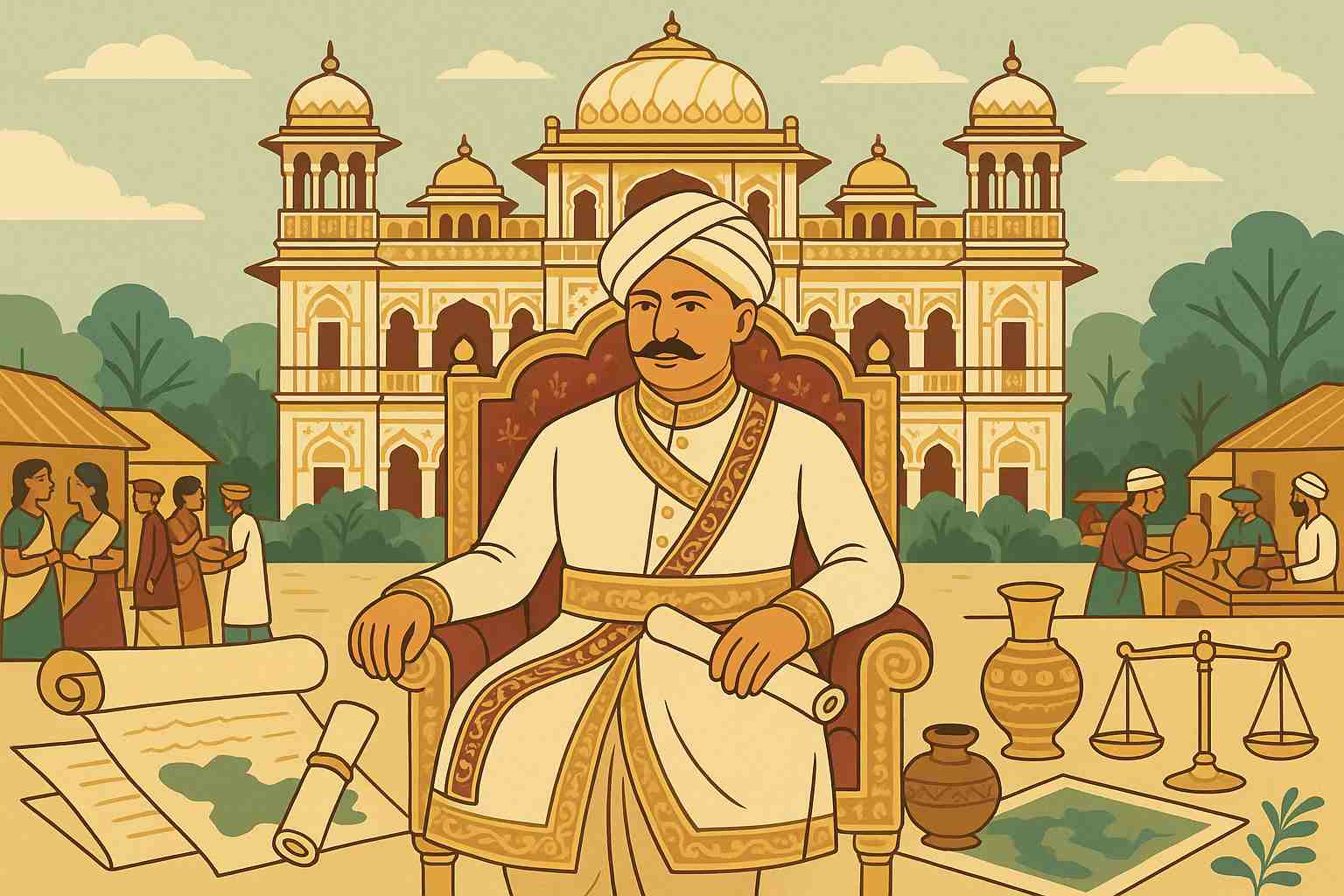
Dewan Purnaiah's Berhampore Legacy: History Explored
In the grand tapestry of Indian history, some threads shine brighter than others. They are not always the kings or warriors, but the silent architects who build the very foundations of kingdoms. One such monumental figure is Dewan Purnaiah (1746 – 1812), a name that echoes through the corridors of Mysore's history as a symbol of integrity, wisdom, and unparalleled administrative genius. His life is a powerful lesson in how dedication and vision can shape the destiny of a region for generations to come.
It feels like his story is not just a chapter in a history book, but a living guide to good governance. Let’s journey back in time to understand the man who served three powerful rulers and left an indelible mark on the soul of the Mysore Kingdom.
From Humble Beginnings to the corridors of Power
Every great story has a simple start, and Purnaiah's is no different. He began his career as a humble bookkeeper, but his sharp mind, flawless accounting skills, and elegant handwriting did not go unnoticed. It was the legendary ruler Hyder Ali who first recognised his potential, bringing him into the inner circle. Purnaiah quickly rose through the ranks, becoming not just the head of the treasury but also a trusted minister and a close advisor. His journey is a testament to the idea that true merit can never be hidden.
The Statesman Who Served Three Masters
What truly sets Dewan Purnaiah apart is his extraordinary ability to serve three different rulers—Hyder Ali, the formidable Tipu Sultan, and finally, the Wodeyar dynasty. This wasn't just about political survival; it was about an unwavering commitment to the prosperity and stability of the Mysore state itself.
- Loyalty to Tipu Sultan: After Hyder Ali's passing, Purnaiah played a crucial role in ensuring a smooth succession for Tipu Sultan. He wasn't just a man of accounts; he even commanded a rocket unit during the Third Anglo-Mysore War, showcasing his versatile leadership. His steadfast support for Tipu Sultan during a tumultuous period speaks volumes about his character.
- Restoring the Wodeyar Dynasty: Following the fall of Tipu Sultan in 1799, Mysore was at a crossroads. It was Purnaiah's statesmanship that was instrumental in restoring the Wodeyar dynasty to the throne. He became the first Dewan for the young Maharaja Krishnaraja Wodeyar III, guiding the kingdom through immense political challenges with a steady hand. He understood that the welfare of the people and the land was more important than any single ruler, a principle that resonates with the core of dharma. This deep understanding of a ruler's responsibility is something we often explore in the stories of great leaders, much like those found in the legacies of other Maharajas.
The Pillars of Purnaiah’s Enduring Legacy
Purnaiah’s true genius lay in his administrative reforms, which were so ahead of their time that their principles can still be seen in our modern systems. He didn't just rule; he built institutions.
- A Revolutionary Administrative Structure: He introduced a methodical system for revenue and land administration. Through meticulous surveys, he clearly marked land borders, reducing disputes and ensuring fair tax collection. He also created an organised hierarchy of officials like Shekdars, Amaldars, and Tahshildars, a framework that brought order and efficiency to governance.
- Visionary Public Works for the People: Purnaiah believed that a kingdom's greatness is measured by the well-being of its people. He initiated the construction of a nine-mile-long canal to bring fresh drinking water to the city of Mysore. He also commissioned the magnificent stone bridge across the Kaveri River, connecting Srirangapattana and Kirangur, a structure that stands as a testament to his engineering vision.
- A Guardian of Culture and Faith: In a move that showcased his deep respect for tradition, Purnaiah reinstated financial support to temples, mathas, and even dargahs, fostering a spirit of harmony. He also built numerous choultries (rest houses) for pilgrims and travellers. This commitment to preserving our cultural and spiritual fabric is a value we cherish deeply at Bhaktilipi.in. We believe that by sharing these stories, we keep the flame of our heritage burning bright for everyone.
Sadly, after Purnaiah's death in 1812, the kingdom faced a period of chaos, a stark reminder of how crucial his visionary leadership had been. His story teaches us that true leaders build systems that outlast them.
Frequently Asked Questions about Dewan Purnaiah
Many people are curious about this remarkable statesman. Here are some answers to common questions that shed more light on his life and impact.
Who exactly was Dewan Purnaiah?
Dewan Purnaiah was a celebrated Indian administrator and the first Dewan of the Mysore Kingdom, serving from 1782 to 1811. He is remembered for his incredible administrative skills and his loyal service under three different rulers: Hyder Ali, Tipu Sultan, and Maharaja Krishnaraja Wodeyar III.
What is considered his most significant contribution to Mysore?
While he had many contributions, his most significant was creating a modern, methodical system of revenue and administration. His introduction of land surveys and a clear administrative hierarchy brought unparalleled stability and prosperity to the kingdom, laying the groundwork for modern Mysore.
How did he successfully serve such different rulers?
Purnaiah’s guiding principle was his unwavering loyalty to the state of Mysore and its people. His integrity, wisdom, and ability to adapt to changing political landscapes earned him the trust of every ruler he served. He prioritized the kingdom's welfare above all else, making him an indispensable advisor.
Can we still see his work in Mysore today?
Yes, his legacy is visible. While the administrative systems have evolved, their foundations were laid by him. Tangible landmarks like the stone bridge over the Kaveri river and the benefits of his water canal projects are still remembered as a part of his lasting contribution to the region.
Why is his story important for us today?
Dewan Purnaiah’s life is a powerful lesson in integrity, selfless service, and visionary leadership. In a world that often changes rapidly, his story reminds us of the timeless value of good governance, respect for tradition, and a deep commitment to the welfare of society.
© 2025 Bhaktilipi – Crafted with devotion.
Bhaktilipi is your trusted source for authentic devotional literature and stories. We aim to preserve and share timeless traditions in ways that connect with today’s readers. Discover inspiring content about history, culture, and spirituality, like the historical legacy of Dewan Purnaiah. Learn, reflect, and stay connected to your roots.
Subscribe to our newsletter for regular updates and follow us on Facebook, Instagram, and YouTube for more engaging content. Join us on this journey of devotion and knowledge.
A passionate group of people dedicated to preserving India's knowledge of Dharma, Karma, and Bhakti for ourselves and the world 🙏.
Comments
Related in
Exploring Dewan Purnaiah's Influence: Mysore's Development Today
Have you ever walked through the grand city of Mysore, felt the history in its air, and wondered about the minds that shaped its destiny? Beyond the magnificent palaces and bustling markets, there are stories of brilliant individuals whose vision laid the very foundation of this cultural capital. One such