Dimasa Language: Heritage and Modern Influences in 2025
Every language is like a river, carrying stories from the mountains of the past to the oceans of the future. For the Dimasa people of Northeast India, their language, also known as Grao Dima, is this sacred river. The very name 'Dimasa' means "children of the great river," and their mother tongue flows with the richness of their history, the depth of their spirituality, and the melody of their folklore. It's more than just words; it's the sound of their identity, a precious dharohar (heritage) passed down through generations. As we step into 2025, let's journey along this linguistic river and see how it navigates the currents of the modern world.
The Ancient Roots: Where History and Spirit Converge
The Dimasa language, a part of the vast Sino-Tibetan family, is a testament to a civilization that has thrived for centuries. Its historical roots are not just found in dusty manuscripts but are alive in the very fabric of Dimasa life.
- Echoes of the Dimasa Kingdom: The glorious Dimasa Kingdom left an indelible mark on the language. The vocabulary we hear today is filled with expressions and idioms shaped by centuries of rule, administration, and cultural patronage. It’s a living link to a time of kings and queens, a history that still commands respect and pride.
- Oral Traditions as Living Classrooms: Long before written scripts became common, wisdom was transferred through the spoken word. Imagine sitting around a fire, listening to elders weaving tales of mythical dragons, brave warriors, and the creation of the world. These stories were, and still are, the primary way values, history, and cultural norms are passed on, keeping the spirit of the community vibrant.
- A Language of Faith and Rituals: The traditional Dimasa faith, Sowaithai, is deeply animistic, connecting people with nature and the spirit world. The language is the medium for this connection. From the prayers chanted during the annual Bushu festival (the vibrant New Year celebration) to the sacred invocations in daily rituals, the Dimasa language is how the community speaks to the divine.
This deep connection to their past is a source of immense strength for the Dimasa people. It’s a foundation that helps them stand tall amidst the winds of change. This intricate cultural web is a fascinating part of the larger Assamese cultural landscape, showcasing the beautiful diversity of the region.
Navigating Modern Tides in 2025
Today, the world is more connected than ever, and this brings both challenges and opportunities for a language like Dimasa. The influence of more dominant languages like English and Hindi, especially in urban schools and media, has meant that fewer young people are using Dimasa in their daily lives. This is a challenge that tugs at the heart of the community.
But the story doesn't end there. There is a powerful counter-current of revival and adaptation.
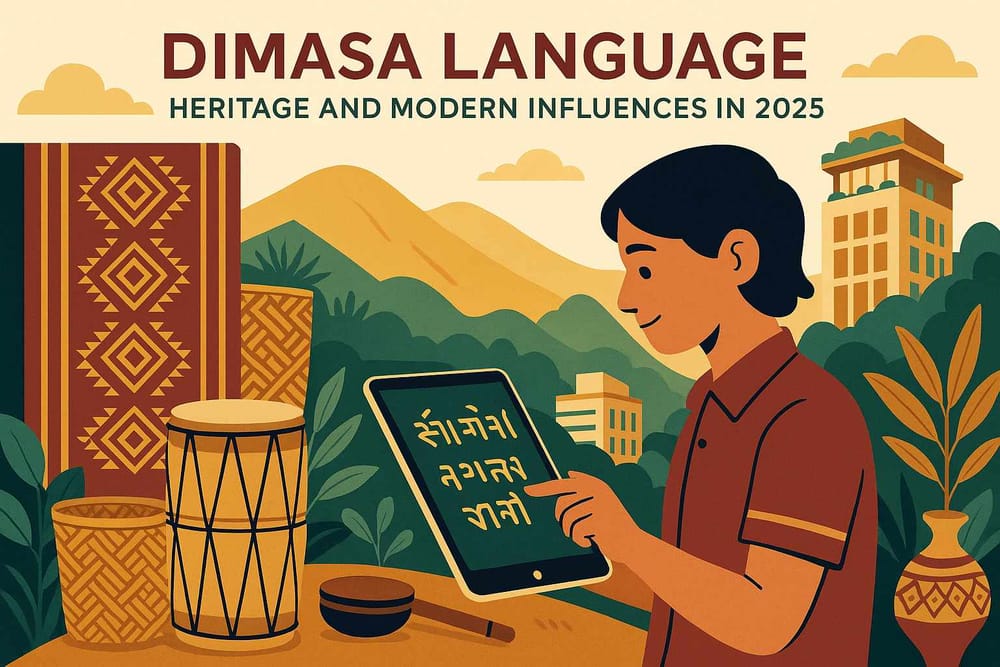
- Technology as a Guardian: The same digital world that poses a challenge is also offering solutions. Enthusiastic community members are creating digital archives of folklore, online dictionaries, and mobile apps to make learning Dimasa accessible to everyone, everywhere. It’s a beautiful fusion of ancient wisdom and modern technology.
- Social Media's New Stage: The younger generation is taking immense pride in their roots. They are using platforms like Instagram and YouTube to share songs, poetry, and conversations in Dimasa. These platforms have become virtual stages where the language is not just surviving but is being celebrated with renewed energy and creativity.
Keeping the Flame Alive: Community and Preservation
The survival of a language is not an accident; it is a conscious act of love and dedication. The Dimasa community is actively working to ensure their mother tongue flourishes for generations to come.
Elders are revered as living libraries, holding invaluable knowledge of the language and its cultural nuances. They are the anchors, patiently teaching the younger generations. Alongside them, linguists and cultural leaders are collaborating on projects to document oral traditions, ensuring these priceless stories are not lost to time.
This beautiful effort to preserve cultural treasures resonates deeply with our mission at Bhaktilipi. We believe that stories, rituals, and devotional literature are the soul of our diverse Indian heritage. To explore more timeless devotional stories and texts from across India, we invite you to visit Bhaktilipi.in, a digital space dedicated to connecting today's readers with our ancient traditions.
Frequently Asked Questions about the Dimasa Language
What are the origins of the Dimasa language?
The Dimasa language, or Grao Dima, is a proud member of the Tibeto-Burman language family. Its roots are ancient, deeply intertwined with the history of the Dimasa Kachari kingdom. It holds immense historical and cultural significance, representing one of the many unique threads in India's rich linguistic tapestry.
Is the Dimasa language at risk?
Like many indigenous languages worldwide, Dimasa is considered vulnerable due to the declining number of native speakers, particularly in urban areas. This makes the ongoing community-led preservation efforts absolutely crucial for its survival and revival.
Does the Dimasa language have its own script?
Traditionally, Dimasa was preserved through a strong oral tradition and did not have its own unique script. Historically, both the Roman and Assamese scripts have been used for writing. However, there is a growing movement and ongoing efforts within the community to develop and standardize a script that is uniquely their own.
How is the language being preserved today?
The preservation of Dimasa is a heartfelt, multi-pronged effort. It includes everything from formally documenting oral histories and folklore to advocating for its inclusion in school curriculums. Cultural festivals like Busu Dima play a massive role, and the digital world, with its apps and social media platforms, has become a powerful new ally in this noble cause.
The Future is in Our Hands: A Hopeful Horizon
The journey of the Dimasa language in 2025 is a powerful story of resilience. It is a story of a community that honours its past while boldly embracing the future. By integrating their mother tongue into formal education, leveraging technology, and celebrating it through cultural events, they are ensuring that Dimasa remains a vibrant, living language.
Let us all celebrate and support this remarkable journey. By showing interest and respect for languages like Dimasa, we contribute to preserving the magnificent diversity that makes India truly incredible. The echo of the "children of the great river" deserves to be heard, loud and clear, for generations to come.
A passionate group of people dedicated to preserving India's knowledge of Dharma, Karma, and Bhakti for ourselves and the world 🙏.