
Exploring the Kushano-Sasanians - A Historical Journey
History isn't just about the grand empires we read about in school books—the Mauryas, the Guptas, the Mughals. Sometimes, the most fascinating tales are hidden in the chapters between these giants. It's in the stories of those who stood at the crossroads of civilisations, blending cultures in a way that left a quiet but lasting mark on our land's heritage. One such incredible story is that of the Kushano-Sasanians, a dynasty that often gets overlooked but whose legacy is woven deep into the fabric of ancient India.
A New Power on an Ancient Land
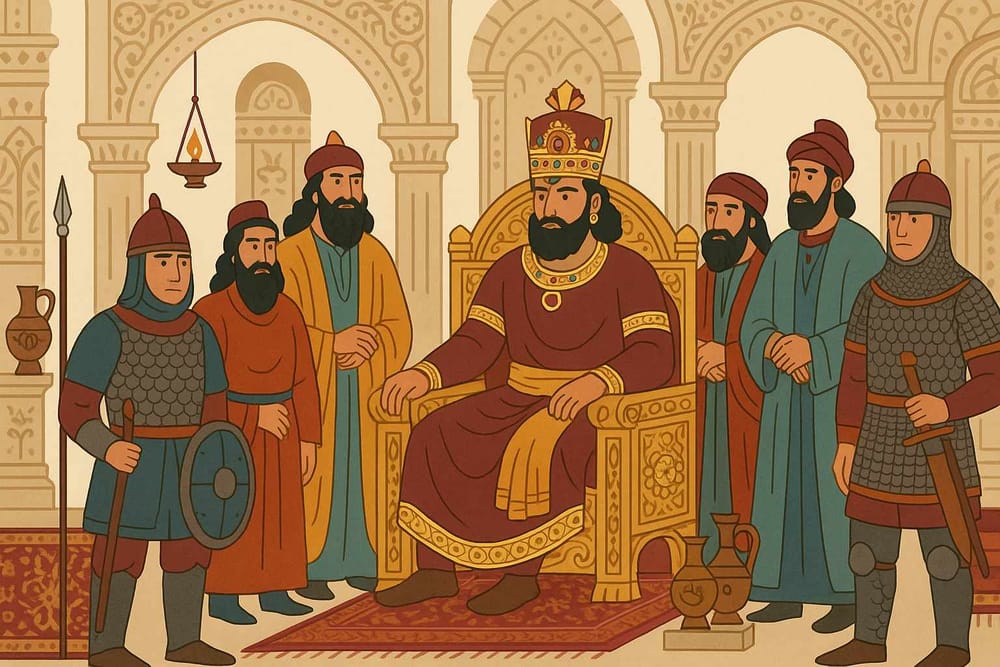
Imagine a time, around the 3rd century CE, when the mighty Kushan Empire, which once ruled vast territories, was starting to fade. From the west, a new, formidable power was rising in Persia—the Sasanian Empire. As the ambitious Sasanian king, Ardashir I, expanded his domain eastward, he conquered the Kushan territories in what is now modern-day Afghanistan, Pakistan, and northwestern India. This wasn't just a simple conquest; it was the birth of a unique dynasty. The Sasanian princes who were appointed to govern these new lands became known as the Kushanshahs, or the ‘Kings of the Kushans’. They were vassals of the main Sasanian emperor but ruled their lands with a degree of independence, creating a fascinating buffer state between great powers. You can delve deeper into their origins and the empires that shaped them in our detailed exploration of Kushano-Sasanian origins and legacy.
The Beautiful 'Sangam' of Art and Faith
What truly makes the Kushano-Sasanian era special is the incredible cultural fusion that took place under their rule. This wasn't a story of one culture erasing another, but of them merging to create something entirely new and beautiful. Think of it as a cultural 'sangam' where Persian, Greek, and Indian streams of art and belief met. Their art, especially in the Gandhara region, is a testament to this. You can see sculptures with the graceful folds of Greek robes but with distinctly Indian spiritual motifs. It was an era of incredible religious harmony. Zoroastrianism, the faith of the Sasanians, co-existed peacefully with the Buddhism and Hinduism that were already flourishing in the region.
Perhaps nothing captures this spirit better than their coins. These weren't just pieces of metal for trade; they were declarations of their identity. On one side, you might see a Sasanian-style portrait of the king, and on the other, an image that speaks directly to the Indian soul—like Lord Shiva standing with his beloved Nandi. This shows how wisely they embraced local traditions, a beautiful example of how different faiths can inspire and enrich one another. This fascinating clash and emergence of cultures is something we explore further in our blog on the Kushano-Sasanian cultural clash.
Guardians of the Ancient Silk Road
The lands ruled by the Kushano-Sasanians were not just culturally rich; they were strategically vital. They sat right on the legendary Silk Road, the ancient superhighway that connected the East with the West. By controlling key cities like Balkh, Kabul, and Taxila, they became the gatekeepers of this immense network. They didn't just facilitate the trade of silk, spices, and precious metals; they ensured the flow of ideas, philosophies, and faith. Their kingdom was a bridge, allowing Indian thought to travel west and Persian and Roman ideas to filter east, enriching everyone in the process.
Exploring these deep-rooted histories is like a pilgrimage into our own past. It’s a journey of understanding the spiritual and cultural currents that have shaped us. At Bhaktilipi, we are dedicated to bringing such timeless stories and devotional literature to you, making our rich heritage accessible in a way that speaks to today's generation.
Connect with Your Roots Through Bhaktilipi
If the story of this incredible cultural blend resonates with you, you'll find a world of inspiration on our platform. We work to preserve and share timeless bhakti literature and stories that connect you to the spiritual heart of India.
For more engaging content, subscribe to our YouTube channel, follow us on Instagram for daily inspiration, and join our community on Facebook to continue the journey. Let’s keep our shared heritage alive, together!
Unravelling the Kushano-Sasanian Story: Common Questions Answered
Many people are curious about this lesser-known dynasty, so let's clear up some common questions. You might wonder who exactly the Kushano-Sasanians were. Simply put, they were a line of Sasanian princes who governed the eastern parts of the Sasanian Empire, which were previously Kushan territories, from the mid-3rd to the late 4th century CE. Their domain was vast, covering parts of modern-day Afghanistan, Pakistan, and northwestern India, making them a significant power in the region.
The significance of their coins often comes up, and rightly so. These coins are invaluable historical records, giving us a glimpse into their world. They show a unique blend of Sasanian and Kushan symbols, reflecting the fusion of their political and cultural identities. This blending is also seen in their religious practices. While the ruling class was primarily Zoroastrian, they showed great respect for the local faiths, with strong influences of Buddhism and Hinduism evident in their art and society. Their strategic location meant they played a crucial role in the Silk Road trade, acting as a bridge between East and West for not just goods, but also culture and ideas.
So, what led to their decline? Like many great powers, their end came from a combination of internal conflicts and external pressures. In the late fourth century, their territories faced invasions from nomadic groups like the Kidarites and Hephthalites, who eventually overran their lands, bringing this unique chapter of history to a close. Despite their fall, the Kushano-Sasanians are historically important because they represent a powerful example of cultural synthesis and religious tolerance, demonstrating how empires can influence and enrich each other, leaving behind a legacy that is still felt today.
Honoring a Forgotten Legacy
The Kushano-Sasanians may not have built monuments as famous as the Taj Mahal or left behind empires as vast as the Mauryas, but their contribution is no less significant. They teach us that our history is a rich, complex tapestry woven from many different threads. Their story is a beautiful reminder of the interconnectedness of ancient civilisations and the incredible heritage they have passed down to us. By remembering them, we don't just study the past; we celebrate the diversity and unity that have always been at the heart of our culture.
A passionate group of people dedicated to preserving India's knowledge of Dharma, Karma, and Bhakti for ourselves and the world 🙏.