
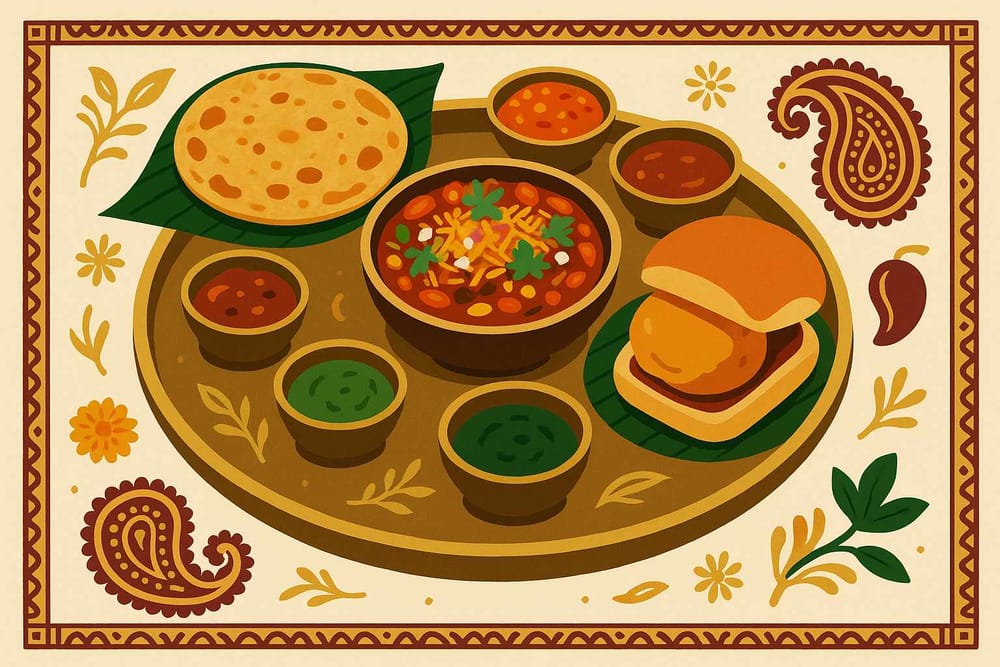
Exploring the Rich Flavors of Maharashtrian Cuisine: A 2025 Guide
The smell of sizzling mustard seeds and curry leaves in hot oil, the comforting aroma of freshly made bhakri on a tawa—these aren't just smells, they are memories. For many of us, Maharashtrian food is the taste of home, of Aai's loving hands, and of festivals celebrated with family. It’s a cuisine that tells a story with every bite, a beautiful narrative of the state’s diverse landscapes, from the breezy Konkan coast to the rugged Deccan plateau.
This isn't just about recipes; it's about understanding the heart and soul of Maharashtra. It’s a culinary heritage that is both simple and profound, blending bold spices with subtle sweetness in a way that feels like a warm embrace. Let’s embark on a journey to explore the rich flavours that make this cuisine so special.
The Soul of Maharashtrian Cooking
What gives Maharashtrian food its unique identity? It's a beautiful balance of core ingredients and age-old cooking techniques, passed down through generations. Each element plays a crucial role in creating the perfect symphony of taste and texture.
Key Pillars of Flavour
- The Foundation of Grains: The daily meal is built upon wholesome grains that reflect the region's agriculture. In the rustic heartlands, you'll find flatbreads made from jowar (sorghum) and bajra (pearl millet), offering an earthy flavour and immense nutrition. As you move towards the coast, steamed rice becomes the staple, perfectly complementing the local curries.
- The Magic of Goda Masala: This is the secret weapon in every Maharashtrian kitchen. It’s not a fiery spice mix but a fragrant, slightly sweet blend of roasted spices like cinnamon, cloves, and coconut. Goda Masala is what gives dishes like aamti (dal) and stuffed vegetables their signature, comforting aroma.
- The Art of Balance - Sweet, Sour, and Tangy: The cuisine masterfully plays with a trio of ingredients: tamarind, kokum, and jaggery. This creates the classic khatta-meetha (sour-sweet) profile. Whether it's the tangy kick of kokum in Solkadhi or the subtle sweetness of jaggery in a lentil dish, this balance is what makes the food so incredibly satisfying.
- The Richness of Coconut and Peanuts: These two ingredients are indispensable. Freshly grated coconut forms the creamy base for many coastal gravies, while roasted and crushed peanuts add a delightful texture and nutty richness to everything from vegetable curries to the famous Sabudana Khichdi.
- Following Nature's Clock: Maharashtrian cooking is deeply connected to the seasons. The menu changes with the produce available, ensuring every meal is fresh and sustainable. Summer brings the joy of aamras (mango pulp) with puris, while winter is for hearty greens and warming bajra bhakris.
Food that Connects with Faith and Festivities
In Maharashtra, food and faith are deeply intertwined. During religious fasts, or upwas, a special category of food takes centre stage. Dishes like Sabudana Khichdi, Sabudana Vada, and Upwas Thalipeeth are prepared. These aren't just meals to get through the day; they are seen as pure, sattvic preparations that aid in spiritual devotion.
And when it's time for celebration, the food becomes even more special. No Ganesh Chaturthi is complete without Ukadiche Modak, steamed rice-flour dumplings filled with a sweet mixture of coconut and jaggery. These delicate parcels are considered Lord Ganesha's favourite, and making them is an act of love and devotion in itself.
Just as these recipes connect us to our heritage, Bhaktilipi.in strives to preserve the sacred texts and devotional stories that form the soul of our culture. We believe that understanding our traditions, whether in the kitchen or through ancient scriptures, brings us closer to our roots.
A Glimpse into the Modern Maharashtrian Kitchen of 2025
While the soul of Maharashtrian food remains rooted in tradition, it is also evolving. Today, there's a renewed appreciation for authenticity and a growing curiosity about hyper-regional cuisines. Food lovers are exploring the fiery curries of Kolhapur, the coconut-laden delicacies of Malvani cuisine, and the unique flavours of the Vidarbha region.
Chefs and home cooks are also adapting to modern lifestyles. You'll find plant-based versions of classic dishes, a focus on sustainable, zero-waste cooking, and experiential dining that tells a story through food. This beautiful blend of old and new ensures that the legacy of Maharashtrian cuisine continues to thrive and inspire a new generation.
Why Discover Maharashtrian Cuisine with Bhaktilipi?
At Bhaktilipi, we believe that food is a gateway to culture and spirituality. Through our platform, you can delve deeper into the history and significance behind these traditional recipes. We share stories that connect rituals, festivals, and food, helping you appreciate the true richness of our heritage. Gain a deeper understanding through our detailed guides on exploring the rich flavours and recipes of Maharashtra.
Stay connected with us on our journey of discovery. Subscribe to our newsletter for more devotional content and cultural insights. Follow us on Facebook, Instagram, and YouTube for regular inspiration.
Answers to Your Culinary Curiosities
Many people have questions as they begin to explore this wonderful cuisine. Here are some answers to help you on your journey.
You might be wondering what traditional Maharashtrian dishes are absolute must-tries.
To truly experience the cuisine, you must try a few timeless classics. Start with Puran Poli, a sweet flatbread stuffed with lentils and jaggery. For something savoury and spicy, Misal Pav is a fantastic choice. Of course, no trip to Mumbai is complete without its iconic street food, Vada Pav. For a wholesome meal, try Bharli Vangi (stuffed brinjal) or the comforting Sabudana Khichdi.
So, what is it that makes Maharashtrian cuisine so unique?
Its uniqueness lies in the masterful balance of flavours. It’s a wonderful mix of spicy, tangy, and sweet, often achieved with key ingredients like kokum, tamarind, jaggery, and peanuts. The cuisine beautifully reflects the state’s diverse geography, blending influences from coastal, rural, and urban areas.
What is the staple food of Maharashtra?
The staples are generally rice and bhakri (a rustic flatbread made from jowar or bajra), which are typically served with dal (varan). These are usually accompanied by a vegetable dish (sabzi), pickles, and chutneys to make a complete and balanced meal.
Is it easy to find vegetarian-friendly options?
Absolutely! A large part of Maharashtrian cuisine is vegetarian. Delicious dishes like Pithla-Bhakri, Sabudana Vada, and Kanda Pohe are entirely plant-based. While seafood and non-vegetarian dishes are very popular, especially along the coast, there is an incredible variety for vegetarians to enjoy.
What about popular sweets in Maharashtrian cuisine?
The state has a wonderful array of sweets. Besides Puran Poli, some famous desserts include Modak (especially during Ganesh Chaturthi), Shrikhand (a sweet, strained yogurt dish), and Basundi (a thickened, sweetened milk dessert). Each one is a delight in its own right.
What is the cultural significance of the Modak?
The Modak holds a very special place in Maharashtrian culture. It is believed to be the favourite sweet of Lord Ganesha, the remover of obstacles. During the grand festival of Ganesh Chaturthi, making and offering Modak is a central ritual, symbolising devotion, love, and the sweet rewards of a spiritual life.
A passionate group of people dedicated to preserving India's knowledge of Dharma, Karma, and Bhakti for ourselves and the world 🙏.