
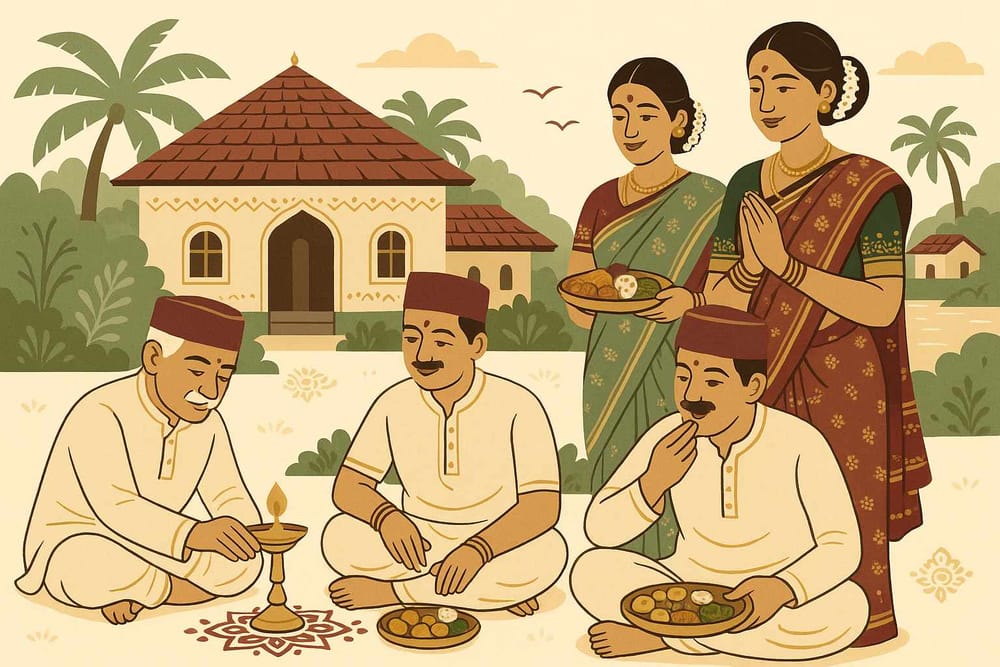
Kokanastha Brahmin Community and Identity: An Overview
There's a certain magic to the Konkan coast of Maharashtra. The salty breeze carries tales of ancient seafarers, and the lush green hills whisper legends of sages and warriors. It is from this very land that a community emerged, whose intellect, resilience, and spirit would not only define a region but also steer the course of an empire. We are talking about the Kokanastha Brahmins, also known as the Chitpavan Brahmins, a community whose story is a fascinating chapter in India's rich cultural history.
Their journey is more than just a historical account; it’s a living tradition, a legacy carried forward in households from Pune to the rest of the world. Let’s walk through their story together, shall we?
From Mythical Shores: The Origins of the Chitpavan
Every great story has a captivating beginning, and for the Kokanastha Brahmins, it's rooted in divinity and legend. The most cherished tale connects them to Lord Parashurama, the sixth avatar of Vishnu. The Sahyadrikhanda of the Skanda Purana narrates how Parashurama, after reclaiming the land of Konkan from the sea, sought Brahmins to perform sacred rituals. Finding none, he is said to have purified the bodies of deceased fishermen, breathing life and Brahminical knowledge into them. This act of purification is believed to have given them the name "Chitpavan," meaning 'pure of heart' or 'purified at the pyre'.
While this legend gives the community a divine origin, history also offers other intriguing theories, including one suggesting they were shipwrecked foreigners who made the Konkan coast their home. Whatever their precise origins, it is clear that their identity was forged on this beautiful, rugged coastline.
The Rise to Prominence: The Peshwa Era
For centuries, the Kokanastha Brahmins were scholars and priests, living a quiet life in the Konkan. However, the 18th century marked a dramatic turn in their fortunes. This was the time when the Maratha Empire was at its peak, and a brilliant administrator from the community, Balaji Vishwanath Bhat, was appointed as the Peshwa (Prime Minister) by Chhatrapati Shahu Maharaj.
This was a game-changer. The appointment of Balaji Vishwanath, and later his son Bajirao I, catapulted the Chitpavan community to the centre of power. A large-scale migration began from the coastal villages of Konkan to the Maratha capital, Pune. Here, they weren't just priests anymore; they became the empire's leading administrators, diplomats, and military commanders. Their sharp intellect and governance skills became the backbone of the Maratha confederacy. This rapid rise, however, also led to a natural rivalry with the established Deshastha Brahmins, creating a complex social dynamic in Maharashtra at the time.
The Fabric of Life: Culture, Traditions, and Food
At the heart of the Kokanastha Brahmin identity is a deep-seated connection to Vedic traditions and a lifestyle woven with simple yet profound rituals.
- Spiritual Practices and Deities: Following the Smartha tradition, they revere the panchayatana—a group of five deities: Shiva, Vishnu, Devi, Ganesha, and Surya. However, Ganesh Chaturthi holds a special place in their hearts. The festival is celebrated with immense devotion, turning homes into vibrant centres of worship and community bonding.
- Rituals that Bind Generations: Ceremonies like the Upanayana (sacred thread ceremony) for young boys are not just rituals but milestones that introduce them to a life of spiritual discipline and responsibility. Similarly, the Shraddha ceremony, honouring ancestors, reinforces the deep familial bonds that are a cornerstone of their culture.
- A Taste of Tradition: You can truly understand a culture through its food, and Kokanastha cuisine is a testament to this. Delicacies like Ukdiche Modak (steamed rice-flour dumplings filled with coconut and jaggery) are offered to Lord Ganesha, while Puran Poli is a festive essential. These dishes are not just food; they are offerings of love and devotion passed down through generations.
The Kokanastha Identity in Modern India
The end of the Peshwa rule and the dawn of the British era brought new challenges. Yet, the community adapted, channelling their intellectual prowess into modern fields. In the late 19th and 20th centuries, they produced some of India's most prominent freedom fighters, social reformers, scholars, and artists.
So, how does this community maintain its unique identity in today's fast-paced world? They do it by striking a beautiful balance. While they have excelled globally in fields like technology, medicine, and entrepreneurship, they remain deeply connected to their roots. Festivals are still celebrated with traditional fervour, Marathi is spoken with pride in their homes, and cultural organizations work tirelessly to pass on their heritage to the younger generation. They have shown that you can embrace the future without letting go of the past.
This journey of preserving heritage while moving forward is something we deeply admire and support. Understanding the nuances of communities like the Kokanastha Brahmins helps us appreciate the incredible diversity of our country.
Bhaktilipi: Your Companion in Cultural Discovery
At Bhaktilipi.in, we are dedicated to bringing such timeless stories and traditions to you. We believe that understanding our heritage is the first step toward preserving it. Whether it's learning about the intricate rituals of a community or the profound stories behind our festivals, we offer a space to connect with your roots in a way that feels inspiring and relevant today. We invite you to explore this world of devotion and culture with us.
Stay connected with our community for more inspiring stories:
A Legacy That Endures
The story of the Kokanastha Brahmins is a powerful reminder of how a community, through its intellect, values, and adaptability, can leave an indelible mark on history. From the serene shores of the Konkan to the corridors of power in Pune, their journey is a testament to resilience and cultural pride. They exemplify how tradition and progress can walk hand in hand, creating a legacy that is both inspiring and enduring.
A passionate group of people dedicated to preserving India's knowledge of Dharma, Karma, and Bhakti for ourselves and the world 🙏.