
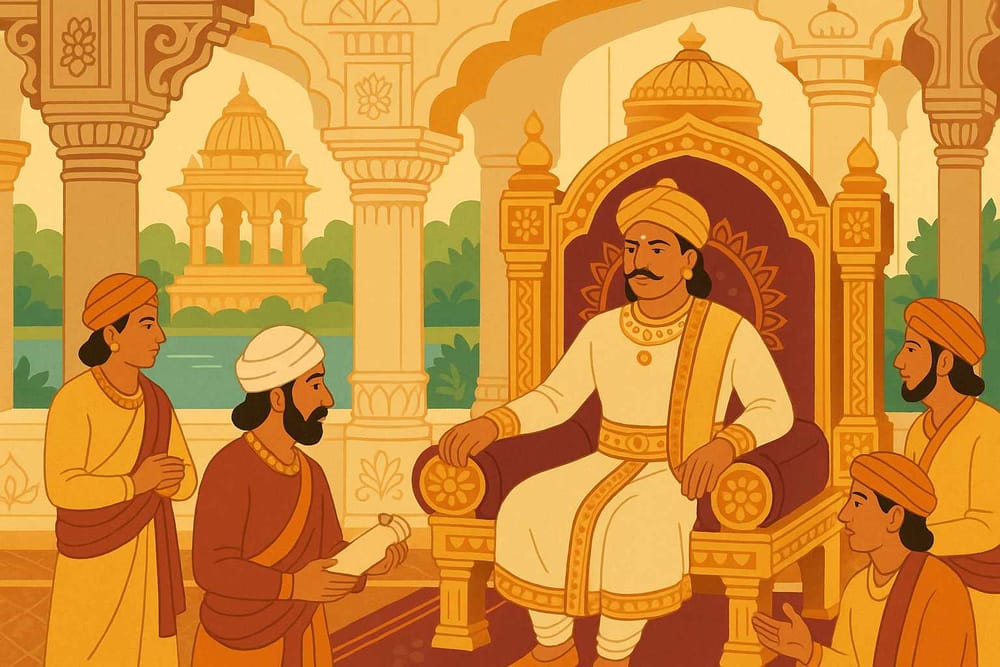
Kumarapala's Forgotten Reign: Chaulukya Dynasty Explored
In the vast tapestry of Indian history, some threads shine brighter than others, while some, equally golden, remain hidden in plain sight. We often hear tales of great emperors from the North and South, but have you ever paused to look at the stories etched in the soil of Western India? Deep within the history of Gujarat lies the saga of the Chaulukya dynasty, and at its heart, the reign of a king whose life was a remarkable blend of struggle, faith, and masterful governance. This is the story of Kumarapala, a ruler who deserves to be remembered not just as a conqueror, but as a true protector of Dharma.
An Unlikely Path to the Throne
Kumarapala’s journey to becoming a king was anything but easy. It was a path filled with danger and uncertainty. Imagine spending your youth not in the comfort of a palace, but in exile, constantly looking over your shoulder. That was Kumarapala's reality. He had to flee to escape the persecution of his own relative, the powerful king Jayasimha Siddharaja. When Jayasimha passed away, the throne was finally within reach, but Kumarapala, already around 50 years old, had to fight for his birthright. With the help of loyal allies, he finally ascended the throne of Anahilapataka (modern-day Patan), his capital. His early life of hardship didn't break him; it forged him into a wise and compassionate ruler.
A Heart Transformed: The King Who Embraced Ahimsa
Every great leader has a turning point, and for Kumarapala, it was his meeting with the revered Jain scholar, Acharya Hemachandra. Born into a Shaivite family, Kumarapala’s heart and soul were deeply moved by the Jain principles of non-violence (ahimsa) and compassion. This wasn't just a political alliance; it was a profound spiritual awakening that would come to define his entire kingdom.
He embraced Jainism with his whole being and became one of its greatest royal patrons. But his faith wasn't confined to his personal prayer room. He wove its principles into the very fabric of his governance. He declared a ban on animal slaughter across his kingdom, a revolutionary step at the time. He encouraged vegetarianism and created a society where compassion for all living beings was the highest law. Under his rule, Jain temples and institutions blossomed, becoming vibrant centres of learning and spirituality. While he was a staunch Jain, he also ensured religious harmony, rebuilding the grand Somnath temple in 1169 CE, showing respect for the faith of his ancestors.
Building for Eternity: A Legacy in Stone
Kumarapala's devotion wasn't just in his policies; it was carved in stone for future generations to see. His reign marked a golden era for the Maru-Gurjara style of architecture. The kingdom was adorned with magnificent temples that were not just places of worship but masterpieces of art. He commissioned the construction of numerous Jain temples, each one a testament to the skill of the artisans and the depth of his faith. He also restored important temples like the Kedareshwar temple in his capital. These architectural marvels became symbols of a kingdom that valued both spiritual devotion and artistic excellence.
A Kingdom Built on Justice and Prosperity
A king's greatness is truly measured by the happiness of his people. Kumarapala understood this deeply. His administrative reforms were designed to create a just, stable, and prosperous kingdom.
- Fairness for All: He knew that the kingdom’s strength came from its farmers and traders. He introduced systematic land revenue policies, ensuring that taxes were fair and collection was transparent. This brought economic stability and won him the trust of his subjects.
- Nurturing Trade and Infrastructure: Recognizing Gujarat’s prime location on the coast, he actively promoted trade. The ports bustled with activity, bringing wealth and prosperity. He also invested heavily in infrastructure, improving irrigation systems for farmers and commissioning magnificent stepwells, like the famous Rani ki Vav, to ensure water security in an arid land.
The Protector of the Realm
While his heart was dedicated to peace and non-violence, Kumarapala was no weak ruler. He was a skilled military strategist who knew that to protect Dharma, the kingdom had to be strong and secure. He successfully defended his borders and expanded his territory, ensuring his people lived without fear. He subdued powerful neighbouring rulers like Arnoraja of the Chahamana dynasty and even annexed the kingdom of Malwa. His empire was vast, stretching from Chittor in the north to the Tapti river in the south, a testament to his strength as both a diplomat and a warrior.
Frequently Asked Questions about Kumarapala's Legacy
Many are curious about this remarkable ruler from the Chaulukya dynasty, also known as the Solanki dynasty, which shaped the culture of present-day Gujarat and Rajasthan. Kumarapala was a 12th-century king who brought immense stability and cultural richness to the region. His reign is considered so significant because he perfectly balanced spiritual values with practical governance. Under the profound influence of Acharya Hemachandra, Jainism played a pivotal role during his time, leading to the widespread adoption of non-violence and the flourishing of Jain art and literature.
The achievements of the Chaulukya dynasty are still visible today in their incredible temple architecture and strong administrative foundations. Kumarapala himself contributed immensely to this, commissioning stunning temples that stand as symbols of devotion. Yet, despite these monumental contributions, his story is often less discussed in mainstream history, overshadowed by later events. Information about his incredible reign comes from historical texts like Hemachandra’s *Dvyashraya Kavya* and various inscriptions from that era, which help us piece together the story of this great king. For those who wish to delve deeper, exploring the legacy of Kumarapala offers a fascinating look into his life and times.
Remembering a King of True Character
Kumarapala’s story is a powerful reminder that a ruler's legacy is built not just on battles won, but on the values they uphold. He showed that it is possible to be a strong protector and a compassionate leader at the same time. His unwavering dedication to his people and his faith created a golden age for Gujarat. Though centuries have passed, the echo of his just and dharmic rule continues to inspire. His is a legacy of how faith, when blended with wise leadership, can create a kingdom that is truly prosperous and blessed. To understand the dynasty he belonged to, one can start with the legacy of the Chaulukya dynasty itself.
At Bhaktilipi, we believe in bringing such timeless stories of devotion, history, and dharma to you. We are a digital space dedicated to preserving and sharing our ancient wisdom in a way that connects with today’s generation. From exploring the lives of forgotten heroes like Kumarapala to understanding sacred texts, we aim to enrich your spiritual journey.
Stay connected with our heritage. For more insightful content, subscribe to our YouTube channel and follow us on Facebook and Instagram. Let’s keep our traditions alive, together!
© 2025 Bhaktilipi – Crafted with devotion.
A passionate group of people dedicated to preserving India's knowledge of Dharma, Karma, and Bhakti for ourselves and the world 🙏.
Comments
Related in

The Legacy of Kumarapala: Examines the Chaulukya Dynasty
Every stone in the ancient temples of Gujarat whispers a story. A story of devotion, of courage, and of a time when kings ruled not just with power, but with a profound sense of dharma. In the heart of medieval India, between the 10th and 13th centuries, the Chaulukya Dynasty,
Exploring the Legacy of Kumarapala - Chaulukya Dynasty's Influential Ruler
In the grand tapestry of Indian history, some rulers are remembered for their mighty conquests, others for their immense wealth. But there are a few whose legacy is etched not just in stone, but in the very soul of the land they governed. King Kumarapala of the Chaulukya (or Solanki)