
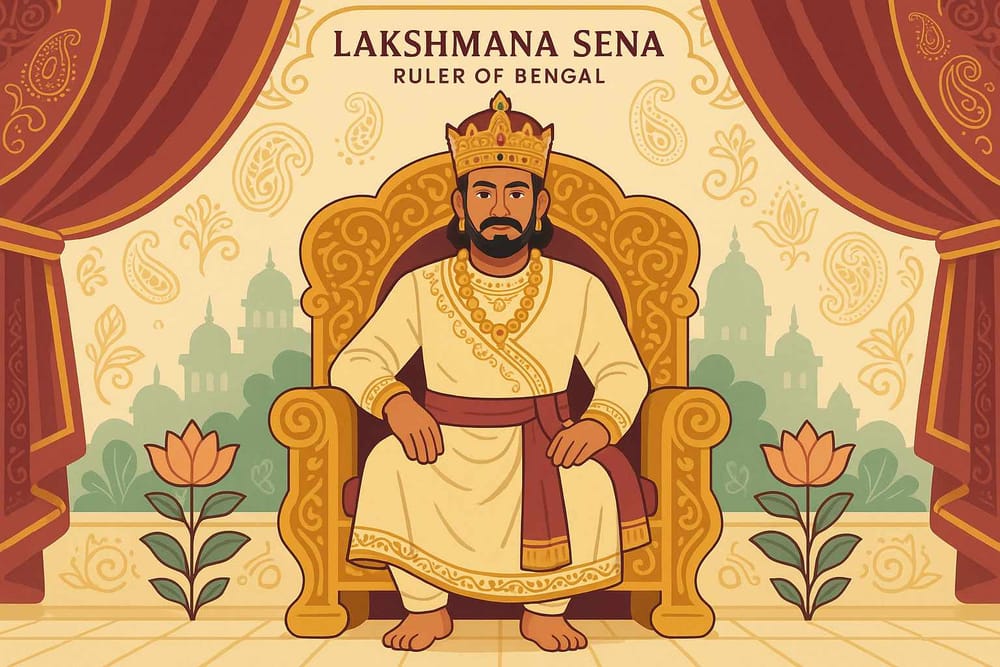
Lakshmana Sena: Examines Leadership and Governance in Historical Context
History, much like our mighty rivers, has currents that run deep and silent. While we celebrate some kings with great fanfare, others, like Lakshmana Sena of the Sena dynasty, remain as profound, yet unsung, guardians of our heritage. His story isn't just a chapter from a textbook; it's a living tale of leadership, devotion, and the undying spirit of Bengal during a time of great change in the late 12th century.
The Rise of a Protector: Inheriting a Sacred Duty
After the decline of the great Pala Empire, Bengal saw the rise of a new power—the Senas. Lakshmana Sena, succeeding his father the illustrious Vallalasena around 1178 CE, inherited more than just a throne; he inherited a sacred duty. His early years were a whirlwind of action, marked by military campaigns not for mere conquest, but to secure the borders of his homeland. He expanded his influence over Gauda, Kamrupa, Kalinga, and even Kashi, creating a strong and stable kingdom. This wasn't just about power; it was about creating a safe haven where culture and spirituality could flourish, shielded from the growing turmoil outside.
A King's Dharma: Governance that Touched Lives
A kingdom's strength isn't just in its forts, but in the happiness of its people. Lakshmana Sena understood this from his very core. He wasn't a distant ruler; his governance was designed to bring stability and prosperity to every corner of his realm.
- An Administration of Trust: He continued the efficient administrative systems of the Palas, dividing the kingdom into manageable units like *Bhuktis* and *Vishayas*. But he added his own layer of trust by appointing capable officials and empowering local leaders to maintain peace and order, ensuring that justice reached even the most remote villages.
- Nurturing the Land and Its People: Realising that farmers were the backbone of his kingdom, he introduced thoughtful agrarian reforms. His taxation policies were designed to be fair, not burdensome, which encouraged agriculture and trade to blossom. This focus on the welfare of his subjects brought a wave of prosperity across Bengal.
The Soul of a Kingdom: Where Art and Devotion Bloomed
But a kingdom without a soul is just land and buildings. Lakshmana Sena, a devout Vaishnava who took the title Paramavaishnava, breathed life into Bengal's cultural heart. His court was not just a place of politics, but a vibrant hub of creativity and intellect.
He was a great patron of Sanskrit literature, and his era is immortalised by the presence of gems like the poet Jayadeva. It was under Lakshmana Sena's patronage that Jayadeva composed the immortal *Geeta Govinda*, a work of divine love that still echoes in temples and hearts across India. The king himself was a man of letters, even completing the book *Adbuta Sagara*, which was started by his father. This environment of respect for knowledge and art laid the foundation for Bengal's rich cultural traditions that we cherish today.
The Gathering Storm and an Enduring Legacy
Even the brightest day must face the dusk. The later part of Lakshmana Sena's reign was met with the formidable challenge of invasions led by Bakhtiyar Khalji. The fall of his capital, Nadia, around 1204 AD was a significant blow, forcing him to retreat. Yet, a king's legacy is not defined by a single battle, but by the strength of what he builds. While his kingdom faced a tragic end, the cultural and administrative foundations he laid down endured. His story is a powerful reminder that true leadership is about building something that outlasts you. The complexities of his reign are a fascinating study, something we explore in our examination of this forgotten king of ancient Bharatvarsh.
Keeping Our Heritage Alive with Bhaktilipi
Stories like that of Lakshmana Sena are the precious jewels of our past, reminding us of the values and vision that shaped Bharat. At Bhaktilipi, we see it as our sacred duty to preserve and share these timeless narratives. We carefully digitise and reimagine devotional literature and historical accounts so that their wisdom can inspire a new generation.
By exploring these stories, we connect with the roots of our culture and learn lessons in leadership, devotion, and resilience. Bhaktilipi is your companion on this journey of discovery.
Stay connected with our community and dive deeper into our shared heritage:
- Facebook: BhaktilipiOfficial
- Instagram: bhakti_lipi
- YouTube: @Bhaktilipi
Delving Deeper into His Reign: Understanding the Man and His Era
As we reflect on his life, certain questions naturally come to mind, helping us appreciate his significance even more.
People often wonder what the Sena Dynasty was truly known for. More than just a line of rulers, the Senas were celebrated for their immense contributions to the art, culture, and administration of medieval Bengal. Lakshmana Sena, in particular, played a pivotal role in strengthening this legacy, making Bengal a beacon of intellectual and spiritual activity.
So, what were Lakshmana Sena’s greatest achievements? While his military victories were impressive, his real success lay in fostering a stable, prosperous society where art and faith could flourish. His patronage of literature and his commitment to just governance left a far more lasting impact than any territorial gain. To understand him better, you can read more about Bengal's forgotten monarch and his legacy.
His influence on medieval India was profound. Lakshmana Sena's leadership helped shape the cultural and administrative identity of Bengal for centuries to come. By creating an environment of religious harmony and intellectual freedom, he ensured that Bengal’s unique spirit would continue to thrive, even through turbulent times. He is remembered not just as a king, but as a preserver of dharma and culture.
Conclusion: A Legacy of Visionary Leadership
Lakshmana Sena’s reign is a powerful lesson in what it means to be a true leader. In an era of uncertainty, he stood as a pillar of strength, balancing military strategy with deep cultural patronage and administrative reform. His life reminds us that a leader's true worth is measured not by the battles they win, but by the cultural and spiritual wealth they leave behind for their people. His legacy inspires us to value the delicate balance between preserving our traditions and embracing progress, a principle that remains deeply relevant in our lives today.
A passionate group of people dedicated to preserving India's knowledge of Dharma, Karma, and Bhakti for ourselves and the world 🙏.