
Lion Capital of Ashoka-India's Heritage Explained
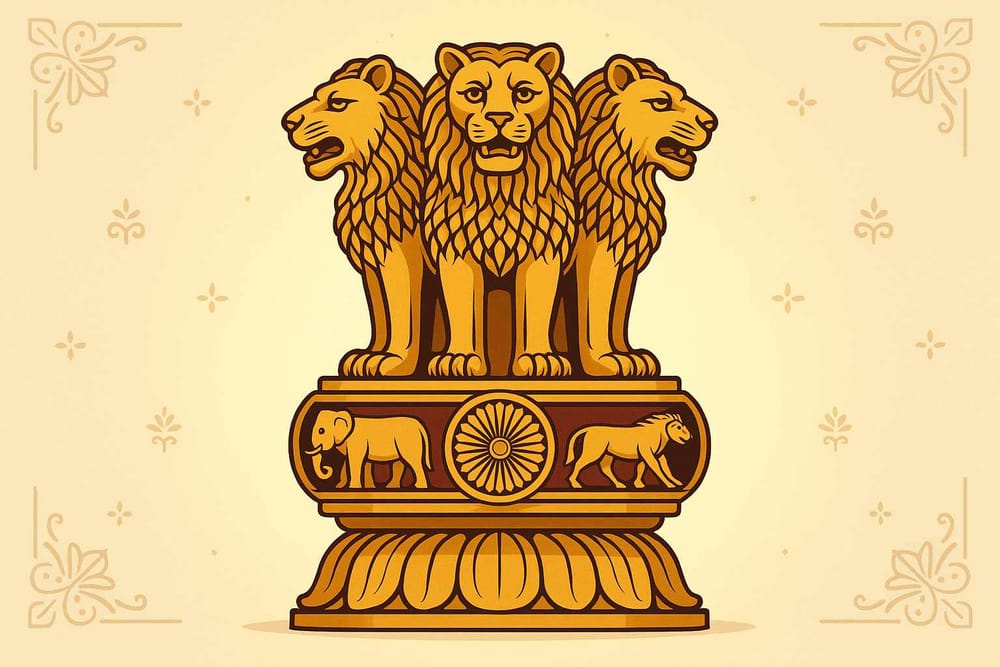
Have you ever held a coin in your hand or looked at your passport and truly seen the four lions seated majestically back-to-back? It’s a sight so familiar to us Indians, a part of our daily lives. But this isn't just a design; it's a whisper from our glorious past, a powerful story etched in stone. This is the Lion Capital of Ashoka, our National Emblem, and it carries the very essence of our nation's heart.
To understand its deep significance, we must travel back in time, over two thousand years ago, to the reign of one of India's most extraordinary rulers, Emperor Ashoka of the Mauryan dynasty. His story is one of a profound transformation, from a fierce conqueror to a messenger of peace.
A King's Change of Heart: The Story Behind the Stone
The tale begins after the devastating Kalinga War. Witnessing the immense suffering and loss, Emperor Ashoka’s heart was moved. He renounced violence and embraced the path of Buddhism, dedicating his life to ruling with *dharma*—righteousness, compassion, and justice. To spread this message of peace far and wide, he erected magnificent pillars across his vast empire.
One such pillar was placed at Sarnath, a place of immense spiritual energy. It was here that Lord Buddha gave his first sermon after attaining enlightenment, setting the "Wheel of Dharma" in motion. Atop this nearly 50-foot-tall pillar, crafted from a single piece of polished sandstone, sat the magnificent Lion Capital. It wasn't just art; it was a declaration of a new era of peace and ethical governance for all to see. To learn more about its fascinating past, you can explore the complete history and significance of the Lion Capital of Ashoka.
Decoding the Sacred Symbols: What Every Detail Means
The Lion Capital is a masterpiece brimming with profound meaning. Every element was carefully chosen to convey a deep spiritual and philosophical message.
- The Four Majestic Lions: Seated back-to-back and facing the four cardinal directions, these lions are not roaring aggressively. Instead, they represent a calm power, courage, confidence, and pride. They are broadcasting the message of Dharma—the universal law of righteousness—to every corner of the world. In Buddhist tradition, the lion's roar is often compared to the Buddha's fearless teaching.
- The Circular Abacus (The Base): Below the lions rests a circular drum, which is just as symbolic. It features four animals exquisitely carved in motion: a galloping horse, a powerful bull, a graceful elephant, and another lion. These animals are often interpreted as guardians of the four directions or representing different stages of Lord Buddha's life.
- The Wheel of Dharma: Separating these animals are 24-spoked wheels, known as the Dharmachakra. This wheel is a central symbol in our culture, representing the eternal path of righteousness, cosmic order, and progress. It's the very same wheel that proudly sits at the center of our national flag.
The entire structure stands on an inverted lotus, a flower that represents purity and spiritual enlightenment, rising beautifully from murky waters. The symbolism and significance of the Lion Capital is a deep well of wisdom that continues to inspire us.
From an Ancient Relic to a Modern Nation's Identity
Fast forward to January 26, 1950. As India proudly became a republic, it needed a symbol that would represent its ancient heritage and its modern aspirations. The choice was clear. The Lion Capital of Ashoka was adopted as our National Emblem.
The emblem we use today shows the four lions above the Dharmachakra. Below it is inscribed the profound motto from the Mundaka Upanishad: "Satyameva Jayate," which means "Truth Alone Triumphs." This powerful phrase serves as a constant reminder of the values our nation is built upon—justice, equality, and unwavering commitment to truth.
Every time you see this emblem on government documents, currency, or official seals, it's a promise. It's a connection to Ashoka's vision and a guide for our own conduct as citizens of this great nation.
Answering Your Heart's Questions about Our National Pride
Many of us have questions about this iconic symbol. For instance, people often wonder where the original Lion Capital is located today. After being unearthed in a fragmented state in the early 20th century, it was painstakingly restored and is now lovingly preserved at the Sarnath Museum in Uttar Pradesh, close to where it was first erected. Visiting it is like touching a piece of our living history.
Another common thought is why these four lions were chosen. They represent Ashoka's rule over his four-direction empire, but more importantly, they symbolize the Buddha, who was known as *Shakyasimha* (Lion of the Shakya clan). Their open mouths signify the spreading of the Dharma. It's a symbol that is simultaneously about royal power and spiritual fearlessness.
The choice of the Lion Capital as our National Emblem was a conscious decision to link modern India's democratic and secular values with the ancient principles of peace, tolerance, and universal harmony that Emperor Ashoka championed. It’s a bridge connecting our past glory with our future dreams.
Preserving Our Heritage, One Story at a Time
The story of the Lion Capital is a beautiful example of how our heritage holds timeless wisdom. Just as archaeologists preserve these physical treasures, we at Bhaktilipi are dedicated to preserving and sharing our rich devotional and cultural stories. We believe these tales are not just for the past; they are lamps that can guide us today.
At Bhaktilipi, we reimagine timeless devotional literature for today’s readers, ensuring the essence and authenticity remain pure. If you feel a connection to our shared heritage and wish to explore the inspiring stories that have shaped our culture, we invite you to join our community.
Stay connected with us and discover more such treasures:
- Facebook: BhaktilipiOfficial
- Instagram: bhakti_lipi
- YouTube: Bhaktilipi
A Legacy That Lives Within Us
The Lion Capital of Ashoka is far more than an ancient artifact; it is our *virasat* (legacy) and our *shaan* (pride). It stands as a powerful reminder of the strength found in unity, the courage in compassion, and the victory in truth. It is a call to every Indian to live with integrity and uphold the noble values that this emblem represents. The next time you see those four lions, may you remember the incredible story they tell—a story of peace, righteousness, and the undying spirit of India.
A passionate group of people dedicated to preserving India's knowledge of Dharma, Karma, and Bhakti for ourselves and the world 🙏.
Comments
Related in
The Historical Significance of the Lion Capital of Ashoka: Understand its Enduring Legacy
There are some symbols that are etched into the very soul of a nation. For us in India, the Lion Capital of Ashoka is one such powerful emblem. We see it on our currency notes, on our passports, and on every official government letterhead. But have you ever paused to
The Significance of the Lion Capital of Ashoka: Explores Indian History
Have you ever paused for a moment, holding a currency note or looking at your passport, and truly looked at the four lions standing so majestically? That symbol, the Lion Capital of Ashoka, is something we see almost every day. But how often do we think about its story? It’
Lion Capital of Ashoka-Symbolism Explained
How many times have we held a coin in our hand or looked at a government document and seen those four majestic lions, standing proud and strong? It’s a sight so familiar, it feels like a part of our own identity. But have you ever paused to think about