

Lion Capital of Ashoka- Symbolism and Significance Explained
Every time I hold a coin or look at a government document, my eyes are drawn to that powerful symbol—the four lions standing majestically back-to-back. It’s a sight that fills me with a quiet, deep-rooted pride. But have you ever paused to think about its story? This isn't just a design; it's a piece of our history, a profound message carved in stone that has travelled through more than two millennia to reach us. This is the story of the Lion Capital of Ashoka, the very heart of our national identity.
A King's Promise Carved in History
Let’s travel back in time, to around 250 BCE. The great Mauryan Empire is under the rule of Emperor Ashoka. After the heart-wrenching Kalinga war, Ashoka had a profound change of heart. He turned to Buddhism and dedicated his life to spreading the message of Dharma—a path of righteousness, compassion, and non-violence. He didn’t just preach; he wanted these ideals to be etched into the very landscape of his empire.
So, he commissioned magnificent pillars across his kingdom. One of the most significant was erected at Sarnath, a place of immense spiritual energy. It was here, near modern-day Varanasi, that Lord Buddha gave his very first sermon after attaining enlightenment. Atop this pillar, Ashoka placed the Lion Capital, a masterpiece of Mauryan art, not just as a crown but as a beacon of his vision for a harmonious world.
Decoding the Timeless Symbols
The Lion Capital is a treasure trove of meaning. Every element was carefully chosen to convey a deep philosophical message. It’s like reading a sacred text, but with your eyes and heart.
- The Four Lions: The most striking feature is, of course, the four magnificent Asiatic lions standing back-to-back. They aren't just symbols of power and courage; they are broadcasting the eternal message of Dharma to the four corners of the world. Their roar is a silent, powerful call for peace, strength, confidence, and moral integrity that echoes through time.
- The Circular Abacus: Below the lions rests a circular drum, or abacus, which features four animals separated by a wheel. We see a galloping horse (representing energy and the cardinal west), a bull (symbolizing diligence and the east), an elephant (a symbol of Buddha's conception and the south), and a lion (representing bravery and the north). Together, they signify the cyclical nature of life and the balance of the universe.
- The Dharma Chakra: The wheel, or the Dharma Chakra, is central to the design. This "Wheel of Law" is a powerful Buddhist symbol representing the path to enlightenment and the continuous flow of cosmic justice. It reminds us that righteousness is a journey, not a destination. To delve deeper into its profound meaning, you can explore our detailed explanation on the symbolism and significance of the Lion Capital.
- The Inverted Lotus: The entire structure rests on an inverted lotus flower. In Indian culture, the lotus is a sacred symbol of purity. It grows in murky waters but blossoms beautifully, untouched by the mud. This represents the ability to rise above worldly troubles and achieve spiritual purity and enlightenment.
From an Ancient Relic to the Pride of a New Nation
Fast forward a couple of thousand years to 1950. A newly independent India was searching for a symbol that would encapsulate its ancient heritage and modern aspirations. What could be better than the Lion Capital? The Constituent Assembly chose it to be our National Emblem.
It was a perfect choice. It connected our new democracy to the moral governance of Ashoka's era. The emblem was slightly adapted; the lotus base was omitted, and below the abacus, the powerful words from the Mundaka Upanishad, ‘Satyameva Jayate’ (Truth Alone Triumphs), were inscribed. This motto reinforces the emblem's message of integrity and justice.
And have you ever noticed the deep connection it has with our Tiranga? The very same Dharma Chakra from the abacus sits proudly in the centre of our national flag, a constant reminder of progress, law, and our duty to move forward while staying true to our values. You can learn more about its journey and how the Lion Capital's symbolism was explained and adopted for our nation.
Our Shared Responsibility: Preserving a Precious Legacy
This incredible piece of our history is not just an idea; it's a physical artifact that needs our care. If you ever want to witness its true glory, the original Lion Capital is carefully preserved at the Sarnath Museum in Uttar Pradesh. Seeing it in person is a truly humbling experience. It’s our collective responsibility to learn about its history and protect it, ensuring that this beacon of our heritage continues to inspire future generations.
The values of unity, strength, and righteousness embodied by the Lion Capital are central to India's spiritual fabric. It's a journey of understanding our roots to better navigate our future. At Bhaktilipi, we are deeply committed to exploring and sharing this timeless wisdom.
About Bhaktilipi
Bhaktilipi is a digital space dedicated to preserving, reimagining, and sharing timeless devotional literature and stories. We aim to make the profound wisdom of bhakti accessible across languages, regions, and cultures, ensuring we respect its authenticity and depth. Our goal is to connect modern readers like you with these ancient works in ways that inspire and resonate with today's lifestyle.
Why Bhaktilipi?
- Preserve: We work tirelessly to ensure that ancient bhakti texts are not lost to time but are cherished and passed down for generations to come. We believe these stories and teachings are invaluable treasures of our culture.
- Reimagine: We understand that the way we consume information has changed. We adapt these profound works to make them relatable, engaging, and meaningful for today’s audience without diluting their essence.
- Share: We are committed to providing authentic knowledge with aesthetics that uphold the beauty and sanctity of tradition. We believe that spiritual wisdom should be shared in a way that is both beautiful and accessible.
The Lion Capital of Ashoka perfectly represents strength, unity, and wisdom—values deeply rooted in India’s spiritual heritage. At Bhaktilipi, we aim to reflect these very values by offering knowledge that empowers you spiritually while connecting you with the incredible richness of our tradition.
Stay Connected
Explore more devotional wisdom on our platform and subscribe for regular updates! Follow us on our social media for insightful posts, videos, and stories that will bring you closer to your heritage:
Join us in this beautiful journey of preserving and celebrating India’s spiritual legacy!
A Timeless Beacon Guiding Our Way
The Lion Capital of Ashoka is far more than a historical artifact. It is a profound testament to India's rich heritage, our ethical ideals, and the artistic genius of our ancestors. It bridges the ancient wisdom of Emperor Ashoka with the vibrant aspirations of modern India, symbolizing unity, justice, and moral integrity.
So, the next time you see it, whether on a crisp currency note or a formal document, take a moment to remember its story. It is a gentle but powerful reminder of the timeless principles it represents. The Lion Capital is not just a piece of our past; it is a living legacy that continues to inspire and guide us towards a future rooted in compassion, harmony, and truth.
A passionate group of people dedicated to preserving India's knowledge of Dharma, Karma, and Bhakti for ourselves and the world 🙏.
Comments
Related in
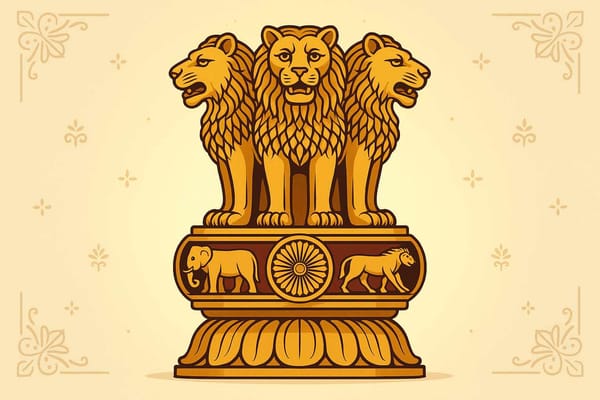
Lion Capital of Ashoka-India's Heritage Explained
Have you ever held a coin in your hand or looked at your passport and truly seen the four lions seated majestically back-to-back? It’s a sight so familiar to us Indians, a part of our daily lives. But this isn't just a design; it's a
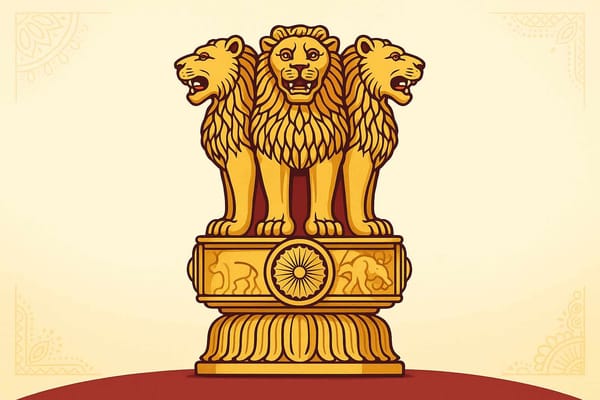
The Historical Significance of the Lion Capital of Ashoka: Understand its Enduring Legacy
There are some symbols that are etched into the very soul of a nation. For us in India, the Lion Capital of Ashoka is one such powerful emblem. We see it on our currency notes, on our passports, and on every official government letterhead. But have you ever paused to
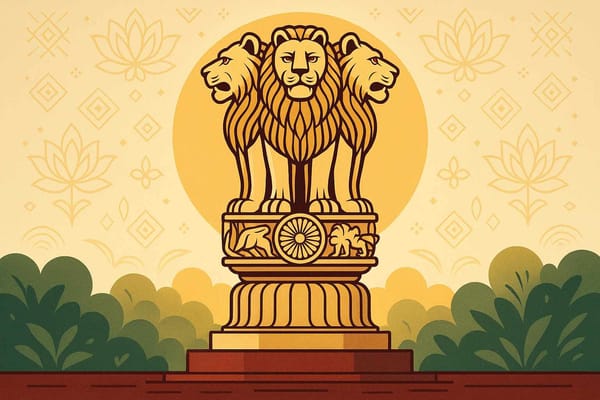
The Significance of the Lion Capital of Ashoka: Explores Indian History
Have you ever paused for a moment, holding a currency note or looking at your passport, and truly looked at the four lions standing so majestically? That symbol, the Lion Capital of Ashoka, is something we see almost every day. But how often do we think about its story? It’