
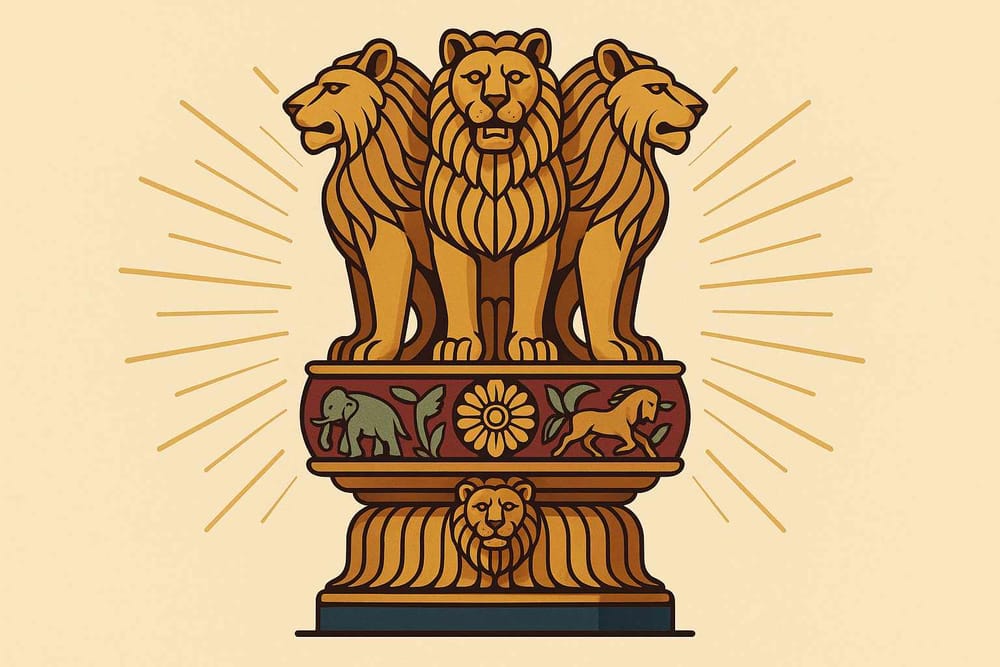
Lion Capital of Ashoka-Symbolism Explained
How many times have we held a coin in our hand or looked at a government document and seen those four majestic lions, standing proud and strong? It’s a sight so familiar, it feels like a part of our own identity. But have you ever paused to think about the story behind this powerful symbol? This isn't just an image; it's the Lion Capital of Ashoka, a timeless echo from our past that speaks volumes about who we are and the values we hold dear.
This magnificent sculpture is more than just a piece of history; it's a lesson in leadership, peace, and righteousness, gifted to us by one of India's greatest emperors, Ashoka Maurya. Let's journey back in time together and uncover the profound meaning etched into this iconic emblem.
From the Battlefield to the Path of Dharma: The Story of its Creation
To truly understand the Lion Capital, we must first understand the man who commissioned it. Emperor Ashoka’s reign in the 3rd century BCE began with conquest and bloodshed, culminating in the devastating Kalinga War. The immense loss of life changed him forever. Riddled with remorse, Ashoka turned to Buddhism and dedicated the rest of his rule not to conquering lands, but to conquering hearts through Dharma (the path of righteousness).
He erected pillars across his empire, and the one at Sarnath was truly special. Sarnath was where Lord Buddha gave his first sermon after attaining enlightenment. By placing this capital here, Ashoka was marking a sacred ground and amplifying the message of peace and truth. Today, while many pillars stand, the original, breathtaking Lion Capital is carefully preserved at the Sarnath Museum near Varanasi, a must-visit for anyone who wishes to connect with our roots.
The Four Lions: Guardians of Universal Truth
The most striking feature is, of course, the four Asiatic lions standing back-to-back. They are not roaring in aggression but have their mouths open as if to spread a message. But what is this message?
- Guardians of the Four Directions: The lions face the four cardinal directions, symbolizing the spread of Dharma to every corner of the world. It’s a declaration that the principles of truth, non-violence (Ahimsa), and compassion are universal and meant for everyone.
- Symbols of Power and Courage: In ancient India, the lion was a symbol of shakti (power), courage, and royalty. But under Ashoka's vision, this power wasn't for domination. It was the inner strength and courage required to walk the path of truth and protect it with vigilance. The four lions together represent the strength of a nation united in righteousness. For a deeper dive into this symbolism, you can explore the significance of the Lion Capital of Ashoka explained on our blog.
The Abacus and the Dharma Chakra: The Foundation of Life
Beneath the regal lions lies a circular abacus, which is a canvas of deeper meaning. It features engravings of four animals, each separated by a wheel, or Chakra. These aren't just decorative elements; they tell a story.
The Four Animals
- The Elephant (East) is often linked to Queen Maya's dream of a white elephant entering her womb, symbolizing Lord Buddha’s conception.
- The Horse (South) represents Kanthaka, the horse Buddha rode when he left his palace, symbolizing the Great Renunciation of worldly pleasures.
- The Bull (West) signifies the zodiac sign of Taurus, the month of Buddha's birth and enlightenment. It stands for perseverance and strength.
- The Lion (North) represents the enlightened one, the "lion of the Shakya clan" (Shakyamuni), whose teachings were as powerful as a lion's roar.
The Wheel of Law (Dharma Chakra)
The wheel, known as the Ashoka Chakra, is central to the entire structure. This is the Dharma Chakra, or the 'Wheel of Law.' Its 24 spokes represent the 24 qualities of a righteous follower and the cyclical nature of time, reminding us that Dharma is eternal. This very wheel proudly sits at the center of our national flag, a constant reminder of our nation’s commitment to move forward on the path of truth and progress.
The entire structure rests on an inverted lotus, a flower that represents purity and enlightenment. Just as a lotus rises clean from muddy waters, humans too can rise above worldly desires to achieve spiritual awakening.
Why is This Our National Emblem?
When India gained independence in 1947, our leaders sought a symbol that would represent the soul of our new nation—a symbol that spoke of our ancient heritage yet reflected our modern aspirations. The Lion Capital of Ashoka was chosen as the national emblem of India because it perfectly embodied these ideals. It stands for courage, peace, and progress, tying our nation to the principles of moral governance laid down by Emperor Ashoka. It is a powerful statement that our strength lies not in aggression, but in unity and righteousness.
Understanding these layers of meaning helps us connect more deeply with our identity. It's not just an emblem; it’s a guide. At Bhaktilipi, we believe that exploring such timeless wisdom enriches our lives. We are a digital space dedicated to sharing devotional literature and stories that inspire, just as the Lion Capital of Ashoka inspires our nation.
A Timeless Legacy in Our Daily Lives
The Lion Capital of Ashoka is far more than a historical artifact. It is a living symbol of India's enduring values. From the mighty lions to the intricate Chakra, every element is a lesson in spirituality, justice, and harmony. It serves as a guiding light, encouraging us to embrace compassion, strength, and enlightenment in our own lives.
This masterpiece is a proud reminder of our rich cultural and philosophical legacy, connecting our past with our present and guiding us toward a future built on righteousness and unity. It’s a story of our heritage, a symbol of our strength, and a promise for our future.
We invite you to continue this journey of discovery with us. Bhaktilipi is committed to preserving and sharing the timeless stories and devotional literature of our culture in a way that resonates with today's world. We believe that knowing our traditions is a source of immense strength and healing.
Stay connected with our community for more insights:
- Facebook: BhaktilipiOfficial
- Instagram: bhakti_lipi
- YouTube: @Bhaktilipi
A passionate group of people dedicated to preserving India's knowledge of Dharma, Karma, and Bhakti for ourselves and the world 🙏.
Comments
Related in
Lion Capital of Ashoka-India's Heritage Explained
Have you ever held a coin in your hand or looked at your passport and truly seen the four lions seated majestically back-to-back? It’s a sight so familiar to us Indians, a part of our daily lives. But this isn't just a design; it's a
The Historical Significance of the Lion Capital of Ashoka: Understand its Enduring Legacy
There are some symbols that are etched into the very soul of a nation. For us in India, the Lion Capital of Ashoka is one such powerful emblem. We see it on our currency notes, on our passports, and on every official government letterhead. But have you ever paused to
The Significance of the Lion Capital of Ashoka: Explores Indian History
Have you ever paused for a moment, holding a currency note or looking at your passport, and truly looked at the four lions standing so majestically? That symbol, the Lion Capital of Ashoka, is something we see almost every day. But how often do we think about its story? It’