Mountain Sanctuaries: Explore Tribal Cultures of North-East India
There's a certain magic that hangs in the air of North-East India. It’s in the mist that lovingly blankets the emerald hills each morning, in the chants that drift from ancient monasteries, and in the vibrant colours that explode during a village festival. This part of our country, a stunning mosaic of the "Seven Sisters" and the brother state of Sikkim, is more than just a travel destination. It's a living, breathing library of ancient traditions, a place where communities have lived in perfect harmony with nature for centuries. Embarking on a journey here is like turning the pages of a storybook, one filled with tales of courage, spirituality, and deep-rooted culture.
Sikkim: Where Sacred Mountains Guard Ancient Traditions
Imagine a land where the mighty Kanchenjunga isn't just a mountain, but a guardian deity, a watchful protector of its people. This is Sikkim. Here, spirituality isn't confined to temples; it's in the very fabric of life. The state is a beautiful home to several indigenous communities, each adding its own unique thread to the cultural tapestry.
- The Lepchas: Children of the Mountains
Considered the original inhabitants, the Lepcha people share a bond with the land that is profoundly spiritual. For them, Mount Kanchenjunga is a sacred protector, and their folklore, songs, and language are filled with reverence for the forests, rivers, and peaks that surround them. Their connection is a beautiful reminder of what it means to live as one with nature. - The Bhutias: A Legacy from Tibet
Having migrated from Tibet centuries ago, the Bhutias brought with them the vibrant traditions of Tibetan Buddhism. Their new year festival, Losar, is a spectacle of joy, colour, and deep faith. When you see them in their traditional attire, the elegant bakhu, you see more than just clothing; you witness a proud heritage worn with grace. - The Limbus: Keepers of Rhythmic Traditions
The Limbu community expresses its soul through vibrant music and dance. Their traditional Dhan Naach (Paddy Dance) is a joyous celebration of the harvest, a rhythmic thank you to the earth for its bounty. They have also carefully preserved their ancient script, a testament to their commitment to keeping their identity and stories alive for future generations.
In Sikkim, places like the ethereal Yumthang Valley are not just scenic spots; they are sacred grounds. Festivals like Pang Lhabsol are not just gatherings; they are powerful ceremonies that unite the community in honour of their guardian, Kanchenjunga. The serene monasteries, like the one at Pemayangtse, stand as silent keepers of this profound spiritual and cultural legacy.
Nagaland: The Land of Festivals and Fierce Pride
Nagaland is a world unto itself, home to over 16 major tribes, each with a spirit as fierce and unique as the hills they inhabit. To understand Nagaland is to understand that while each tribe has its own distinct identity, they come together to form a collective spirit that is undeniably Naga.
- The Angami Tribe: Celebrating Purity and New Beginnings
The Angami people celebrate Sekrenyi, their festival of purification, with incredible solemnity and joy. It’s a time to cleanse the soul and the village, to let go of the past and welcome a fresh start. The community feasts and rituals during this time strengthen their bonds and renew their connection to their roots. - The Konyak Tribe: Artists with a Warrior Past
The Konyaks, once renowned for their formidable warrior traditions, now channel that same intensity into their art. Their intricate facial tattoos and powerful wood carvings are not mere decorations; they are a visual language, telling stories of lineage, courage, and a history that is etched into their very skin. To meet a Konyak elder is to look upon a living historian.
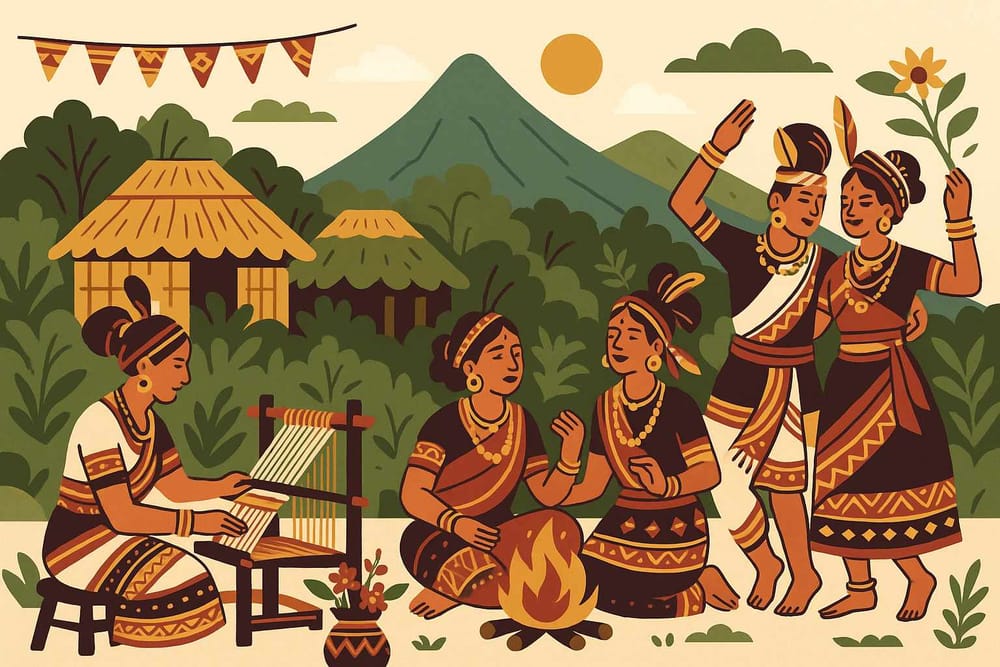
The famous handwoven Naga shawls are more than just warm garments; they are canvases that narrate tales of achievement and social standing through their bold patterns and colours. And then there is the Hornbill Festival, aptly called the "Festival of Festivals." For ten days in December, all the tribes of Nagaland gather in a spectacular showcase of their culture. It’s an unforgettable explosion of music, dance, food, and traditions, a chance to witness the soul of Nagaland in one place.
The spiritual depth found across the North-East isn't limited to these states. In neighbouring Arunachal Pradesh, you can feel a similar reverence for nature and tradition as you explore the sacred sites around Itanagar. Each state has its own unique flavour, contributing to the region's incredible diversity.
A Deeper Connection to Our Roots
Exploring these cultures, understanding their beliefs, and witnessing their way of life feels like a spiritual journey in itself. It’s a chance to connect with the timeless wisdom that our ancestors held so dear—a wisdom rooted in respect for nature, community, and the divine.
At Bhaktilipi, we believe that these stories of devotion and tradition deserve to be shared and celebrated. We strive to be a space where you can explore the profound depth of India's spiritual heritage, from ancient texts to the living traditions of its people. If these stories from the North-East resonate with you, we invite you to explore more devotional literature on Bhaktilipi.in.
A Journey That Stays With You
A trip to the mountain sanctuaries of North-East India is more than a holiday. It’s an immersion into a world where life is simpler, yet richer in meaning. You leave with more than just photographs; you carry back the warmth of the people, the taste of their food, and the echoes of their songs. You carry back a newfound respect for the cultures that make our country so incredibly diverse.
Whether you plan a visit or simply learn about these communities from afar, every effort to honour their heritage helps keep these precious traditions alive for generations to come. Let the spirit of the North-East inspire you to cherish the beauty of simplicity and the power of culture.
Common Questions About North-East India’s Tribal Heritage
Understanding the Prominent Tribes of the Region
People often ask about the main tribal communities in states like Sikkim and Nagaland. In Sikkim, the Lepchas, Bhutias, and Limbus are the most prominent, each with unique customs. The Lepchas are the original inhabitants, deeply connected to nature, while the Bhutias brought Tibetan Buddhist traditions. Nagaland is famously home to tribes like the Angami, Ao, Sumi, and the Konyak, known for their vibrant festivals and rich history.
The Cultural Significance of Tribal Festivals
Why are festivals so important here? Because they are the heartbeat of the community. Festivals like Hornbill in Nagaland, Losar in Sikkim, and Bihu in Assam are not just celebrations. They are living expressions of culture, featuring dances, music, and sacred rituals that honour ancestors, celebrate harvests, and strengthen the bonds of the community.
The Importance of Mountain Sanctuaries for Tribal Life
The mountains and forests are not just landscapes; they are sacred homes. These natural sanctuaries provide everything the tribal communities need to sustain their way of life. By protecting these mountains, we also help safeguard their unique traditions, languages, and the immense natural wisdom that is integral to their identity. The rich biodiversity found in places like Assam's Chirang District is a perfect example of this deep connection between nature and culture.
Interacting Respectfully with Tribal Communities
Yes, visitors can often interact with tribal communities, especially during public festivals. However, it is vital to approach with respect. Think of yourself as a guest in their home. Be mindful of their customs, ask for permission before taking photographs, and listen with an open heart. This ensures your visit is a positive experience for everyone.
The Stories Told by Traditional Attire
Traditional attire in the North-East is a beautiful form of storytelling. The patterns on a Naga shawl can signify a warrior's achievements, while the colours and jewellery worn by a Bhutia woman can indicate her family's status. Each handmade garment is a piece of art, deeply woven with history, identity, and meaning.
A passionate group of people dedicated to preserving India's knowledge of Dharma, Karma, and Bhakti for ourselves and the world 🙏.