
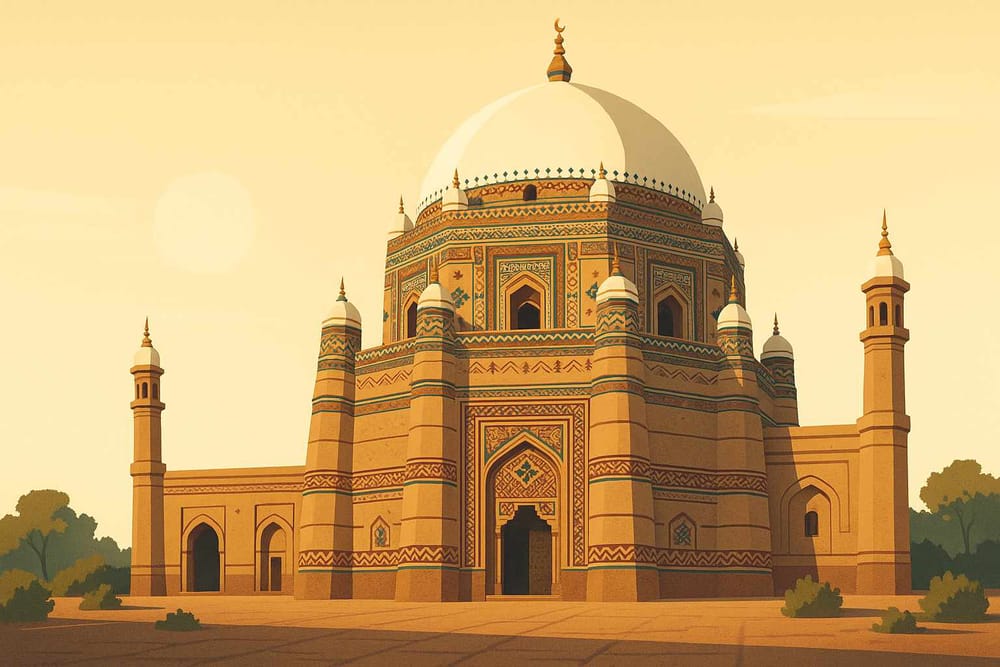
Mystical Architecture: Shah Rukn-e-Alam Tomb Explored
Some places don't just exist in brick and mortar; they breathe with the prayers of centuries. Standing in Multan, the ancient 'City of Saints', you feel this in the very air. My heart felt a pull towards one particular monument that rises against the sky like a silent, powerful prayer – the Tomb of Shah Rukn-e-Alam. It isn't just a building; it’s a story, a sanctuary, and a testament to a faith that has moved millions.
To visit this place is to walk through history itself, to feel the echoes of devotion left by every soul that has sought solace within its walls. Let me take you on a small journey to understand the profound beauty and spiritual weight of this magnificent mausoleum.
A Gift from a King, A Home for a Saint
The story of the tomb is as fascinating as its architecture. Built between 1320 and 1324 AD, it stands as one of the earliest and most stunning examples of Tughluq architecture. Interestingly, the Sultan Ghiyas-ud-Din Tughlaq originally built this grand structure for himself. But destiny, as it often does, had other plans. Moved by the spiritual aura of the Suhrawardi Sufi saint, Shah Rukn-e-Alam, the Sultan gifted this masterpiece to the saint's family. And so, a tomb meant for a king became the eternal resting place for the "Pillar of the World" (the meaning of Rukn-e-Alam).
This act alone speaks volumes about the reverence the saint commanded. His teachings of love, peace, and spiritual enlightenment were a guiding light for the entire region. Today, the tomb's presence on UNESCO's tentative list of World Heritage Sites is a nod to its immense cultural and historical value, a true jewel of South Asia's past.
An Architectural Marvel Whispering Tales of Heaven
What truly takes your breath away is the sheer architectural genius of the tomb. It’s not just grand; it’s deeply symbolic. The structure is built in three tiers, a unique design choice that immediately sets it apart.
- The Octagonal Base: Unlike other tombs of its time that were square, this mausoleum rests on a mighty octagonal base. In Islamic tradition, the octagon often represents the eight levels of paradise, making the very foundation a spiritual statement. The walls are incredibly thick, a feature borrowed from Tughluq military design, giving it an air of unshakeable strength and permanence.
- A Tapestry of Brick and Tile: The exterior is a breathtaking blend of deep red brick, intricately carved wood, and shimmering glazed tiles in shades of celestial blue, azure, and pure white. This combination creates a visual poetry that speaks of the earth and the heavens coming together. You can see sculpted bricks and battlements, another hint of military influence, yet softened by the delicate beauty of the tilework.
- The Majestic Dome: Crowning the structure is a massive white dome, one of the largest pre-Mughal domes on the subcontinent. It appears to float above the city, a beacon of tranquility. Adorned with blue tile patterns, it draws the eye upward, as if guiding one's thoughts towards the divine. The vast, column-free space inside makes you feel small yet incredibly peaceful, with the beautifully carved wooden mihrab silently pointing towards Mecca.
A Living Heart of Spirituality
Even centuries later, this tomb is far from being just a historical relic. It is a vibrant, beating heart of spiritual life. Thousands of devotees travel here every year, especially for the 'Urs' festival, which marks the anniversary of the saint's passing. The air during these gatherings is thick with devotion, with soulful music and heartfelt prayers creating an atmosphere of pure love and harmony.
For any visitor, it offers a moment of profound peace. It's a place to disconnect from the chaos of the world and reconnect with something deeper within yourself. You can see how the intricate designs and serene atmosphere have inspired generations of local artisans, their craft echoing the beauty of this sacred space.
Exploring the incredible spiritual depth and magnificence of Shah Rukn-e-Alam's tomb allows us to appreciate our shared heritage more deeply.
Our Shared Responsibility and the Spirit of Bhakti
Places like the Tomb of Shah Rukn-e-Alam remind us of the timeless nature of devotion. They are treasures that connect us to our roots and to the universal search for meaning. At Bhaktilipi, we are deeply committed to this very idea – preserving and sharing the timeless literature and stories of devotion that enrich our lives.
We believe spirituality knows no boundaries. Our platform is a humble effort to bring stories, hymns, and teachings to you in a way that feels personal and accessible. By understanding the legacy of spiritual figures and sacred architecture, we enrich our own journey. We invite you to explore the profound wisdom of bhakti with us.
Clearing the Mists: Common Questions about the Tomb
Many visitors and admirers often have questions about this iconic structure, so let's explore some of them. A frequent point of curiosity is its unique architecture. The tomb is celebrated for its perfect blend of strength and beauty, featuring a massive dome that was an engineering marvel of its time, along with intricate tile work and a distinctive octagonal shape symbolizing heavenly levels.
People often ask what materials give it such a mesmerizing look. The tomb is primarily constructed from sturdy red brick, which is then masterfully decorated with blue, azure, and white glazed tiles. This vibrant combination is a signature of the artistic style of that era. The location itself is also significant; it stands proudly in Multan, Pakistan, a city historically renowned as a center for Sufi saints and spiritual wisdom.
Another common query is about who commissioned this masterpiece. It was built by Ghias-ud-Din Tughlaq, the Sultan of Delhi, initially for his own burial. However, it was later gifted as a final resting place for Shah Rukn-e-Alam, a testament to the saint's revered status. For a more detailed look into its past, you can gain a historical perspective on Shah Rukn-e-Alam's legacy and how his influence shaped the region.
A Final Thought on its Enduring Legacy
Shah Rukn-e-Alam's tomb is more than just a destination; it's an experience. It’s a powerful reminder that beauty, faith, and history can create something that truly transcends time. Whether you are fortunate enough to stand before it or simply learn its story from afar, its spirit of peace and devotion is something that can touch us all. It stands as a timeless symbol, inviting us to appreciate the profound beauty of our shared spiritual heritage.
A passionate group of people dedicated to preserving India's knowledge of Dharma, Karma, and Bhakti for ourselves and the world 🙏.
Comments
Related in
Explore the Mystical Charm of Shah Rukn-e-Alam's Tomb: A 2025 Guide
Some places aren't just destinations on a map; they are feelings, they are echoes of history, and they are deep, silent prayers. Imagine standing under the vast Multan sky, your eyes fixed on a magnificent dome of brilliant blue and turquoise. This isn't just a building;
Multan's Mystique: Shah Rukn-e-Alam's Tomb Explained
There are some places that you don't just see; you feel them in your soul. The moment you witness the grand mausoleum of Shah Rukn-e-Alam rising against the Multan sky, you understand. It's not just bricks and mortar; it’s a living testament to faith, a
Mystical Tomb of Shah Rukn-e-Alam - History Explores
There are some places in the world where the air itself feels different, heavy with history and whispered prayers. Multan, the legendary 'City of Saints,' is one such place. As you walk its ancient streets, you can almost feel the echoes of centuries of devotion. And at the