
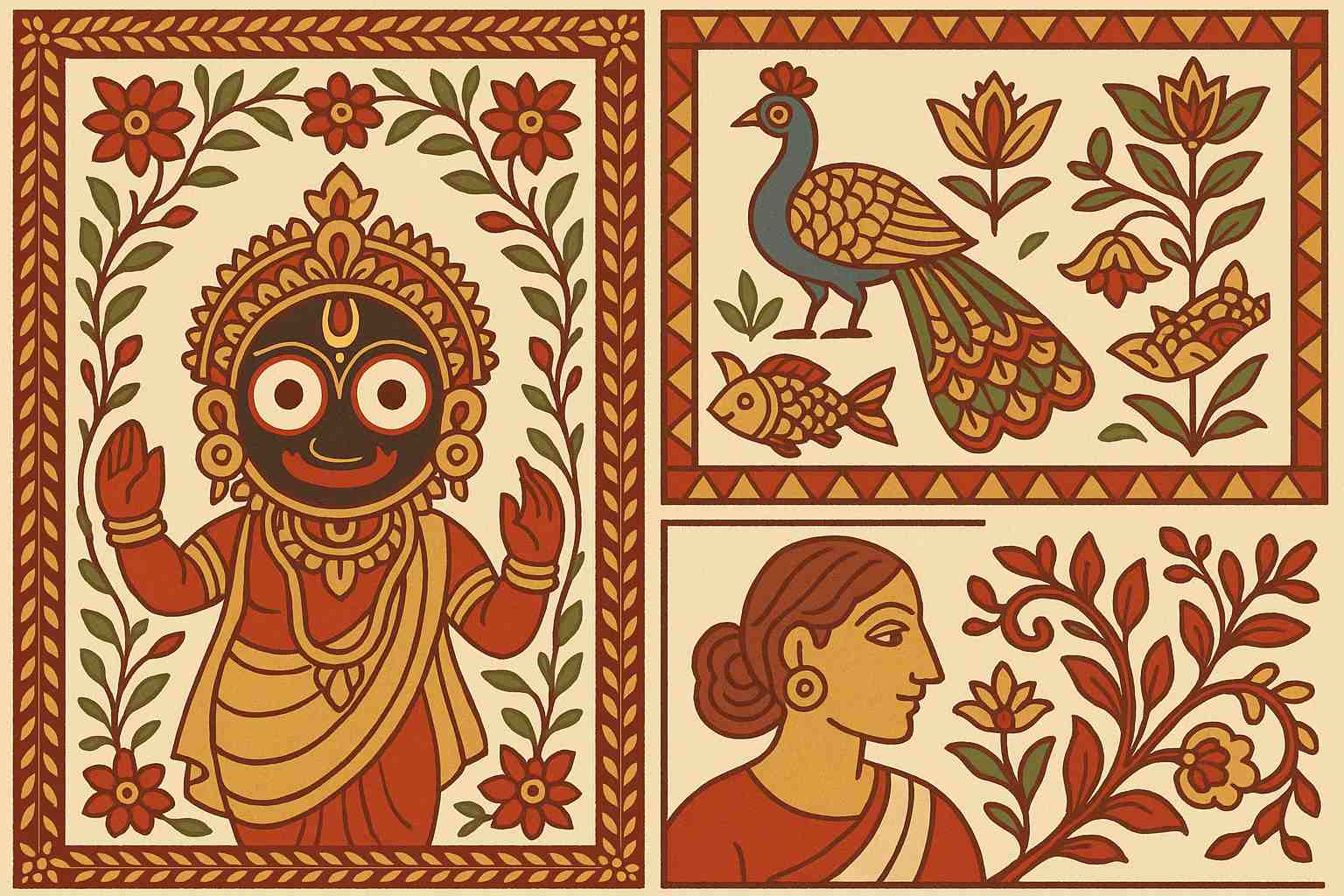
Pattachitra-Madhubani-Kalamkari: Compare India's Art Forms
Every corner of our beautiful India hums with a unique story, a special colour, a rhythm of its own. I often feel that to truly understand our country's heart, one must look at its art. It’s in the vibrant strokes of a painting, the intricate lines on a piece of cloth, that you find the whispers of our ancestors, the prayers of our grandmothers, and the dreams of generations. Three such art forms that have always captivated me are Pattachitra, Madhubani, and Kalamkari. They aren't just paintings; they are living, breathing traditions that carry the essence of our culture.
Pattachitra: Where Divinity Unfurls on a Scroll
The very name Pattachitra sounds like poetry, doesn't it? It comes from Sanskrit, where ‘Patta’ means a piece of cloth and ‘Chitra’ means a picture. Originating from the holy lands of Odisha and West Bengal, this art is deeply connected to the worship of Lord Jagannath. Think of it as a divine comic book, where each frame on the scroll tells a powerful story from the Ramayana, the Mahabharata, or the life of Lord Krishna.
The artists, known as 'Chitrakars', are not just painters; they are storytellers and devotees. They prepare their canvas meticulously, treating the cloth with a special paste of tamarind seeds and chalk powder. The colours they use are all from Mother Nature – fiery reds from stones, brilliant whites from conch shells, and sunny yellows from turmeric. The fine, bold lines and decorative borders make each painting a masterpiece of devotion and skill. To dive deeper into its legacy, you can explore the rich tradition and craft of Pattachitra, a world where every detail holds profound meaning.
Madhubani: The Colours of Life and Celebration
Travel to the Mithila region of Bihar, and you will find the walls and floors of homes blooming with art. This is Madhubani, also lovingly called Mithila painting. Traditionally, it was the women of the household who would create this art during festivals, weddings, and other auspicious occasions. It was their way of inviting prosperity, fertility, and divine blessings into their homes.
What makes Madhubani so special is its raw, earthy charm. The themes are drawn from daily life and nature – you’ll see fish for good luck, peacocks for love, and lotus flowers for divinity. The art is marked by its eye-catching geometric patterns and double-lined borders, filled with vibrant natural colours. There are different styles too, like Bharni (filling) and Katchni (line work), each telling its own unique tale. Today, this beautiful art has moved from village walls to canvases and fabrics, carrying its legacy of joy and celebration with it.
Kalamkari: The Art of Storytelling with a Pen
In the southern states of Andhra Pradesh and Telangana, another magical art form took root. Kalamkari literally means ‘pen-work’ (‘kalam’ for pen and ‘kari’ for work). It is the painstaking art of hand-painting or block-printing on fabric using a special bamboo pen and natural dyes. The process is a meditation in itself, requiring immense patience and precision.
Kalamkari artists often draw inspiration from temple architecture and Hindu mythology. You’ll find magnificent panels depicting scenes from our epics, alongside delicate patterns of flowers, birds, and vines. The colours are typically soft and earthy – deep maroons, indigo blues, and mustard yellows, all derived from plants and minerals. It’s the kind of art that transforms a simple piece of cloth into a timeless heirloom, a story you can wear and cherish.
A Tapestry of Similarities and Differences
While each of these art forms has a distinct identity, they are all bound by a common thread of devotion and storytelling. They are India’s visual folklore, a way of keeping our sacred tales alive. But how do they stand apart?
- The Canvas and Medium: Pattachitra is primarily a scroll painting done on specially treated cloth, making it a narrative art meant to be unveiled. In contrast, Madhubani was born on the walls and floors of homes, making it a part of daily life and celebration. Kalamkari, on the other hand, is exclusively a textile art, created to adorn fabrics with stories and patterns.
- The Style and Technique: You can recognize Pattachitra by its fine detailing, mythological figures, and ornate borders. The techniques used in Pattachitra have been passed down for centuries. Madhubani art is striking for its bold geometric shapes, double outlines, and a feeling of vibrant, joyful energy. Kalamkari is known for its flowing lines and earthy colour palette, giving it a more serene and organic feel.
- The Thematic Focus: While all three draw from Hindu mythology, their focus can differ. Pattachitra is deeply centered around the Jagannath tradition and Vaishnava stories. Madhubani portrays deities but also gives equal importance to nature and social events. Kalamkari often depicts large, elaborate scenes from the epics, much like a temple frieze on cloth.
Understanding these beautiful art forms is like connecting with a deeper part of our own heritage. It reminds us of a time when art was not just for decoration, but a form of prayer and a way of life. At Bhaktilipi, we are passionate about bringing these timeless traditions closer to you. Our aim is to share the beauty of our devotional literature, art, and stories in a way that feels both authentic and accessible.
If you love surrounding yourself with tradition and meaning, exploring these art forms can be a truly fulfilling experience. And for more such stories that connect you to your roots, you can subscribe to our newsletter.
Diving Deeper into India's Folk Art
People are often curious about the specifics of these art forms, and it's wonderful to see this growing interest. A common question is about the essence of Pattachitra. At its heart, it is a traditional scroll painting from Odisha and West Bengal, meticulously hand-painted to narrate mythological and religious stories, especially those of Lord Jagannath.
Many then wonder how Madhubani painting is different. While Pattachitra is known for its classical, detailed style on scrolls, Madhubani from Bihar is famous for its lively geometric patterns and vibrant colours, often created with simpler tools like twigs and even fingers on various surfaces. It’s more of a folk expression of life, nature, and divinity.
What about the key features of Kalamkari? This art from Andhra Pradesh stands out as a textile art, either hand-painted or block-printed. It is celebrated for its intricate floral and animal motifs and its grand depictions of epic tales, all done with natural dyes on fabric. Yes, this makes Kalamkari art perfect for clothing! It is very popular on sarees and dupattas, turning them into wearable stories.
Are these ancient art forms still alive today? Absolutely! They are vibrant traditions passed down through generations of artisan families. While they hold on to their classic methods, many artists are beautifully adapting their work for modern home décor and fashion, ensuring their legacy continues to thrive.
Celebrating Our Living Heritage
Pattachitra, Madhubani, and Kalamkari are so much more than just "art." They are the echoes of our past and the pride of our present. By choosing to bring a piece of this art into our homes, we are not just buying a beautiful object; we are supporting the skilled artisans and helping keep these invaluable traditions alive.
Each piece tells a story, a story of faith, culture, and incredible craftsmanship. Let’s cherish them, learn from them, and let them inspire a deeper connection to the rich and diverse soul of our incredible country.
Stay connected with the heart of Indian tradition. Follow us on Facebook, Instagram, and subscribe to our YouTube channel for more stories that inspire and enlighten.
A passionate group of people dedicated to preserving India's knowledge of Dharma, Karma, and Bhakti for ourselves and the world 🙏.