
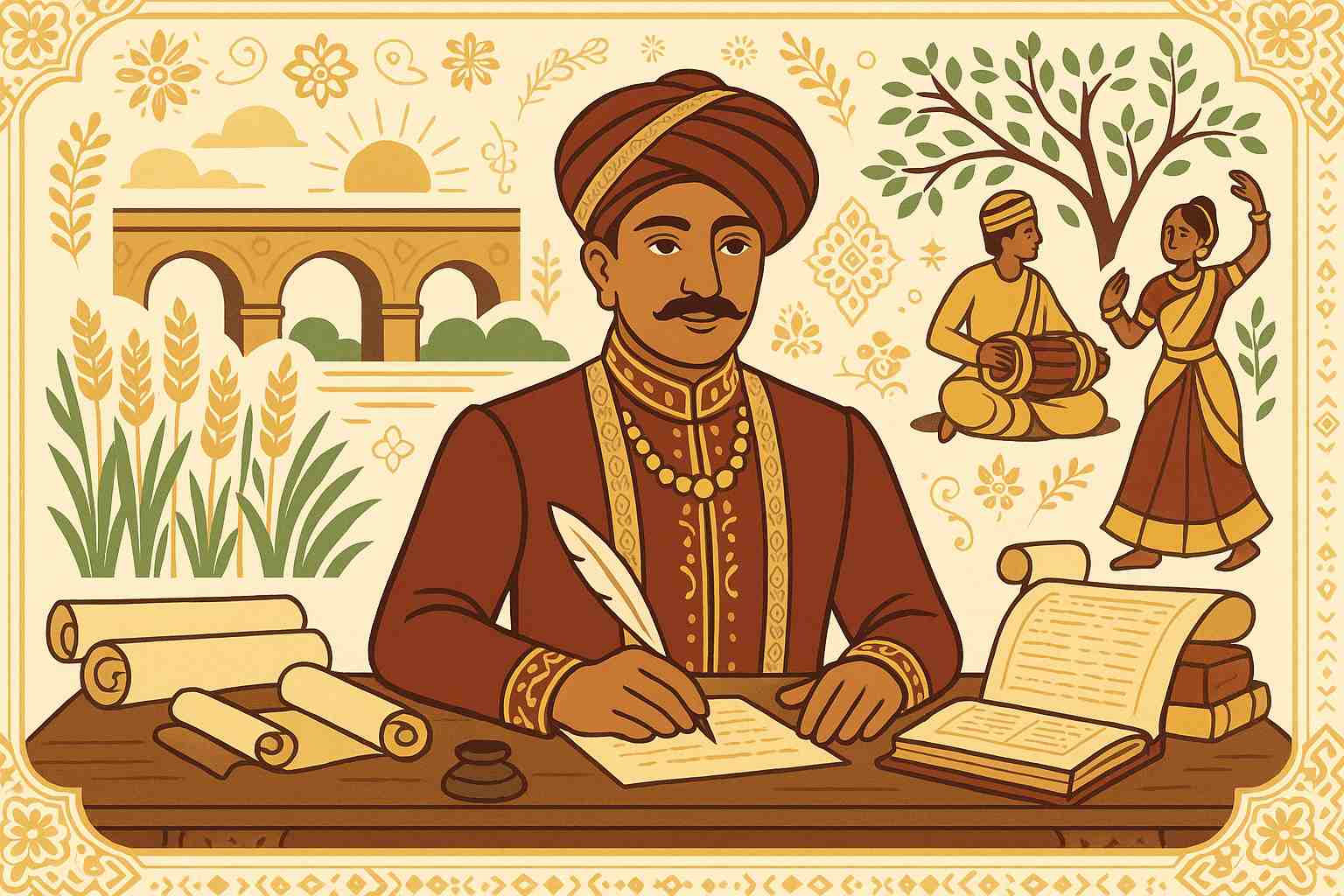
Purnaiah's Legacy Extends Beyond Dewan
History often remembers the kings and sultans, the grand battles and magnificent palaces. But behind every thriving kingdom, there is often a silent architect, a visionary whose wisdom and hard work lay the foundation for prosperity. In the rich tapestry of Mysore's history, one such towering figure is Dewan Purnaiah (1746 – 1812). His story is not just of an administrator; it is a tale of unwavering loyalty, brilliant statesmanship, and a legacy that was felt in every home and farm of the kingdom.
Serving under the formidable Hyder Ali, the legendary Tipu Sultan, and then guiding the nascent rule of Maharaja Krishnaraja Wodeyar III, Purnaiah was the steady hand that steered Mysore through some of its most turbulent times. Let’s journey back and understand the man whose contributions went far beyond his official title.
The Rise of a Genius: From Humble Roots to Royal Court
Purnaiah’s journey began not in a palace, but in a modest family. Yet, from a very young age, his sharp intellect shone brightly. His mastery over Kannada, Persian, and Marathi was not just about learning languages; it was about understanding different cultures and administrative systems. This knowledge became his key to entering the service of Hyder Ali and later, his son Tipu Sultan. It was his sheer merit, dedication, and an uncanny ability to solve complex problems that saw him rise through the ranks.
When the Fourth Anglo-Mysore War ended with Tipu Sultan's tragic death in 1799, Mysore was at a crossroads. The kingdom was in chaos, and the British had restored the Wodeyar dynasty to the throne. In this delicate and volatile situation, Purnaiah emerged as the voice of reason and stability. His diplomatic skills were instrumental in ensuring a smooth transition, protecting Mysore's interests while navigating the complex political landscape. He wasn't just an official; he was the guardian of Mysore's future.
More Than a Dewan: Crafting a Prosperous Kingdom
Purnaiah’s true genius lay in his vision for a self-sufficient and just Mysore. He wasn't just managing the state; he was rebuilding it from the ground up. His reforms were so profound that their impact is studied even today.
- A System of Fair Governance: Purnaiah knew that a kingdom's strength comes from its people's trust. He introduced a methodical system of administration by creating posts like Shekdars, Amaldars, and Tahshildars. This wasn't just paperwork; it was a revolution that brought order, ensured fair land surveys and tax collection, and made justice accessible to the common man.
- Water as a Lifeline: Understanding the importance of water for both life and livelihood, he initiated incredible public works projects. Imagine the joy of the people when a nine-mile-long canal was built to bring fresh drinking water to the city of Mysore! He also commissioned a sturdy stone bridge across the Kaveri, connecting Srirangapattana and Kirangur, which boosted trade and connected communities.
- Honouring Every Faith: In a beautiful display of inclusivity and respect for our culture, Purnaiah reinstated financial support to temples, *mathas* (monasteries), and even *dargahs*. He understood that a kingdom's soul lies in its spiritual heritage. This deep respect for preserving timeless traditions is something we cherish dearly at Bhaktilipi, where we strive to share stories that connect us to our roots.
A Legacy That Time Remembers
Purnaiah's legacy is not just written in history books; it was etched into the very land and life of Mysore. His administrative models laid the groundwork for modern governance in South India. The irrigation systems he built served generations of farmers. His belief in an inclusive society, where every tradition is respected, is a lesson for all time.
Sadly, after his passing in 1812, the kingdom struggled. The stability he had painstakingly built began to crumble under an inexperienced king and corrupt officials. This period of chaos only serves to highlight how indispensable Purnaiah was. He was the pillar that held the entire structure together.
Exploring the lives of such remarkable individuals helps us connect more deeply with our history and devotion. At Bhaktilipi.in, we bring you more such inspiring stories and insights into our vibrant cultural heritage. Discover articles, understand authentic rituals, and stay connected with your spiritual journey.
Learning More About the Great Dewan Purnaiah
Many people are curious about this legendary figure. Here are some answers to common questions that help paint a clearer picture of his impact.
Who exactly was Dewan Purnaiah?
Purnaiah was a brilliant Indian administrator, statesman, and military strategist who served as the first Dewan (Prime Minister) of the Kingdom of Mysore from 1782 to 1811. He was a key figure during the reigns of Hyder Ali, Tipu Sultan, and the Wodeyar dynasty, renowned for his wisdom and integrity.
What defines Purnaiah's enduring legacy?
His legacy is multifaceted. It goes far beyond his title as Dewan. He is remembered for creating a modern and efficient administrative system, undertaking massive public works like canals and bridges, ensuring financial stability, and promoting a culture of justice and inclusivity in Mysore.
How did Purnaiah's contributions shape Mysore's governance?
He revolutionized it completely. By introducing clear administrative roles and a methodical system for revenue collection, he replaced chaos with order. His focus on agricultural reforms and infrastructure development created a prosperous and self-reliant state, setting a high standard for governance.
Did Purnaiah really serve under the famous Tipu Sultan?
Yes, absolutely. Purnaiah was a trusted and high-ranking official under both Hyder Ali and his son, Tipu Sultan. After Tipu's fall, his adaptability and statesmanship allowed him to continue serving under the Wodeyars, always keeping the welfare of Mysore as his primary goal.
Why is Purnaiah remembered with such reverence today?
Purnaiah is celebrated because he was a visionary leader who guided Mysore through incredibly challenging times with unmatched skill and unwavering integrity. His ability to balance tradition with progress, and his selfless service to the people, have made him an inspirational figure in Indian history.
By remembering figures like Purnaiah, we don't just learn about the past; we find inspiration for the future. His life is a testament to the power of service, vision, and dedication.
To continue exploring the stories of India's rich heritage, subscribe to our newsletter and follow us on Facebook, Instagram, and YouTube for more insightful and soul-stirring content.
A passionate group of people dedicated to preserving India's knowledge of Dharma, Karma, and Bhakti for ourselves and the world 🙏.