
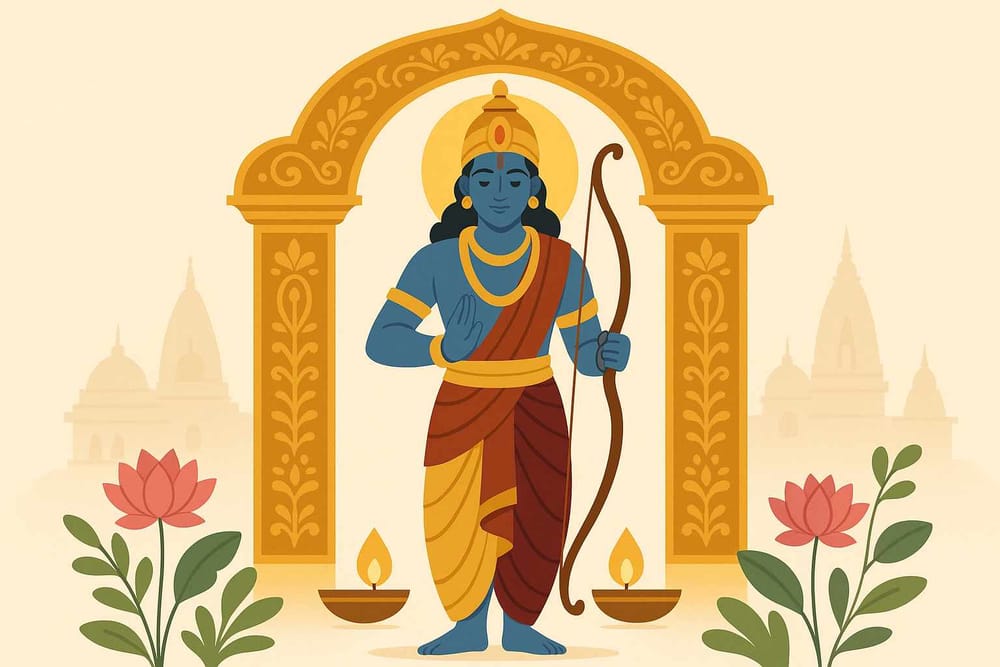
Saketa Rama - Story and Significance of Ayodhya's Lord
The name 'Ayodhya' itself stirs something deep within the soul, doesn't it? It’s a word that echoes with millennia of faith, the divine presence of Lord Rama, and the promise of righteousness. But long before it was known as Ayodhya, this sacred land was called Saketa. This ancient name holds a profound spiritual vibration, one that is eternally connected to its divine guardian – Saketa Rama.
Understanding Saketa Rama is like peeling back a beautiful layer of history to reveal the very heart of devotion that beats in Ayodhya. It takes us beyond the stories we know and connects us to the eternal abode of Shri Rama, a spiritual realm of pure bliss and dharma.
The Sacred Soil of Saketa: Ayodhya's Ancient Identity
In our most revered scriptures, from the Valmiki Ramayana to the Puranas, Ayodhya is often referred to as Saketa. It wasn’t just a city; it was the capital of the Kosala Kingdom, a buzzing centre of culture, spirituality, and learning. Under the noble King Dasharatha, it flourished as a kingdom where dharma was not just a rule, but the very air that people breathed.
Over time, the name evolved to Ayodhya, which beautifully means “a place that cannot be conquered by war.” This name is not just about physical strength, but about the unshakable moral and spiritual foundation laid by Lord Rama himself. The city became a symbol of a kingdom built on righteousness, a legacy that continues to draw millions of devotees to its sacred ground even today.
Saketa Nagara Natha: The Lord and Protector of His People
When we say Saketa Rama, we are affectionately calling him Saketa Nagara Natha – the beloved Lord of the city of Saketa. This title is filled with so much love and reverence. It signifies his role not just as a king, but as the divine protector, the ultimate guardian of his people and his kingdom.
His life, a perfect embodiment of dharma, compassion, and humility, set the ultimate example. The era of his rule, famously known as Rama Rajya, is still considered the gold standard of governance. It was a time of perfect justice, prosperity, and harmony, where every citizen felt safe, heard, and cared for. For devotees, Saketa Rama is more than a historical figure; He is a guiding light, showing us the path of righteousness and offering divine justice to all who seek it.
Living the Teachings of Saketa Rama in Our Lives
The name Saketa Rama carries a beautiful symbolism. It represents the divine presence that protects and guides us, and the deep wisdom that helps us navigate life's challenges. For a devotee, connecting with Saketa Rama is about inviting his qualities into our own lives—to live with truth, to act with compassion, and to carry ourselves with humility.
Simple acts of devotion help deepen this bond.
- Chanting His Divine Name: The simple act of chanting "Ram, Ram" or singing bhajans dedicated to him can quiet the mind and fill the heart with peace. It's a way of constantly remembering his presence and reaffirming his teachings in our daily lives.
- Reading the Ramayana: Immersing yourself in the verses of the Ramayana is not just reading a story; it's a spiritual practice. Each chapter offers timeless lessons on duty, relationships, and faith, bringing us closer to understanding the essence of Saketa Rama.
These practices remind us to strive for a virtuous life while seeking the grace and protection of our beloved Lord. For those looking to explore these timeless stories and rituals more deeply, Bhaktilipi offers a treasure trove of devotional literature. You can find authentic retellings and insights on our Bhaktilipi.in platform, designed to connect you with your spiritual roots.
Festivals and Worship: Celebrating the Lord of Ayodhya
The worship of Saketa Rama is a living, breathing tradition that fills the air in temples across India, especially in his birthplace, Ayodhya. The recent consecration of the Ram Mandir has once again made Ayodhya the spiritual heart for Hindus globally, a unifying symbol of unwavering faith.
Devotees express their love through beautiful pujas, melodious kirtans, and the heartfelt recitation of the Ramayana. Festivals connected to his life are celebrated with immense joy and devotion:
- Ram Navami: This festival marks the birth of Lord Rama. Ayodhya comes alive with celebrations, as devotees from all over the world gather to witness the divine festivities and seek his blessings on this auspicious day.
- Diwali: The festival of lights celebrates Lord Rama's triumphant return to Ayodhya after 14 years of exile. Every lit diya symbolizes the victory of good over evil and the joy of his homecoming, filling every heart with hope and happiness.
Embracing the Everlasting Grace of Saketa Rama
Saketa Rama, the cherished Lord of Ayodhya, is a symbol of the eternal bond between the divine and humanity. His life story inspires us to walk a path guided by strong values, unwavering faith, and deep humility. By understanding his significance as the protector of Saketa, we connect more deeply with our rich heritage and the timeless teachings of the Ramayana.
As we celebrate and worship him, let us remember that his grace is always with us, offering strength in our struggles and guidance on our path. Whether through a simple prayer from the heart, a family ritual, or quiet reflection, honouring Lord Rama allows us to embrace the virtues he represents and bring peace and harmony into our own lives and the world around us.
Your Questions on Saketa Rama Answered
What is the meaning behind the name 'Saketa Rama'?
The name Saketa Rama lovingly refers to Lord Rama as the presiding deity of Saketa, which is the ancient name for the holy city of Ayodhya. This name beautifully highlights his divine and inseparable connection to his birthplace and kingdom, and his role as the eternal upholder of dharma for all of humanity.
Why is Lord Rama sometimes called Saketa Nagar Natha?
Lord Rama is called Saketa Nagar Natha, which translates to the "Lord of Saketa City," because Ayodhya (anciently known as Saketa) was his janmabhoomi (birthplace) and his kingdom. This title is filled with affection and respect, acknowledging his righteous rule and profound spiritual significance over the city.
What is the spiritual significance of Saketa in our tradition?
Saketa, or Ayodhya, is considered one of the seven most sacred cities (Sapta Puri) in Hinduism. Its significance is deeply rooted in its connection to Lord Rama's life. It is not just a geographical location but is revered as Nitya-Ayodhya, the eternal spiritual abode of Bhagavan Shri Rama, making it a paramount pilgrimage site for devotees seeking spiritual liberation.
How is Saketa Rama worshipped in modern times?
Today, Saketa Rama is worshipped with great devotion in temples all over the world, with Ayodhya being the epicentre. Devotees perform daily pujas, recite verses from the Ramayana, sing bhajans, and celebrate festivals like Ram Navami and Diwali with great enthusiasm. The new Ram Mandir in Ayodhya has become a global symbol of this devotion.
What is the relationship between Saketa and the Ramayana?
Saketa, or Ayodhya, is the primary setting for the epic Ramayana. The entire narrative of Lord Rama’s life unfolds in this sacred city—from his divine birth and childhood to his coronation and establishment of Rama Rajya. The city is as central to the story as Lord Rama himself, making it eternally sacred to Hindus.
Why is Lord Rama's life story so important in Indian culture?
The story of Lord Rama, as beautifully depicted in the Ramayana, is the bedrock of Indian culture and values. It teaches timeless lessons about dharma (duty), devotion, righteousness, and ideal relationships. As Saketa Rama, his life inspires millions to lead a life of virtue, integrity, and unwavering faith in the divine.
A passionate group of people dedicated to preserving India's knowledge of Dharma, Karma, and Bhakti for ourselves and the world 🙏.