
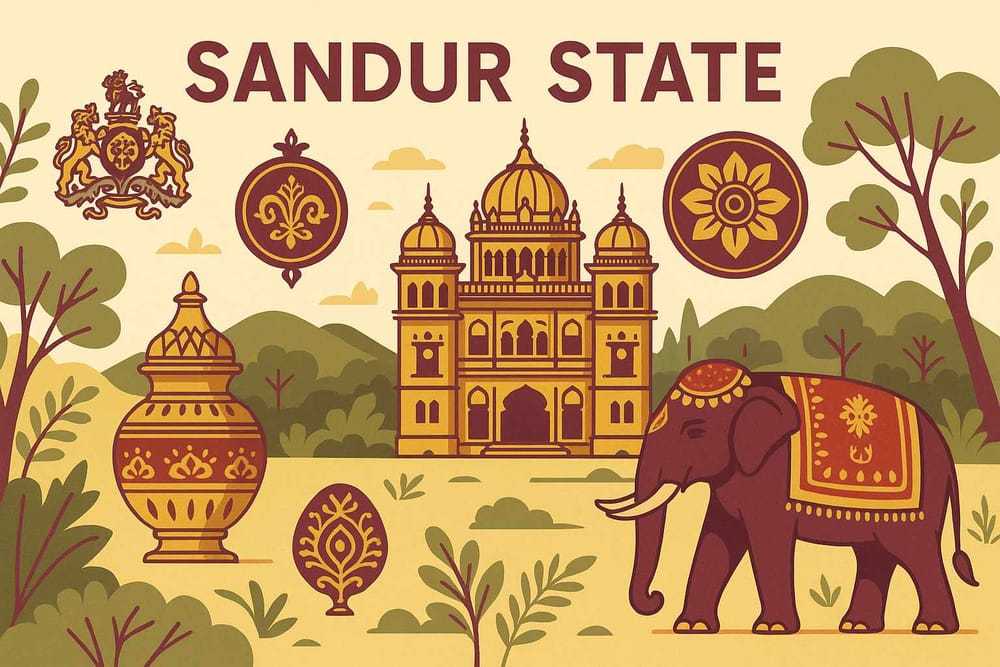
Sandur State Historical Significance- A Deep Dive
In the heart of Karnataka, nestled amidst hills brimming with ancient secrets and rich earth, lies a story not many know. It's the tale of a kingdom, a princely state that carved its own destiny with courage, wisdom, and a deep love for its people. This is the story of Sandur State, a place where Maratha heritage blossomed on Kannada soil, leaving behind a legacy that continues to inspire us. Let’s take a walk back in time, not just to read history, but to feel the heartbeat of this remarkable kingdom.
The Rise of the Ghorpades: A Maratha Stronghold in the South
Our journey begins in the 18th century, a time of great change across India. It was then that the valiant Ghorpade dynasty, hailing from Maratha lineage, laid the foundation of Sandur State. Imagine the courage it took to establish a kingdom and nurture it. The Ghorpades weren't just warriors; they were visionary rulers. They governed with a unique blend of traditional Indian values and forward-thinking policies, creating a haven of stability and progress. Their rule was more than just governance; it was a commitment to the land and its people.
A Reign of Progress and Compassion
What truly sets the Ghorpade rulers apart was their focus on the well-being of their subjects. They weren't distant kings sitting in palaces; they were architects of a thriving society. They introduced reforms that touched every life:
- Nurturing the Land and Its People: The rulers invested heavily in agriculture, understanding that a full granary meant happy homes. They improved irrigation systems, ensuring that the fields were always green and bountiful, securing the livelihood of countless families.
- Pioneers of Social Harmony: In an era when society was often divided, the rulers of Sandur were remarkably progressive. They challenged untouchability by opening the doors of temples and schools to all castes, a bold step that promoted unity and social equality. This wasn't just a policy; it was a profound statement of humanity.
- Patrons of Art and Culture: The Ghorpades had a deep appreciation for the arts. Under their patronage, traditional crafts, music, and literature flourished. They created an environment where artists were respected and their talents celebrated, helping preserve the unique cultural identity of Sandur for generations to come. The magnificent Shivavilas Palace stands today as a glorious reminder of their architectural taste and love for beauty.
A Land Blessed by Nature and Strategy
Sandur's geography was both a blessing and a strategic advantage. Tucked away in the mineral-rich hills of the Bellary district, the state was a treasure trove of iron ore and manganese. This natural wealth was not just a source of economic prosperity; it made Sandur a key player in the region. Its strategic location meant that it was important during regional conflicts and negotiations, especially during the British Raj. While navigating the complex political landscape of colonial India, the Ghorpade rulers managed to maintain their state's autonomy through skilled diplomacy, proving that true strength lies in wisdom, not just in might.
Embracing a New Dawn: The Merger with India
When India stood at the threshold of independence in 1947, the princely states faced a monumental decision. Raja Yeshwantrao Ghorpade, in a moment of great patriotism, chose to merge Sandur with the newly-formed nation. On August 10, 1947, he signed the Instrument of Accession, and Sandur peacefully became a part of the Indian Union. This seamless transition marked the end of an era but also the beginning of a new chapter, where Sandur's legacy would become a part of India's larger story.
Why Sandur’s Story Matters Today
The tale of Sandur is more than just a chapter in a history book. It's a living example of good governance, social reform, and cultural preservation. It teaches us how a small kingdom can make a big impact through progressive thinking and a commitment to its people. Exploring Sandur's timeless journey helps us understand the diverse tapestry of India's past, where hundreds of such states contributed to the idea of India we know today. We can see its heritage in the ancient temples and monuments that still stand, each one whispering stories of a bygone era.
Understanding the legacy and cultural impact of Sandur State gives us a deeper appreciation for the complexities and richness of our own history. It reminds us that our roots are deep, nourished by countless stories of courage, art, and tradition.
Keeping Our Heritage Alive
Stories like that of Sandur are precious threads in the fabric of our culture. They connect us to our past and inspire our future. At Bhaktilipi, we believe in preserving these timeless tales and devotional traditions. Our digital space is a tribute to the rich bhakti literature and historical gems that shape our identity.
We invite you to explore more such inspiring stories with us. Discover the wisdom of the ages, reimagined for today's world. Let's learn, reflect, and grow together on our spiritual journey.
Stay connected with our community and be a part of this beautiful mission to preserve devotion for generations to come.
- Follow us on Facebook
- Join our family on Instagram
- Subscribe to our YouTube channel for inspiring videos
A passionate group of people dedicated to preserving India's knowledge of Dharma, Karma, and Bhakti for ourselves and the world 🙏.
Comments
Related in
Unveiling the Legacy of Sandur State: History and Culture
In the grand tapestry of India's history, woven with tales of mighty empires and legendary kings, some threads shine with a quiet brilliance all their own. The story of Sandur is one such thread. Tucked away in the mineral-rich hills of Karnataka's Bellary district, this princely
Sandur State History: Culture Blooms in Karnataka
Some places in our country are like hidden treasure chests, holding stories of courage, art, and a way of life that continues to whisper to us through the ages. Tucked away in the green hills of Karnataka’s Bellary district is one such gem – the former princely state of Sandur.
Exploring the Legacy of Sandur State- A Historical Perspective
In the heart of Karnataka's Ballari district, cradled by ancient, iron-rich hills, lies a story that echoes through time. It's not just a tale of a kingdom, but of a legacy that breathes even today. This is the story of Sandur, a princely state where a