
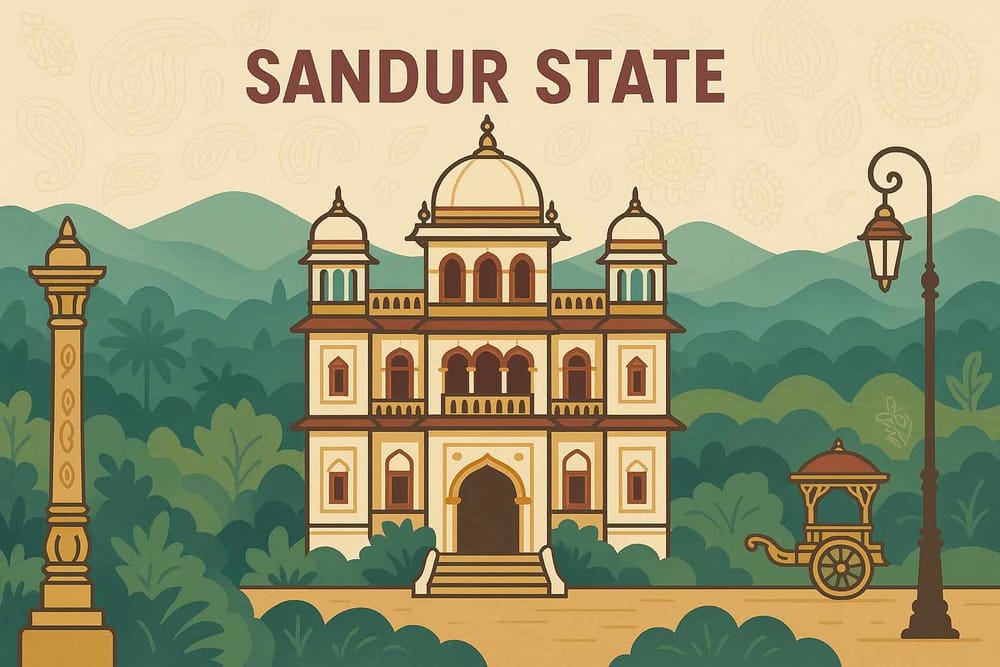
Sandur State's Historical Significance: An Exploration
Some stories are not just written in books; they are etched into the very soil of the land, whispered by the winds that sweep through its hills. Deep in the mineral-rich Ballari district of Karnataka lies one such tale—the story of Sandur State. It's more than just a forgotten princely state; it's a living testament to how a small kingdom, cradled by nature's fortress, could champion progress while holding its traditions close to its heart. For many of us who find solace in our heritage, the story of Sandur feels like discovering a hidden gem from our own family's past.
The Ghorpades of Sandur: Forging a Legacy Amidst Turmoil
The journey of Sandur began in 1713, when Sidhojirao of the Maratha Ghorpade family laid its foundation. Imagine the courage it took! The Sandur hills weren't just beautiful; they were a natural fortress, a strategic advantage that helped this fledgling state survive in turbulent times. Its history wasn't a straight line. Power shifted like the seasons; it was briefly part of the mighty Mysore Kingdom and even saw a short spell under Maratha dominions.
However, true resilience is about finding stability in chaos. On July 1, 1818, Sandur became a British protectorate. This wasn't a surrender but a strategic move that gave the state the peace it needed to flourish from within, to focus on its people and its future, shielded from the constant storms of the era. This crucial phase is a deep dive into Sandur State's historical significance and its timeless journey.
A Kingdom with a Conscience: Governance that Touched Lives
What truly sets the Ghorpade rulers apart was their vision. They weren't just rulers; they were nation-builders who understood that progress without compassion is hollow. Their administration was a beautiful blend of respecting age-old traditions and embracing forward-thinking reforms that touched every life.
- Uplifting the Community: In an era where social hierarchies were rigid, the Ghorpade rulers implemented incredibly progressive policies. They opened temple doors to all castes, a revolutionary act of social harmony that showed their deep respect for every individual.
- Nurturing Minds for the Future: They believed that education was the key to a brighter tomorrow. Schools and cultural institutions were established that welcomed everyone, ensuring that knowledge wasn't a privilege for a few but a right for all.
- Caring for the Land and its People: The dynasty wasn't just focused on social reforms. They introduced agricultural improvements and better land tenure systems, ensuring that the farmers who fed the state could live with dignity and security.
The Soul of Sandur: A Tapestry of Art and Culture
The cultural heartbeat of Sandur is a vibrant fusion of Maratha and Kannada influences. The royal family didn't just rule; they nurtured art and creativity, ensuring that the state's soul was as rich as its iron-ore mines. This patronage left behind a legacy that we can still touch and feel today.
The world-famous Lambani embroidery, with its intricate stitches and tiny mirrors, flourished under royal encouragement, becoming a symbol of Sandur's artistic spirit. The region is also dotted with beautiful temples and architectural marvels, each telling a story of faith and craftsmanship. The magnificent Shivavilas Palace, completed in 1940, stands as a grand reminder of their refined taste and is now a heritage hotel where you can still feel the echoes of that royal era.
Preserving such cultural treasures is at the heart of what we do at Bhaktilipi. We believe that every story, every piece of art, is a thread in the grand fabric of our heritage. If you feel a connection to preserving these timeless traditions, we invite you to explore the devotional stories and literature on Bhaktilipi.in, where we are dedicated to keeping these legacies alive for future generations.
A New Dawn: Sandur's Journey with Independent India
When the winds of freedom swept across India, Sandur embraced the change with grace. On August 10, 1947, Raja Yeshwantrao Ghorpade signed the instrument of accession, merging Sandur's destiny with that of the newly independent India. The state first merged with the Madras Presidency and later, in 1953, became a part of the Bellary District in what we now know as Karnataka.
But the Ghorpade family's commitment to their people didn't end with their royal titles. The spirit of service continued, with Raja Yeshwantrao's son, M.Y. Ghorpade, serving the nation as a state Minister and Member of Parliament. It's a powerful reminder that true leadership is about service, not just power.
Exploring the Legacy of Sandur: Your Questions Answered
Many of us are curious about these lesser-known chapters of our history. Let’s explore some of the things you might be wondering about this remarkable state.
What truly defines the historical significance of Sandur State?
Sandur's significance lies in its incredible ability to balance tradition with modernity. It was a princely state that maintained its unique cultural identity and internal autonomy while navigating complex relationships with the Marathas, Mysore, and eventually the British. Its real importance comes from its progressive leadership, which focused on social welfare and education, making it a model state of its time.
How did the Ghorpade dynasty shape Sandur?
The Ghorpade dynasty was the heart and soul of Sandur. They weren't just rulers; they were patrons of art, champions of social justice, and pioneers of modern education. Their legacy is not just in the palaces they built, but in the inclusive society they fostered and the cultural traditions, like Lambani embroidery, that they helped preserve.
What makes Sandur so culturally important to Karnataka?
Sandur is a cultural crucible where Maratha and Kannada traditions met and created something beautiful and unique. Its festivals, art forms, and architectural heritage are an integral part of Karnataka's rich history. It serves as a beautiful example of the state's ability to absorb diverse influences and weave them into its own cultural identity. For a deeper look into this, exploring Sandur's history and legacy can be very insightful.
How did Sandur transition after Indian independence?
The transition was peaceful and dignified. By joining the Indian Union, Sandur integrated its people, administration, and culture into the larger dream of a modern India. The continued public service of the royal family after independence showed that their commitment was to the welfare of the people, a value that transcends any political change.
About Bhaktilipi: Connecting with Our Roots
At Bhaktilipi, we are passionate about stories like that of Sandur State. Our platform is a dedicated space for preserving and sharing the timeless devotional literature and cultural tales from every corner of India. We collect, digitize, and reimagine these works so they can inspire and connect with us today, in a way that feels authentic and respectful. By exploring our collections, you can reconnect with the wisdom of our traditions and the spirit of bhakti that has guided generations.
Stay connected with our journey and discover more inspiring stories:
- Facebook: BhaktilipiOfficial
- Instagram: bhakti_lipi
- YouTube: Bhaktilipi Channel
Honoring the Enduring Spirit of Sandur
The story of Sandur State is a powerful reminder that history is not just about dates and battles; it’s about people, vision, and values. It teaches us about leadership with a conscience, the beauty of cultural harmony, and the importance of community welfare. By remembering and sharing the legacy of Sandur, we honor the spirit of those who built a kingdom that was small in size but vast in its ideals.
A passionate group of people dedicated to preserving India's knowledge of Dharma, Karma, and Bhakti for ourselves and the world 🙏.
Comments
Related in
Unveiling the Legacy of Sandur State: History and Culture
In the grand tapestry of India's history, woven with tales of mighty empires and legendary kings, some threads shine with a quiet brilliance all their own. The story of Sandur is one such thread. Tucked away in the mineral-rich hills of Karnataka's Bellary district, this princely
Sandur State History: Culture Blooms in Karnataka
Some places in our country are like hidden treasure chests, holding stories of courage, art, and a way of life that continues to whisper to us through the ages. Tucked away in the green hills of Karnataka’s Bellary district is one such gem – the former princely state of Sandur.
Exploring the Legacy of Sandur State- A Historical Perspective
In the heart of Karnataka's Ballari district, cradled by ancient, iron-rich hills, lies a story that echoes through time. It's not just a tale of a kingdom, but of a legacy that breathes even today. This is the story of Sandur, a princely state where a