
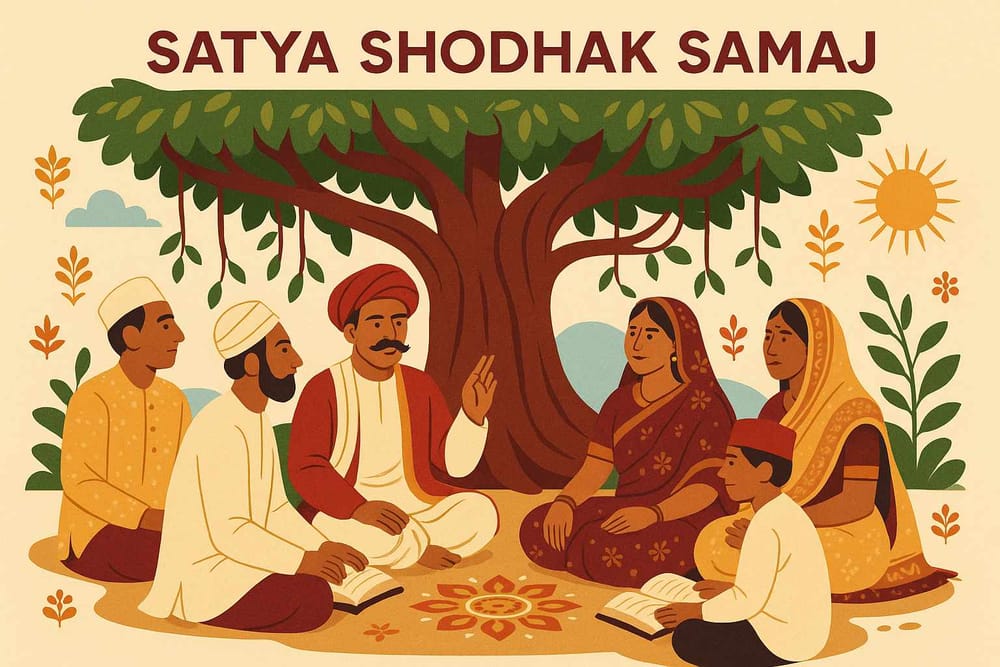
Satya Shodhak Samaj- History and Perspective
Sometimes, a single idea, born from a deep sense of justice, can change the course of history. It can shake the very foundations of a society built on age-old customs and hierarchies. In 19th-century India, this idea took the form of the Satya Shodhak Samaj, or the "Truth-Seekers' Society." This wasn't just an organization; it was a powerful movement, a heartfelt cry for dignity, and a promise of a more equal tomorrow for millions who had been silenced for centuries.
Let's take a journey back in time to understand this incredible chapter of our history, a story of courage, reform, and the unwavering pursuit of truth.
The Spark of a Revolution: Jyotirao Phule's Vision
Every great movement begins with a person who feels the pain of others as their own. For the Satya Shodhak Samaj, that person was Jyotirao Phule. Born in Maharashtra, Phule experienced the harsh realities of the caste system firsthand. He saw how it stripped people of their basic human dignity and denied them opportunities for growth. But instead of accepting this as fate, he decided to challenge it.
On September 24, 1873, in Pune, Jyotirao Phule founded the Satya Shodhak Samaj. His vision was simple yet revolutionary: to create a society free from the oppressive clutches of Brahmanical dominance and to liberate the Shudras and Ati-Shudras (Dalits) from social and economic bondage. He believed that the path to liberation was through education and rational thinking, tools that could empower people to break free from centuries of mental and social conditioning.
Savitribai Phule: The Mother of Indian Feminism and Education
No story about this movement is complete without honouring Savitribai Phule, Jyotirao's wife and partner in revolution. While Jyotirao laid the ideological groundwork, Savitribai was the force on the ground, making his vision a reality. She became one of India's first female teachers, bravely opening schools for girls and children from lower castes at a time when this was considered unthinkable.
Her efforts were monumental. She faced insults and attacks but never wavered in her mission. Her work in educating women was a groundbreaking step towards their empowerment, creating a legacy that resonates even today in movements that champion women's voices, much like the Sadou Asom Lekhika Samaroh Samiti does for women writers. Together, the Phules showed the world that true social reform begins with empowering both men and women.
Core Ideals: Building a Society on Truth and Equality
The Satya Shodhak Samaj wasn't just about protest; it was about building a new, better way of life. It operated on a few powerful principles that challenged the status quo directly.
- Education as Liberation: The Samaj's biggest weapon against inequality was knowledge. Phule firmly believed that education was the key to self-respect. They established numerous schools, especially for girls and Dalits, giving them access to a world that had been cruelly kept from them. It was about teaching people not just to read and write, but to think for themselves.
- Rejecting Empty Rituals for Meaningful Practices: The movement rejected the need for priests as intermediaries between people and God. They introduced Satyashodhak marriages, simple ceremonies conducted without a Brahmin priest, based on mutual respect and equality. This was a radical act of self-empowerment, proving that sacredness lies in sincerity, not in hierarchy.
- Championing Rational Thought: Phule urged people to move away from superstitions and blind faith that were used to exploit them. The Samaj promoted scientific reasoning and rational thinking, encouraging its members to question oppressive traditions and embrace a more logical and moral approach to life and religion.
The Lasting Legacy: How the Truth-Seekers' Society Shaped Modern India
Though the Satya Shodhak Samaj formally disbanded in the 1930s, its spirit is very much alive. Its impact echoes through the corridors of Indian history and society today. The movement awakened a sense of self-respect and identity among the oppressed classes that had never been felt before. It planted the seeds for future social justice movements, including the powerful Ambedkarite and Dalit movements.
The ideals of the Samaj—equality, social justice, and education for all—are enshrined in the very Constitution of India. Its legacy reminds us that true devotion isn't just about rituals; it's about seeing the divine in every human being and working to uphold their dignity.
Understanding movements like the Satya Shodhak Samaj helps us connect with the deeper roots of our own culture and the struggles that have shaped our nation. At Bhaktilipi, we believe that exploring these stories of reform and justice is a form of bhakti in itself—a devotion to the progress and well-being of all. It’s about appreciating the rich and diverse history that places like Mehsana and countless other towns across India hold within them.
About Us
Bhaktilipi is your digital path to Bhakti and beyond. We preserve and share timeless devotional literature from various regions and languages. Whether you're starting your spiritual journey, exploring sacred writings, or seeking peace in devotional stories, Bhaktilipi is here for you. Read, reflect, and connect with devotion on Bhaktilipi.in.
Why Explore This Story on Bhaktilipi?
Our platform offers deep insights into movements like the Satya Shodhak Samaj and their role in our social fabric. By understanding them, you deepen your knowledge of India's spiritual and cultural heritage. Bhaktilipi makes it easy to access authentic information that inspires reflection and connection.
Stay Connected
For more devotional content, historical insights, and inspiring stories:
- Follow us on Facebook: BhaktilipiOfficial
- Join us on Instagram: bhakti_lipi
- Subscribe to our YouTube channel: Bhaktilipi
Start your journey with Bhaktilipi today!
Frequently Asked Questions on the Satya Shodhak Samaj
The core mission of the Satya Shodhak Samaj
At its heart, the Satya Shodhak Samaj was a social reform movement founded by Jyotirao Phule in 1873. Its primary goal was to achieve social and religious equality for the marginalized sections of society, particularly the Shudras and Dalits, by fighting against the oppressive caste system.
The key objectives that drove the movement
The main goals were multifaceted but united by a single vision of an egalitarian society. This included abolishing caste-based discrimination, promoting education for all (especially women and lower castes), empowering the oppressed, and encouraging rational thought over blind superstition.
The impact this truth-seeking society had on India
The impact was profound and long-lasting. It ignited a powerful wave of social awakening, instilling self-respect and confidence among the downtrodden. By championing education and questioning unjust traditions, it laid the groundwork for future social reformers and significantly influenced the principles of equality that shaped modern India.
The role of key figures in the Samaj
While Jyotirao Phule was the visionary founder, his wife, Savitribai Phule, was the movement's soul in action. Her tireless work in establishing schools for girls made her a pioneer of women's education in India. Many other individuals from oppressed communities also became leaders, carrying the torch of reform across Maharashtra and beyond.
The relevance of the Satya Shodhak Samaj today
The fight for social equality is far from over. Issues of caste discrimination and gender inequality still persist in our society. The principles of the Satya Shodhak Samaj—education, rationality, and human dignity—are more relevant than ever, serving as a powerful reminder of the work that still needs to be done to build a truly just society.
A passionate group of people dedicated to preserving India's knowledge of Dharma, Karma, and Bhakti for ourselves and the world 🙏.
Comments
Related in
Satya Shodhak Samaj's Historical Impact: An Exploration
In our Indian culture, the word 'Satya' or 'Truth' holds a sacred place. We are taught that it is the ultimate virtue. But what happens when the truth of human equality gets buried under centuries of oppressive traditions? In the 19th century, one man, along with