
Shah Rukn-e-Alam's Tomb: Explore its Mystique
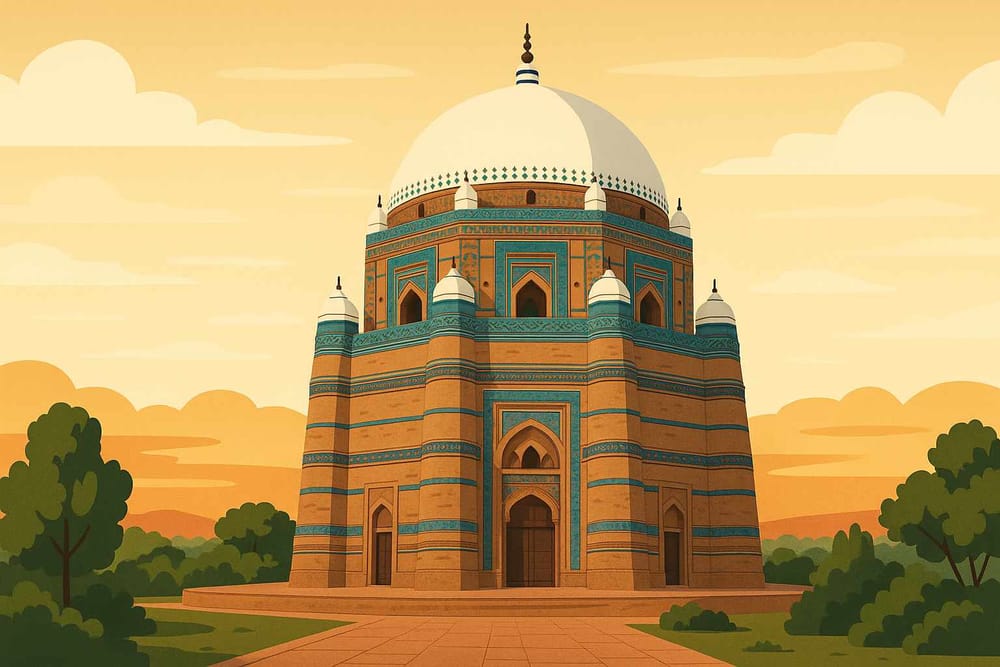
Some places aren't just made of brick and mortar; they are built from stories, faith, and centuries of devotion. When you hear about Multan, often called the "City of Saints," one image immediately comes to mind—a magnificent, three-tiered structure crowned with a grand white dome, standing tall against the sky. This is the Tomb of Shah Rukn-e-Alam, a place that feels less like a monument and more like a living, breathing testament to our subcontinent's rich spiritual heritage.
A Journey Back in Time: The Story Behind the Shrine
The story of this tomb is as fascinating as its architecture. It was built between 1320 and 1324 CE, a time of great change. The man who commissioned it was Ghiyath al-Din Tughluq, who was then the governor of Dipalpur. It’s believed he originally intended this grand mausoleum for himself, a final resting place befitting his stature. But destiny, as it often does, had other plans. When he became the Sultan of Delhi, this architectural marvel was gifted by his successor, Muhammad bin Tughluq, to the family of the revered Sufi saint, Shah Rukn-e-Alam.
The saint's remains were moved here in 1330 from his grandfather's shrine, and ever since, this place has been a beacon of hope and peace. Interestingly, this tomb is considered one of the earliest and most spectacular examples of Tughluq architecture, even predating similar monuments in Delhi. It truly is a piece of history that has stood watch over Multan for nearly 700 years.
An Architectural Masterpiece Whispering Tales of Faith
To see the tomb is to be completely mesmerised. It’s not just a building; it’s a symphony of design and devotion. Standing at a majestic height of 35 meters, it’s built in three distinct tiers, a design that was groundbreaking for its time.
- A Foundation of Strength and Harmony: The base is a solid octagon, with a diameter of 15 meters and walls that are an incredible 4 meters thick. Each of its eight corners is supported by sloping buttresses, a feature borrowed from military architecture, giving it an air of unshakable strength. This octagonal shape, a key element in Islamic geometry, represents balance and cosmic harmony—principles central to Sufi thought.
- A Canvas of Brick and Tile: The exterior is a breathtaking sight. It is constructed from deep red bricks, polished to a fine finish, and beautifully contrasted with a framework of dark shisham wood beams. But the real magic lies in the intricate tile-work. Panels of dark blue, azure, and white tiles, known as kashi-kari, are arranged in stunning floral, arabesque, and geometric patterns. This vivid splash of colour against the earthy red brick is simply unforgettable.
- The Crown Jewel—The Dome: Sitting atop the structure is a massive white dome, 15 meters in diameter, which seems to float above the city. It is decorated with delicate blue tile patterns along its base, like a necklace of sapphires. Inside, the tomb chamber is just as awe-inspiring, with a beautifully decorated mihrab on the western wall pointing towards Mecca.
This magnificent structure is not just a showcase of architectural genius but also a beautiful fusion of Central Asian influences and local Multani craftsmanship, a style that has become iconic. You can explore the magnificence of Shah Rukn-e-Alam's tomb in more detail to truly appreciate its artistic nuances.
The Heartbeat of Multan: Its Spiritual and Cultural Soul
More than its history or its architecture, the tomb is the spiritual epicentre of Multan. For centuries, it has drawn devotees from all walks of life. The air here feels different—charged with prayers, filled with peace. Each year, over 100,000 pilgrims gather for the annual Urs festival to honour the saint, filling the space with chants and rituals that echo Sufi traditions of love and unity.
Visitors often speak of a profound sense of calm and connection they feel here. Shah Rukn-e-Alam's grave is surrounded by 72 graves of his descendants and followers, a silent community resting in eternal peace. For those interested in exploring the legacy of Shah Rukn-e-Alam from a historical perspective, understanding its spiritual pull is key to understanding its enduring importance.
Answering Your Curiosities About This Sacred Place
Many who hear of this marvel wonder, who exactly was the great saint resting here? Shah Rukn-e-Alam, whose name means 'Pillar of the World', was a revered Sufi saint of the Suhrawardiyya order. He was the grandson of the famous Sufi saint Bahauddin Zakariya and was known for his teachings of love, peace, and spiritual harmony that touched countless lives.
People also ask, what makes this tomb so special? Its significance is threefold. Spiritually, it's a major pilgrimage site that embodies the heart of Sufi tradition. Historically, it is a landmark of the Tughlaq era. Architecturally, it is a masterpiece that has inspired countless other structures across the subcontinent. Its blend of military-style strength with delicate artistic details makes it a truly unique monument.
If you plan to visit, remember that it is a place of deep reverence. While visitors are welcome to explore its stunning beauty, it's important to do so with respect for the local customs and the sanctity of the shrine. It is this atmosphere of devotion that adds another layer to its profound beauty.
Embracing the Legacy with a Deeper Connection
The Tomb of Shah Rukn-e-Alam is more than a destination; it's an experience that stays with you long after you've left. It’s a reminder of a time when art and faith were inseparable, creating legacies that transcend borders and generations. It stands as a cherished symbol of Multan's identity and our shared cultural treasure.
At Bhaktilipi, we believe in bringing you closer to such timeless stories and devotional traditions. We strive to be your digital space where you can explore the rich history and spiritual significance of our heritage, all with the convenience of today's world. Our platform is here to provide you with authentic knowledge and inspiration on your spiritual journey.
Stay connected with us for more such soul-stirring content! Subscribe to our YouTube channel for beautiful videos, follow us on Facebook and Instagram for daily inspiration, and join our newsletter to continue this beautiful journey of learning and discovery.
A passionate group of people dedicated to preserving India's knowledge of Dharma, Karma, and Bhakti for ourselves and the world 🙏.
Comments
Related in
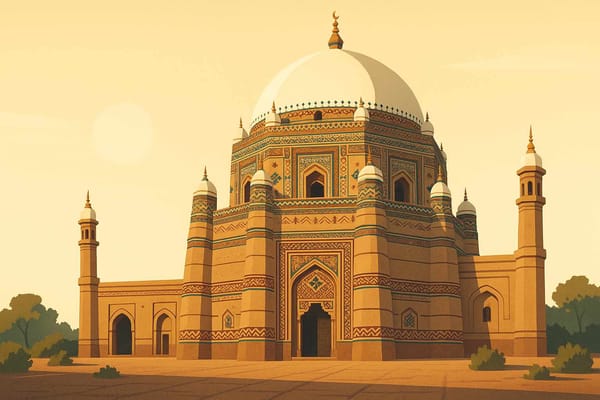
Mystical Architecture: Shah Rukn-e-Alam Tomb Explored
Some places don't just exist in brick and mortar; they breathe with the prayers of centuries. Standing in Multan, the ancient 'City of Saints', you feel this in the very air. My heart felt a pull towards one particular monument that rises against the sky like
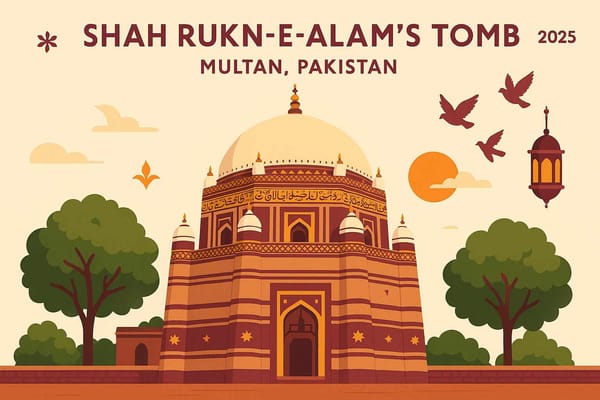
Explore the Mystical Charm of Shah Rukn-e-Alam's Tomb: A 2025 Guide
Some places aren't just destinations on a map; they are feelings, they are echoes of history, and they are deep, silent prayers. Imagine standing under the vast Multan sky, your eyes fixed on a magnificent dome of brilliant blue and turquoise. This isn't just a building;
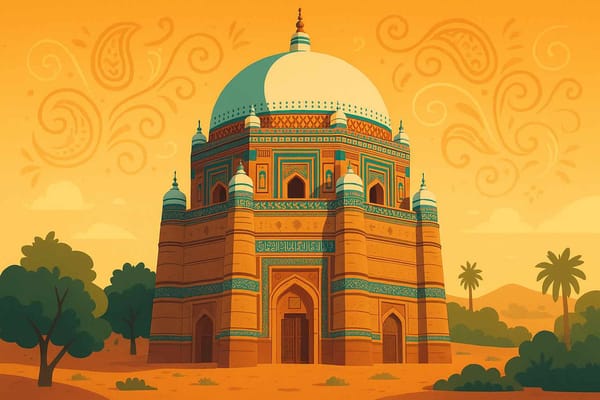
Multan's Mystique: Shah Rukn-e-Alam's Tomb Explained
There are some places that you don't just see; you feel them in your soul. The moment you witness the grand mausoleum of Shah Rukn-e-Alam rising against the Multan sky, you understand. It's not just bricks and mortar; it’s a living testament to faith, a