
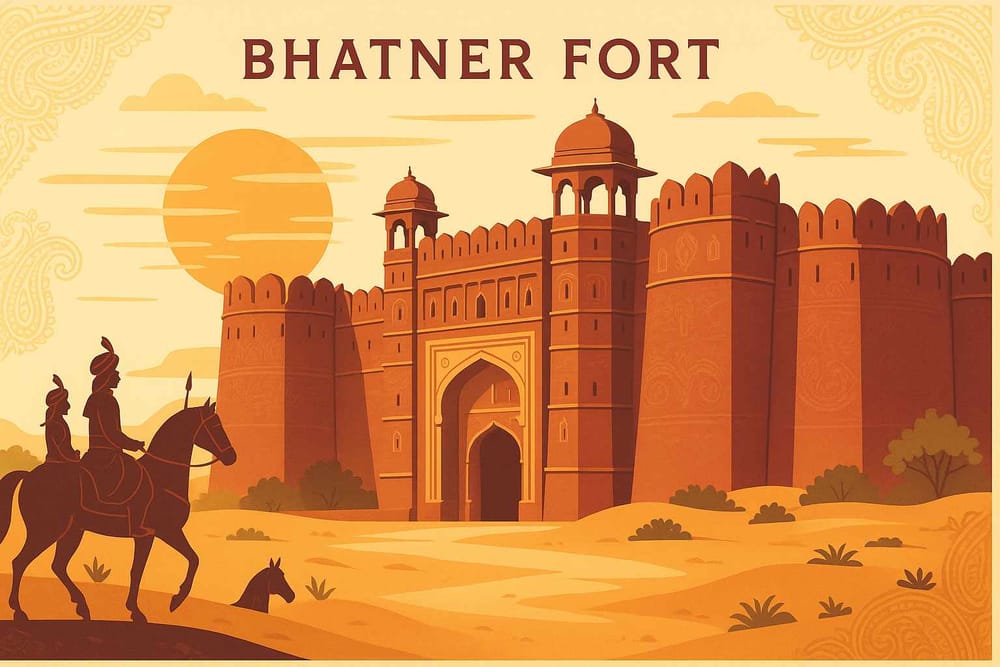
The Ancient Sentinels: Bhatner Fort-History and Builders
In the heart of Hanumangarh, where the Ghaggar River whispers ancient secrets, stands a fortress that has defied time itself. The Bhatner Fort isn't just a structure of bricks and mortar; it's a living chronicle of India's glorious past, a silent witness to over 1700 years of courage, conquests, and culture. Standing here feels like stepping into a storybook, where every bastion and every corridor has a tale to tell.
This magnificent citadel, considered one of India's oldest, is more than just a historical monument. It's a symbol of resilience, a testament to the visionaries who built it, and a treasure trove of stories waiting to be discovered. Let's journey back in time and uncover the layers of history that make Bhatner Fort a true jewel of Rajasthan.
A Journey Through Time: The Rich History of Bhatner Fort
The story of Bhatner Fort is woven into the very fabric of Indian history, a timeline marked by mighty empires and legendary rulers.
- The Dawn of a Legacy: The foundation of this grand fort was laid around 285 AD by King Bhupat of the Bhati Dynasty. He envisioned a safe haven for his people, a fortress that would stand strong against the shifting sands of time. He named it Bhatner, meaning "fortress of the Bhati," forever etching his lineage into its walls.
- A Sentinel on the Silk Route: Its strategic position on the ancient Multan-Delhi route made Bhatner a crucial outpost. For centuries, it guarded against invasions from Central Asia and protected the caravans that fueled the region's prosperity. Even the great conqueror Timur, in his autobiography 'Tuzuk-e-Timuri,' praised it as one of the strongest and most secure forts in all of Hindustan.
- Echoes of Empires: The fort has seen the rise and fall of many dynasties. From the Ghaznavids to the Mughals, many sought to control this strategic prize. In the 13th century, Sher Shah Suri undertook significant repairs, strengthening its defenses. Later, under Emperor Akbar, the fort was seamlessly integrated into the Mughal administration, adding new layers to its architectural and strategic character.
- A Divine Renaming: In 1805, a new chapter began when Maharaja Soorat Singh of Bikaner captured the fort from the Bhati rulers. The victory took place on a Tuesday, a day considered sacred to Lord Hanuman. In a beautiful gesture of faith, the Maharaja renamed the fort Hanumangarh, and the name has graced the city ever since.
The Visionaries Who Shaped the Fortress
Bhatner Fort is not the work of a single hand but the collective vision of generations of rulers who fortified and embellished it.
- The Founder, King Bhupat: It all began with the Bhati king's dream of creating an impregnable stronghold. His initial design, a formidable parallelogram-shaped structure covering 52 bighas and built entirely of bricks, laid the foundation for its enduring strength.
- Successive Rulers and Their Mark: Over the centuries, rulers from the Johiyas, Chayals, Rathores, and Mughals added their own touches. They expanded its walls, strengthened its bastions, and adapted its design to meet the changing needs of warfare and administration, creating a fascinating blend of architectural styles. The history of such places, shaped by various dynasties, reflects the rich and complex heritage of regions like the Mayurbhanj State, where culture evolved with each new era.
An Architectural Masterpiece Forged in the Desert
The architecture of Bhatner Fort is a masterclass in military engineering and artistic finesse, showcasing a beautiful fusion of Rajput and Mughal styles.
- Built to Last: The fort's walls, crafted from sturdy bricks and lime mortar, have withstood centuries of harsh desert weather and numerous sieges. Its fifty-two massive bastions stand like stoic guardians, each a testament to the builders' skill.
- A Fortress of Stories: Within its protective embrace, the fort houses temples, palaces, and intricate water reservoirs designed for self-sufficiency. The walls are adorned with beautiful carvings and inscriptions, offering glimpses into the lives and beliefs of the people who once called this fortress home. Each detail tells a story of devotion, power, and everyday life.
The ingenuity of its builders is evident in every corner, reminding us of the incredible feats of engineering achieved by our ancestors, much like the awe-inspiring mysteries hidden within the Daulatabad Fort.
About Bhaktilipi
At Bhaktilipi, we believe that stories like that of Bhatner Fort are the soul of our culture. We are a digital space dedicated to preserving and sharing India's timeless devotional literature, traditions, and heritage. Our goal is to connect you with the wisdom of our ancestors in a way that feels inspiring and relevant today. From ancient forts to profound spiritual texts, we bring you knowledge that enriches your connection with our roots.
To stay inspired and receive more stories from India's heartland, subscribe to our newsletter and join our community on social media!
Facebook | Instagram | YouTube
Let's continue this beautiful journey of discovery together!
Frequently Asked Questions about Bhatner Fort
The Enduring Legacy of Bhatner Fort
The history of Bhatner Fort in Hanumangarh, Rajasthan, stretches back an incredible 1,700 years. It was not just a military stronghold but also a vital hub on ancient trade routes. Its long and storied past is filled with epic battles, powerful rulers, and a cultural significance that makes it a cornerstone of Indian history.
The Royal Hands that Forged a Fortress
The credit for building this ancient marvel goes to Bhupat, a king of the Bhatti Rajput dynasty, around the 3rd century CE. He strategically constructed the fort to defend his kingdom from potential invasions, creating a legacy that would last for millennia.
An Ancient Fortress Built Around 285 CE
Historical records suggest that Bhatner Fort was constructed around 285 CE. The primary purpose behind its creation was to establish a powerful defensive stronghold in the vast and challenging landscape of the Thar Desert.
Why is Bhatner Fort Unique in its Architecture?
The fort’s architecture is a remarkable example of Rajputana style, designed primarily for defence. It features massive gates, incredibly strong walls made of brick, and intricate carvings that showcase fine craftsmanship. Its location next to the Ghaggar River also served as a natural moat, enhancing its defensive capabilities.
The Reason for its Renaming to Hanumangarh Fort
The fort received its current name, Hanumangarh, in 1805. When Maharaja Soorat Singh of Bikaner conquered it on a Tuesday—a day dedicated to Lord Hanuman—he renamed it in honour of the deity. This act reflects the deep-seated faith and cultural traditions of the region.
Can You Visit Bhatner Fort Today?
Absolutely! Bhatner Fort is open to tourists and is a much-loved historical site in Rajasthan. A visit here offers a profound journey into the region’s rich past, with breathtaking views and countless stories etched into its ancient walls.
A Timeless Guardian of Our Heritage
Bhatner Fort is far more than just a ruin; it is a timeless guardian of India’s history and cultural spirit. Its walls resonate with tales of bravery, strategic genius, and the artistic brilliance of countless generations. From defending ancient trade routes to evolving under different dynasties, the fort embodies the very idea of resilience.
To walk through its gates is to connect with a legacy that has shaped not just Rajasthan, but the larger story of India. It’s a bridge to our shared past, a place that inspires us to cherish the incredible treasures our ancestors left behind. It’s a reminder that our heritage is a living, breathing story, and it is up to us to keep it alive.
A passionate group of people dedicated to preserving India's knowledge of Dharma, Karma, and Bhakti for ourselves and the world 🙏.