
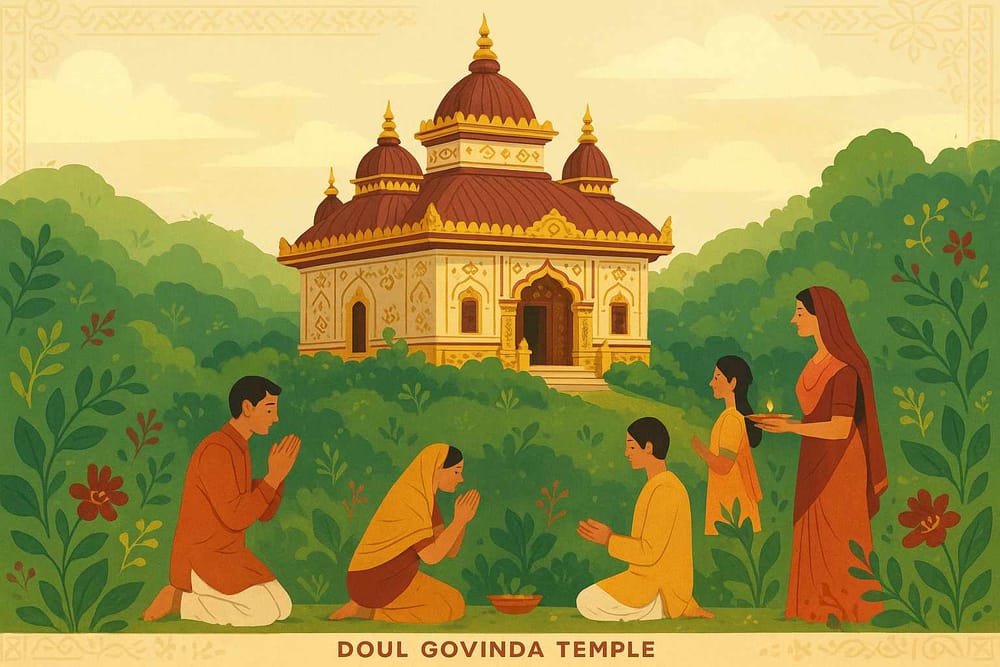
The Divine History of Doul Govinda Temple-Builder and Sacred Hill
Some places aren't just marks on a map; they live and breathe in the heart of a culture. For the people of Assam, the Doul Govinda Temple is one such sacred heartbeat. Imagine standing on the serene northern banks of the mighty Brahmaputra, looking up at the gentle Chandra Bharati hill. There, nestled amidst nature's beauty, stands a temple whose story is as magical as the faith it inspires. It’s a place where every prayer feels like a conversation and every visit feels like coming home.
The Miraculous Tale of Lord Govinda's Arrival
Every sacred place has a story that feels like it’s been touched by the divine. The history of Doul Govinda Temple is no different. The original idol of Lord Krishna wasn't just sculpted and placed here; it was discovered through a miracle. Legend tells us that in a place called Sandhyasar, near Nalbari, a Brahmin noticed something strange. Every day, his cow would wander into the forest and mysteriously pour all her milk onto a patch of birina grass.
Curiosity and faith led the villagers to investigate. When they cleared the grass, they found a beautiful idol of Lord Krishna, playing his divine flute. It was a moment of pure magic, a sign that the Lord himself had chosen to reveal his presence. This very idol, discovered through an act of nature's devotion, became the heart of the temple. The name 'Doul Govinda' itself has a sweet story. During a festival, the idol was placed on the doul (a special platform for Holi celebrations), and from then on, he was lovingly worshipped as Doul Govinda.
A Temple Built from Faith: The Vision of Ganga Ram Barooah
A divine discovery calls for a worthy home. The first structure of the temple was built more than 150 years ago, but the form we see today, renovated in 1966, was brought to life by the devotion of Ganga Ram Barooah. He was a man of great faith whose vision was to create a sanctuary where devotees could gather and feel the presence of Lord Govinda. It wasn't just about constructing a building; it was about creating a centre of spiritual energy for the entire community.
His dedication, combined with the skilled hands of local artisans, resulted in a temple that beautifully reflects Assamese traditions. His efforts ensured that this sacred space would stand the test of time, continuing to inspire generations of devotees. Assam is home to many such powerful spiritual centers, each with a unique history, like the revered Ugro Tara Temple, which also tells a profound story of devotion.
Chandra Bharati Hill: Where Heaven Touches Earth
The location of a temple is as significant as the deity within. The Doul Govinda Temple rests at the foothills of the sacred Chandra Bharati hill in North Guwahati. In our traditions, hills and mountains are often seen as places closer to the gods, and this hill truly enhances the temple's divine aura. It offers breathtaking views of the Brahmaputra, creating a peaceful and pure environment for prayer and reflection.
From November to April, the surroundings are especially beautiful, with the river calm and its white sand beaches inviting you for a quiet walk. This serene setting makes the temple not just a place of worship, but a retreat for the soul. The accessibility by road, ferry, and even the Guwahati Ropeway makes it easy for devotees from all over to come and experience this tranquility.
The Soul of the Temple: Daily Rituals and Grand Festivals
The spirit of Doul Govinda Temple truly comes alive during its celebrations. People often wonder about the best time to visit, and while the temple welcomes devotees year-round with its divine calm, the energy during festivals is something else entirely. The temple opens its doors early at 7:30 AM with morning prayers, and the day is filled with devotion until the sun sets. However, it is the Holi celebration, or Doul Utsav, that transforms the temple grounds into a sea of colours, music, and joy.
This festival lasts for five days and attracts thousands of pilgrims who come to play with colours and seek the blessings of Lord Krishna. It’s a time when the entire region comes together, celebrating the playful spirit of the Lord. Along with major festivals like Janmashtami, these celebrations are the lifeblood of the temple, keeping traditions alive and connecting the community in shared faith.
Continuing Your Spiritual Journey
The story of the Doul Govinda Temple is a beautiful reminder of how faith, nature, and community are woven together in our culture. It is not just a structure of brick and mortar but a living beacon of devotion that has blessed countless lives. Exploring such sacred landmarks helps us connect with our roots and deepens our understanding of India's spiritual heritage.
At Bhaktilipi, we believe in preserving and sharing these timeless stories. If the tale of Doul Govinda has touched your heart, we invite you to explore more such divine histories on our platform. We bring you authentic devotional literature and traditions to inspire your spiritual path.
Stay connected with our community for more inspiring content. You can subscribe to our newsletter and follow us on Facebook, Instagram, and YouTube.
A passionate group of people dedicated to preserving India's knowledge of Dharma, Karma, and Bhakti for ourselves and the world 🙏.
Comments
Related in
The Sacred History of Doul Govinda Temple: Royal Origins and Legacy
Imagine a gentle hill overlooking the majestic Brahmaputra, a place where a divine secret was once revealed not by a king's grand decree, but by the quiet devotion of a humble cow. This isn't just a story; it's the very soul of the Doul
Doul Govinda Temple FAQs: Get Answers Now
There are some places where you don't just go, you arrive. The journey itself becomes a part of the darshan. Imagine a gentle ferry ride, the vast, calming expanse of the Brahmaputra River around you, and the first glimpse of a serene temple nestled on the northern bank.
The Sacred Legacy: Doul Govinda Temple's History Emerges
Imagine standing on the gentle slopes of Chandra Bharati hill in North Guwahati, with the mighty Brahmaputra river flowing peacefully nearby. You can almost hear the soft chanting and the distant temple bells mingling with the river breeze. This is the feeling you get at the Doul Govinda Temple, a