
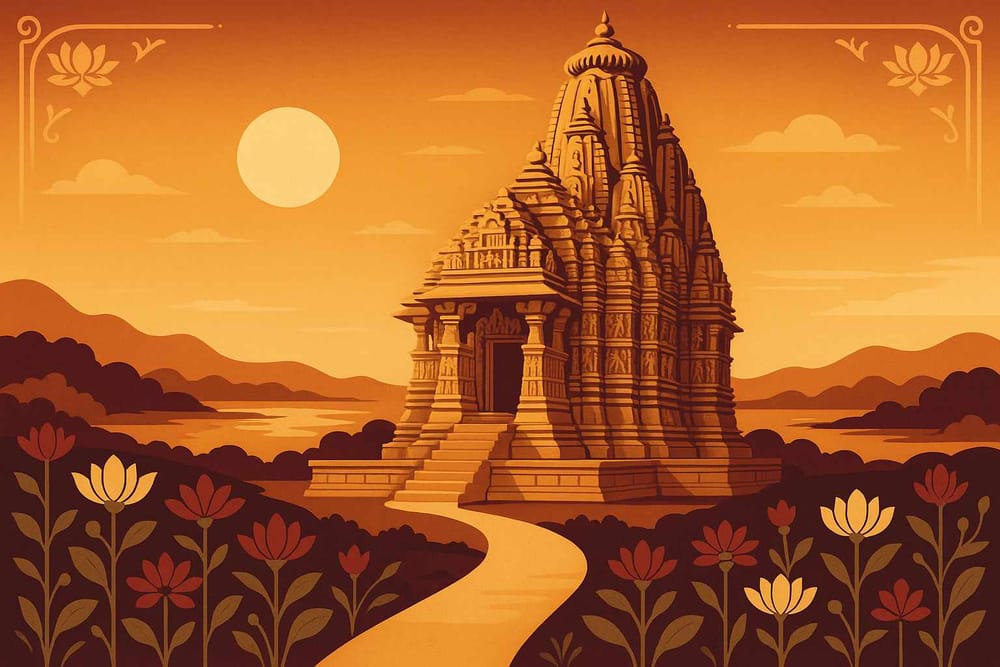
The Legacy of the Chandelas-A Journey Through History
Some stories aren't just written in books; they are carved in stone, echoing through centuries for us to hear. In the heart of India, in the ruggedly beautiful land of Bundelkhand, lies one such epic tale – the legacy of the Chandela dynasty. For almost 500 years, between the 9th and 13th centuries, these rulers didn't just build a kingdom; they crafted a civilization whose brilliance continues to leave us spellbound. This isn't just a history lesson; it's a journey back in time to understand the soul of a dynasty that celebrated life, devotion, and art like no other.
The Rise of a Formidable Power in Central India
The story of the Chandelas begins with their roots tracing back to the revered Lunar Dynasty. From this legendary lineage, they emerged as a force in Bundelkhand, a region that has always been a cradle of culture and courage. Under visionary rulers like Dhanga and the mighty Vidyadhara, the dynasty grew from a local power to a formidable kingdom. Their strength wasn't just in their armies but in their sharp political minds and their ability to forge strategic alliances.
They navigated the complex political landscape of medieval India, maintaining a delicate balance of power with neighbours like the Pratiharas and Kalachuris. This period of stability allowed Bundelkhand to flourish. It wasn't just about winning battles; it was about building a society where agriculture, trade, and culture could thrive. The inscriptions they left behind tell us of their deep commitment to the land and its people, a testament to their strong governance. This era of powerful regional kingdoms, much like the Chaulukya dynasty under Kumarapala, defined the very character of medieval India.
Architectural Marvels: A Symphony in Sandstone
When we speak of the Chandelas, one word invariably comes to mind: Khajuraho. To call these temples mere buildings would be an understatement. They are living poems in sandstone, a UNESCO World Heritage Site that captures the very essence of Indian spirituality and philosophy. Built in the elegant Nagara style, their soaring spires (shikharas) reach for the heavens, while their walls are adorned with some of the most intricate and expressive sculptures the world has ever seen.
- The Temples of Khajuraho: These temples are not silent structures; they are alive with stories. The carvings depict gods and goddesses, celestial beings, warriors, and scenes from daily life. They celebrate divinity, love, and human existence in all its forms, reflecting a deep understanding that the spiritual and the worldly are intertwined.
- Forts and Water Management: Beyond the divine beauty of Khajuraho, the Chandelas were master strategists. The formidable forts at Mahoba and Ajaygarh stand as silent sentinels, showcasing their military and architectural prowess. They also built an incredible network of lakes and reservoirs, a testament to their brilliant engineering and their commitment to sustaining life in the arid Bundelkhand region.
The Soul of the Kingdom: Culture, Faith, and Art
A kingdom's true legacy lies in its culture, and the Chandelas fostered an environment where art and intellect flourished. They were great patrons of literature, supporting scholars who wrote in both Sanskrit and Prakrit. The manuscripts and inscriptions from their time give us a precious window into their world.
What is truly beautiful is their spirit of religious tolerance. While predominantly followers of Hinduism, worshipping Shiva, Vishnu, and Devi, they also extended their patronage to Jainism. The peaceful coexistence of magnificent Hindu and Jain temples at Khajuraho is a powerful symbol of their inclusive vision. Music and dance also thrived, laying the foundations for classical traditions that we cherish even today. The annual Khajuraho Dance Festival is a living tribute to this vibrant cultural heritage, where the ancient stones reverberate with the sounds of ghungroos under the stars.
At Bhaktilipi, We Cherish These Timeless Stories
In a world that moves so fast, stories like those of the Chandelas remind us of our deep and beautiful roots. They connect us to a past filled with wisdom, art, and devotion. At Bhaktilipi, our mission is to keep these flames alive. We carefully collect and digitize timeless devotional works from every corner of India, ensuring that this precious heritage is preserved for generations to come.
By exploring tales such as The Legacy of the Chandelas: A Journey Through History on our platform, you're not just reading history; you're connecting with the soul of India. Our resources are designed to deepen your understanding and bring you closer to the stories that truly matter.
Stay connected with our journey of discovery. Subscribe to our newsletter and follow our community on social media:
Come, join us in celebrating and preserving the timeless wisdom of bhakti!
Honoring a Legacy That Inspires Awe
The Chandela dynasty eventually declined due to invasions, but their legacy is immortal. They left behind a gift that continues to inspire awe and wonder in everyone who beholds it. Their architectural genius, their love for art, and their deep spiritual roots are a lesson in what a truly visionary dynasty can achieve.
When we walk through the temple corridors of Khajuraho, we are not just tourists; we are pilgrims connecting with the spirit of a people who saw divinity in beauty and life in stone. Let us cherish these treasures, for they are not just monuments of the past, but guideposts for our future, reminding us of the enduring power of faith, art, and culture.
Frequently Asked Questions About the Chandelas
Why are the Chandelas considered so significant in Indian history?
The Chandelas hold a special place because they were not just powerful rulers but also extraordinary patrons of art and culture. They stabilized Central India during a crucial period and left behind an architectural legacy, especially the Khajuraho temples, that is unmatched in its beauty and spiritual depth.
What makes the Khajuraho temples so famous?
Khajuraho is the crown jewel of the Chandelas' achievements. These temples are celebrated worldwide for their stunning Nagara-style architecture and incredibly detailed sculptures. The carvings beautifully blend spiritual themes with aspects of daily life, reflecting a philosophy that embraces humanity in its entirety.
During which era did the Chandelas rule?
The Chandelas reigned over Bundelkhand between the 9th and 13th centuries AD. Their golden age, when most of the Khajuraho temples were built, was during the 10th and 11th centuries.
What kind of cultural environment did the Chandelas promote?
They nurtured a rich and diverse cultural landscape. The Chandelas were great supporters of art, architecture, and literature. Their patronage of Shaivism, Vaishnavism, and Jainism shows their respect for different spiritual paths, a quality reflected beautifully in their temple art.
What materials did they primarily use for their magnificent temples?
The Chandelas masterfully used sandstone for their temples. This choice of material was brilliant, as sandstone is not only durable but also perfect for holding the intricate and delicate carvings that make their structures so famous. This is why the temples have withstood the test of time so well.
Is the legacy of the Chandelas celebrated today?
Absolutely! The annual Khajuraho Dance Festival is a grand celebration of their artistic heritage. Held against the backdrop of the beautifully lit temples, this event brings together the best classical dancers from across India, keeping the cultural flame of the Chandelas alive and burning bright.
A passionate group of people dedicated to preserving India's knowledge of Dharma, Karma, and Bhakti for ourselves and the world 🙏.
Comments
Related in
Explore the Chandelas Legacy-A Timeless Journey
Have you ever stood before something so ancient and beautiful that it feels like the stones themselves are whispering stories? That’s the feeling that washes over you in Khajuraho. It’s a place where every wall, every sculpture, tells a tale of a remarkable dynasty—the Chandelas. Their story