
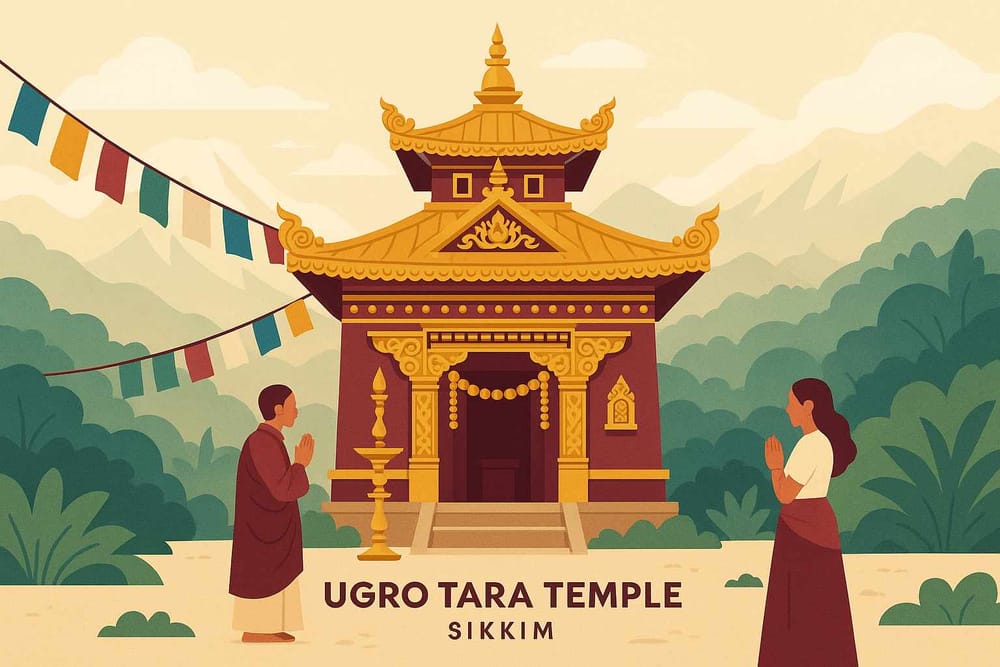
The Mystical Ugro Tara Temple-Sikkim's Cultural Landscape Unveiled
Some places in our country have a certain pull, a quiet energy that speaks directly to the soul. You feel it the moment you step onto the sacred ground. It’s not just about the idols or the rituals; it’s a feeling of being in the presence of something ancient and powerful. This is exactly what I felt at the Ugro Tara Temple in Guwahati, Assam. It’s not just a temple; it’s a living, breathing centre of faith, nestled in the heart of the city, yet feeling a world away from its hustle and bustle.
Standing by the serene Jorpukhuri, the twin ponds glistening under the sun, you can almost hear the whispers of history. This place has a story to tell, a story of devotion, divine power, and a unique way of connecting with the Goddess.
The Royal Beginnings and Sacred History
The story of this temple takes us back to 1725 AD, a time when the great Ahom King, Siva Singha, ruled the land. It was his deep devotion that led to the construction of this beautiful shrine. He didn't just build a temple; he created an entire spiritual ecosystem. The beautiful Jorpukhuri ponds, which he commissioned to the east of the temple, are not just for beauty. They add to the calm and peaceful energy, preparing your mind for the darshan within.
But the temple's roots go even deeper. It is revered as a Shakti Peetha, one of the most sacred spots for devotees of the Goddess. Legend has it that this is the very place where the navel of Mata Sati fell. This belief infuses the land with immense divine energy, making it a powerful centre of Shakti worship. You can learn more about its fascinating past by reading about the Ugro Tara Temple's history and significance on our blog.
Where Faith is Formless: A Unique Form of Worship
What truly sets the Ugro Tara Temple apart is how the Goddess is worshipped here. When you enter the inner sanctum, you won't find a traditional idol or murti. Instead, your prayers are offered to a small pit filled with sacred water. This water is considered the living form of the Goddess herself.
This beautiful tradition reminds us of a profound spiritual truth: the divine is formless and is present everywhere. It teaches us to look beyond physical forms and connect with the universal energy of the Divine Mother. It’s a powerful and humbling experience that stays with you long after you leave.
A Hub of Shakti and Tantric Wisdom
For centuries, the Ugro Tara Temple has been a vital centre for Shakti worship and Tantric practices. It's a place where seekers come to deepen their spiritual journey. The vibrations here are so strong that it is believed even the great sage, Rishi Vasishtha, once worshipped at this very spot. Maa Tara, in her 'Ugro' or fierce form, is seen as a compassionate saviouress, a protector who guides her devotees through life's toughest challenges. Many believe that offering sincere prayers here can bring immense peace and help overcome all obstacles.
Exploring the deep meanings behind such sacred places can be a journey in itself. If these stories of divine energy and ancient traditions touch your heart, you will find a treasure trove of similar devotional literature on Bhaktilipi.in, where we try to bring these timeless tales to you in a way that feels personal and inspiring.
When the Temple Comes Alive: Festivals and Celebrations
While the temple has a serene atmosphere throughout the year, it truly comes alive during major festivals. The energy during Durga Puja and Kali Puja is something to be experienced. The air is thick with the scent of incense, the sounds of mantras, and the collective devotion of thousands of devotees. Special rituals are performed, and the entire complex buzzes with a festive spirit, drawing people from all corners of the state and beyond.
The architecture of the temple itself is a testament to the rich cultural heritage of Assam, with intricate carvings and traditional designs that tell stories of their own. It’s a place where spirituality, history, and art come together in perfect harmony.
Frequently Asked Questions about Ugro Tara Temple
Many who plan a visit often wonder about the spiritual importance of this temple. The Ugro Tara Temple is considered a highly significant Shakti Peeth, believed to be the spot where Goddess Sati's navel fell, making it a powerful centre of divine feminine energy.
People are also curious about the unique worship style. Unlike most temples, there is no idol here. Devotees offer their prayers to a small pit of water, which is revered as the living embodiment of the formless Goddess, symbolizing that divinity is omnipresent.
A common question is about the best time to visit this sacred place. While the temple is open year-round, visiting during major festivals like Durga Puja and Kali Puja offers a vibrant and deeply spiritual experience, with special rituals and a palpable festive energy.
Visitors often ask what makes this temple unique among others in Guwahati. Besides being a Shakti Peeth, its connection to Tantric practices and the worship of the formless divine make it a unique spiritual destination. The serene Jorpukhuri ponds, built by an Ahom king, also add to its historical and tranquil charm.
A Final Thought from the Heart
A visit to the Ugro Tara Temple is more than just a pilgrimage; it's a conversation with your inner self. It’s about finding peace in simplicity and strength in faith. As you offer your prayers to the sacred water, you realize that the Goddess is not just in a temple, but within the flow of life itself. It’s a gentle reminder that faith doesn’t always need grand idols; sometimes, all it needs is a pure heart and a quiet moment of connection. You can further explore the significance of Ugro Tara Temple and what makes it so special to its devotees.
A passionate group of people dedicated to preserving India's knowledge of Dharma, Karma, and Bhakti for ourselves and the world 🙏.