
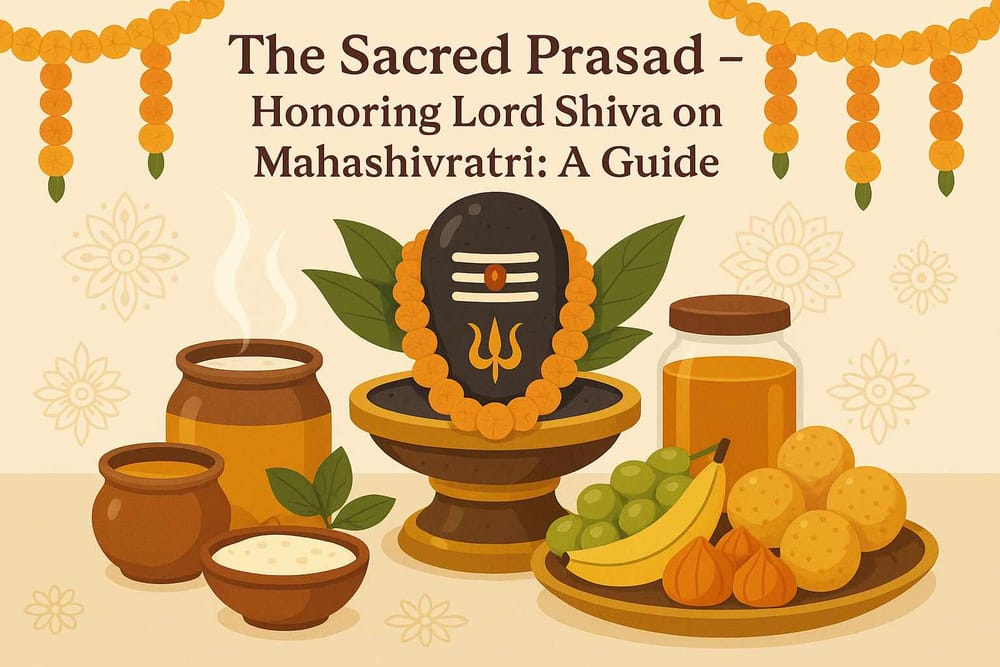
The Sacred Prasad-Honoring Lord Shiva on Mahashivratri :A Guide
There's a certain magic in the air on Mahashivratri night, isn't there? A profound stillness that you can almost touch, broken only by the distant chime of temple bells and the soft murmur of "Om Namah Shivaya". It's a night when the universe feels closer, and our hearts naturally turn towards Mahadev. In this sacred atmosphere, one of the most beautiful ways we express our love is through prasad – an offering made with a pure heart.
Beyond Food: Understanding the Soul of Prasad
Let’s be clear, prasad is not just a food item on a plate. It’s a feeling, an emotion, a piece of our devotion made tangible. In our culture, it is considered a sacred bridge between us and the divine. When we prepare something for Lord Shiva, we are not just cooking; we are pouring our sincerity and love (our shraddha and bhav) into it. The food first touches the divine and then returns to us, no longer just food, but as Shiva's grace or 'kripa'.
For Bholenath, who is the ultimate ascetic, the offerings are simple and pure. They are sattvic in nature, reflecting his detachment from worldly excesses. Sharing this blessed food with family and friends afterwards is what truly completes the ritual, spreading the divine blessings and strengthening our community bonds.
Traditional Offerings Dear to Mahadev
Every item offered to Lord Shiva has a deep, symbolic meaning. It’s a language of devotion understood by the heart. If you're wondering what to offer, here are some of the most cherished items:
- Bilva Patra (Bel Leaves): This is perhaps the most significant offering. The trifoliate leaf represents Shiva's three eyes, as well as the holy trinity of Brahma, Vishnu, and Mahesh. Offering a simple Bel leaf with devotion is said to be equivalent to performing grand pujas.
- Milk and Panchamrit: Lord Shiva is often appeased with a cooling 'abhishekam'. Milk symbolizes purity and righteousness. A step further is Panchamrit, a divine mix of five nectars: milk, curd (yoghurt), ghee, honey, and sugar. This sacred concoction is not just an offering but a prayer for health and prosperity.
- Fruits and Honey: Seasonal fruits like bananas and pomegranates signify abundance and our gratitude for nature's bounty. Honey represents the sweetness of our devotion and the desire to bring that sweetness into our lives, unifying our soul with the divine.
- Dhatura and Akanda Flowers: While Dhatura is a poisonous fruit, its offering is deeply symbolic. It represents our willingness to offer the "poison" of our ego, envy, and negativity to Shiva, the Neelkanth, who can transform it. (Please remember, Dhatura is offered symbolically and should never be consumed.)
Delicious Bhog Recipes for the Holy Night
Beyond the raw offerings, many families prepare special dishes. The aroma of these preparations fills the home with a festive and spiritual vibe. Some popular bhog items include:
- Sabudana Khichdi or Kheer: A staple for those who are fasting, Sabudana (tapioca pearls) provides gentle energy without breaking the fast's rules. Preparing it as a sweet kheer or a savoury khichdi is a wonderful way to offer something lovingly cooked.
- Makhana Kheer: Fox nuts, or makhana, are another fasting favourite. A creamy, delicious kheer made from these light and nutritious nuts is considered a very pure and sattvic offering for Mahadev.
- Sooji or Aate ka Halwa: A simple, heart-warming halwa made from semolina or whole wheat flour, roasted in pure ghee and sweetened with sugar or jaggery, is a classic prasad. It represents warmth, nourishment, and the sweetness of devotion.
- Thandai: Especially popular in North India, Thandai is a refreshing and cooling drink made with milk, nuts, and spices like fennel and cardamom. Some traditional recipes include a very small amount of bhang, which is associated with Shiva's ascetic meditative states.
The Ritual: Preparing Prasad with a Pure Heart
The preparation of prasad is a ritual in itself. It begins with a clean kitchen and a clean self—both body and mind. Many devotees chant "Om Namah Shivaya" or play devotional bhajans while cooking. This infuses the food with positive vibrations, making it truly worthy of being offered. The intention behind the preparation is everything. Even the simplest fruit, offered with a full heart, is more valuable than an elaborate feast prepared without feeling.
To perform the puja correctly, it's always good to follow authentic steps. For those setting up a small temple at home, understanding the process can make the experience even more profound. Our guide on Bringing Sacred Rituals Home can be a wonderful companion on this journey.
Frequently Asked Questions about Mahashivratri Prasad
Many of us have questions as we prepare for this special night. Here are some answers to help guide your devotion.
What is the core significance of offering prasad to Lord Shiva on this particular night?
Offering prasad on Mahashivratri is a deeply personal act of love and surrender. It’s a way of saying, "O Mahadev, all that I have is yours." The act purifies our intentions, deepens our devotion, and allows us to receive divine blessings in a tangible form.
Are there specific items that are absolute favourites of Lord Shiva?
Yes, some items are considered especially dear to him. Bel Patra is paramount. Along with it, simple offerings like water from the Ganga (Gangajal), raw milk, seasonal fruits, and sweets made without onion or garlic are always perfect.
Is it essential to prepare the bhog at home?
While homemade prasad carries the special energy of your personal effort and devotion, it's the purity of intent that matters most. If you are short on time, you can offer fresh fruits or pure, store-bought sweets (mithai) that are sattvic. The key is to offer it with a clean and loving heart.
Why are Bel leaves so important in Shiva Puja?
The scriptures are filled with stories about the significance of Bel Patra. It is believed to have a natural cooling effect, which is said to soothe the fiery, ascetic energy of Shiva. Offering it is considered an act of great merit and devotion.
What should be done with the prasad after the puja is complete?
The prasad, now blessed by the Lord, should be treated with utmost respect. It should be distributed among all family members and any guests present. Sharing the prasad multiplies the blessings and fosters a sense of unity and shared divinity. It should never be wasted.
A Final Thought from Bhaktilipi
At Bhaktilipi, we believe in connecting hearts to our rich spiritual heritage. Mahashivratri is a powerful reminder of the deep bond between devotion, our timeless traditions, and the joy of community. Preparing and offering prasad is not just a ritual; it's an act of love that nourishes the soul.
As you celebrate this holy night, let the prasad you offer be a true reflection of your heart. Whether it’s a simple fruit or a lovingly prepared halwa, know that Bholenath sees the devotion, not the dish. May the grace of Lord Shiva fill your life with peace, strength, and spiritual bliss.
Om Namah Shivaya!
A passionate group of people dedicated to preserving India's knowledge of Dharma, Karma, and Bhakti for ourselves and the world 🙏.