
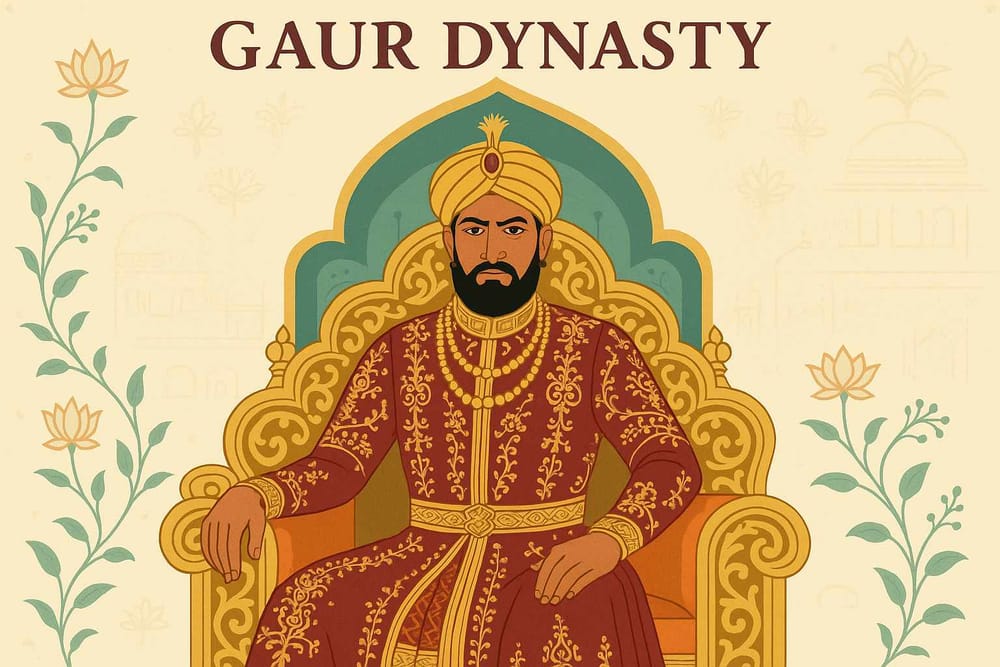
The Untold Stories of the Gaur Dynasty's Rulers: History Reveals Hidden Figures
History isn't always found in the grand tales of massive empires we read in textbooks. Sometimes, its most profound secrets are tucked away in the heart of a region, waiting to be rediscovered. It feels like finding a forgotten family album, filled with faces and stories that shaped who we are today. This is exactly the feeling I get when I delve into the history of the Gaur Dynasty of Bengal—a chapter that is as rich and vibrant as the land it ruled.
For centuries, the fertile plains of Bengal have been a cradle of culture, trade, and power. And right in the middle of the medieval period, the Gaur Dynasty, also known as the Bengal Sultanate, carved out a kingdom that left an indelible mark on India's eastern soul. Let's journey back together and listen to the whispers of these hidden figures.
The Dawn of an Era: How Gauda Rose to Power
The story of the Gaur Dynasty doesn't begin with a single, dramatic conquest. It grew organically from the soil of Bengal. Its rise was a masterclass in strategy and administration. The early rulers, like the visionary Shamsuddin Ilyas Shah, didn't just win battles; they won the people's trust. They understood the rhythm of the land and its rivers, turning Bengal's strategic location into a thriving hub for trade and commerce.
Long before them, the groundwork was laid by dynasties like the Palas, whose founder Gopala was elected by local chieftains in the 8th century, unifying the regions of Gauda, Varendra, and Banga. This tradition of strong regional leadership was carried forward by the Gaur rulers. They built a robust economy that wasn't just about wealth, but about creating a stable society where art and culture could flourish. It was a time when Hindu and Islamic traditions began a unique dialogue, creating a cultural fabric that is uniquely Bengali.
More Than Just Rulers: Architects of Culture and Society
The true legacy of the Gaur Dynasty isn't just in the territories they controlled, but in what they built and nurtured. Their reign was a golden age for architecture in Bengal. If you ever get a chance to visit the ruins of the ancient city of Gaur or the magnificent Adina Mosque in Pandua, you can feel the ambition and artistic vision of these rulers. These aren't just stone structures; they are storytellers, chronicling a time of immense creativity.
Beyond bricks and mortar, they were brilliant administrators. Their systems for governing a diverse population were so effective that their influence was felt for centuries. Even the great Sher Shah Suri, when he later reformed Bengal's administration, built upon the foundations they had laid. The rulers of Gaur understood that true power lies in creating a just and efficient society. This deep understanding of governance is a common thread we see when we explore the legacy of Maharajas across our country.
At Bhaktilipi, we believe these stories of devotion, leadership, and cultural fusion are a vital part of our heritage. We are a digital space dedicated to preserving and sharing timeless devotional literature and stories. Our mission is to preserve sacred texts, reimagine them for today's generation, and share their wisdom with the world.
Discovering tales like the Untold Stories of the Gaur Dynasty's Rulers helps us connect with our roots and inspires our spiritual journey. If these stories resonate with you, stay connected with us for more!
The Fading Light and an Enduring Legacy
Like all great dynasties, the Gaur Sultanate eventually faced its twilight. The pressure of invasions from rising powers like the Mughals, combined with internal conflicts, led to its decline. But does a story truly end when the rulers are gone? I don't think so. The spirit of the Gaur Dynasty lives on in Bengal’s art, its language, and its resilient culture.
Their story reminds us that history is not just about the mighty emperors but also about the regional heroes who nurtured their homelands with vision and care. The untold stories of Tripura's culture and history, for example, share this same spirit of proud, regional identity. By remembering the Gaur Dynasty, we honor the countless "hidden figures"—the artists, administrators, poets, and saints—who contributed to its success. We ensure that their chapter in India's grand narrative is never forgotten.
Answering the Echoes of the Past: Your Questions Answered
As we uncover these stories, it's natural for questions to arise. Let's explore some of the things you might be curious about.
Many wonder, who were the main architects of the Gaur Dynasty? While there were many significant rulers, figures like Shamsuddin Ilyas Shah are often remembered as pioneers. He and his successors were instrumental in expanding the kingdom's borders and setting up a strong, stable administration that lasted for generations.
A common question is about the timeline: when exactly did this dynasty grace the pages of history? The Gaur Dynasty flourished during the medieval period of India, primarily holding sway over Bengal and surrounding regions between the 14th and 16th centuries. It was a crucial bridge between ancient and modern Indian history.
But what were their greatest achievements that we can still see today? Beyond their political power, the dynasty is celebrated for its remarkable contributions to architecture, such as the magnificent mosques and tombs in Gaur and Pandua. They also supercharged the region's economy through trade and developed sophisticated administrative systems that brought stability and prosperity.
This leads to a deeper thought: why is this dynasty considered so important in the grand scheme of Indian history? Its significance lies in its role as a cultural and economic bridge. The Gaur Sultanate facilitated a rich exchange of ideas, art, and goods between Bengal and the rest of the world, leaving a lasting impact on the region's identity.
Naturally, people want to know, are there any surviving monuments from this era? Absolutely. The most famous examples are the stunning Adina Mosque in Pandua and the sprawling ruins of their capital city, Gaur. These sites are a powerful testament to their architectural genius and historical importance.
Of course, their journey wasn't without obstacles. The rulers constantly had to navigate serious challenges, from fending off attacks by powerful neighbouring kingdoms to managing internal rebellions and uniting a population with diverse beliefs and cultures.
So, what led to the end of their rule? The dynasty's decline was a gradual process, caused by a combination of factors. Persistent invasions, most notably by the Mughals, along with internal power struggles, slowly weakened their hold, eventually leading to their fall.
Finally, we must remember the many hidden figures associated with the Gaur Dynasty. It wasn't just the sultans who made the kingdom great. Countless administrators, generals, Sufi saints, and cultural patrons played vital roles, and their contributions are an essential part of the dynasty's rich and complex legacy.
A passionate group of people dedicated to preserving India's knowledge of Dharma, Karma, and Bhakti for ourselves and the world 🙏.
Comments
Related in
The Influence of Gaur Dynasty Rulers on Indian History- Explained
Have you ever walked through the historic lanes of Bengal and felt the whispers of the past in the air? Every handful of soil in this land seems to hold a story, a memory of kings and kingdoms that have long since turned to dust but whose legacy continues to