
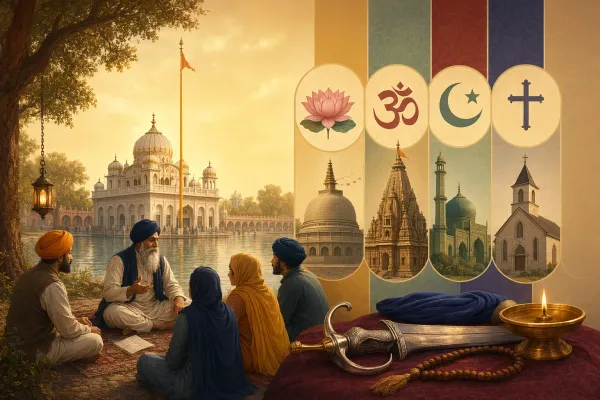
Is Sikhism Closer to Hinduism, Islam, Christianity, or Buddhism?
Sikhism has its own path. It shares historical contact with other traditions, but it should not be reduced to being “closest” to one religion.
Sikhism has its own path. It shares historical contact with other traditions, but it should not be reduced to being “closest” to one religion.
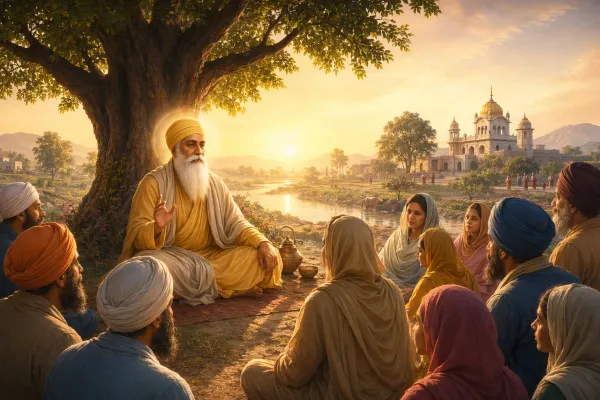
Sikhism was founded by Guru Nanak in the Punjab region, then shaped through the Guru tradition and the Sikh community’s lived practice.
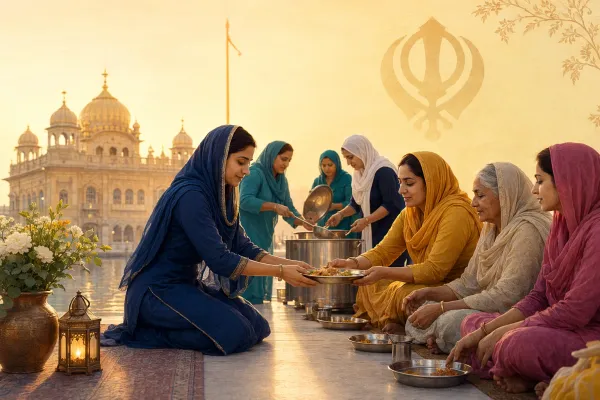
Learn how Sikhism teaches equality, dignity, and seva, with a simple guide to women’s participation, langar, service, and modern relevance.
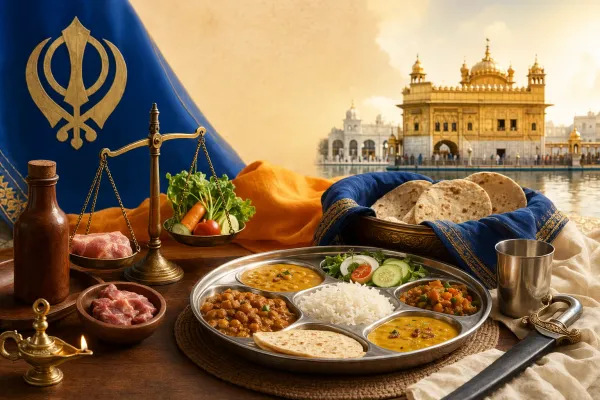
A respectful guide to Sikhism food rules: langar, vegetarian meals, meat and pork questions, alcohol, intoxicants, and community nuance.
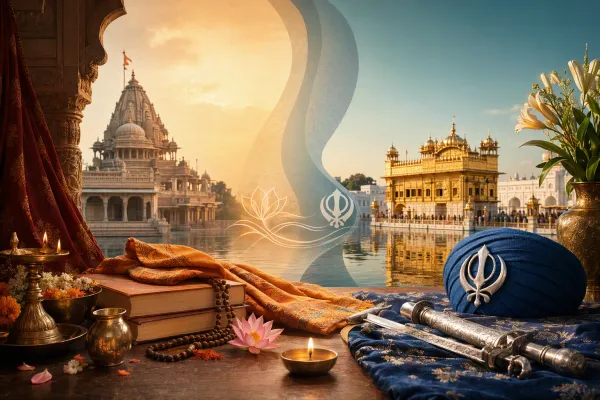
Compare Sikhism and Hinduism respectfully: shared Indian background, distinct scriptures, worship, identity, teachings, and common misunderstandings.
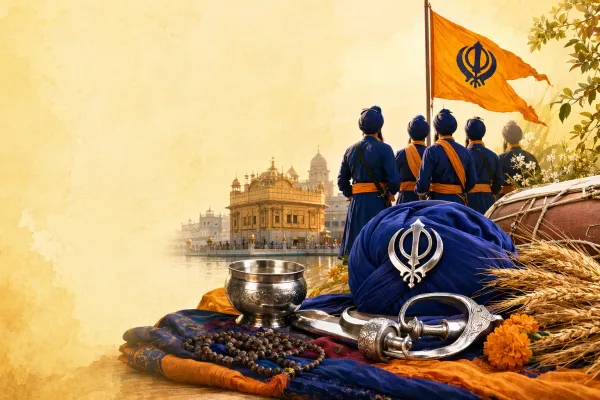
Learn what Khalsa means in Sikhism, why Vaisakhi 1699 matters, and how Guru Gobind Singh, the Five Ks, courage, and equality connect.

Understand the Five Ks of Sikhism—Kesh, Kara, Kanga, Kirpan, and Kachera—with their meaning, Khalsa connection, and respectful context.
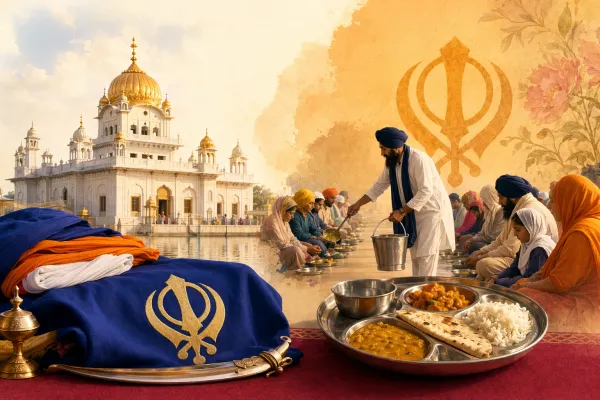
A simple guide to gurdwara and langar in Sikhism: worship, seva, equality, community kitchen, visitor etiquette, and why it matters.
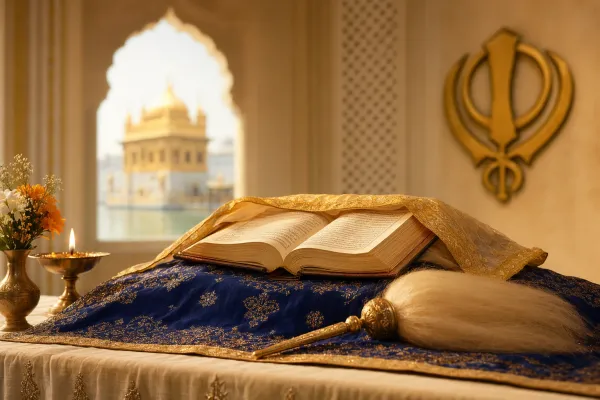
A simple explanation of Guru Granth Sahib: Sikhism’s holy scripture, eternal Guru, devotional respect, kirtan, and beginner learning.