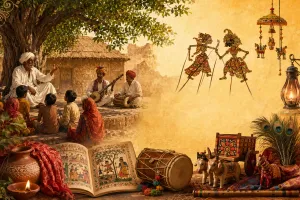
Indian Folklore
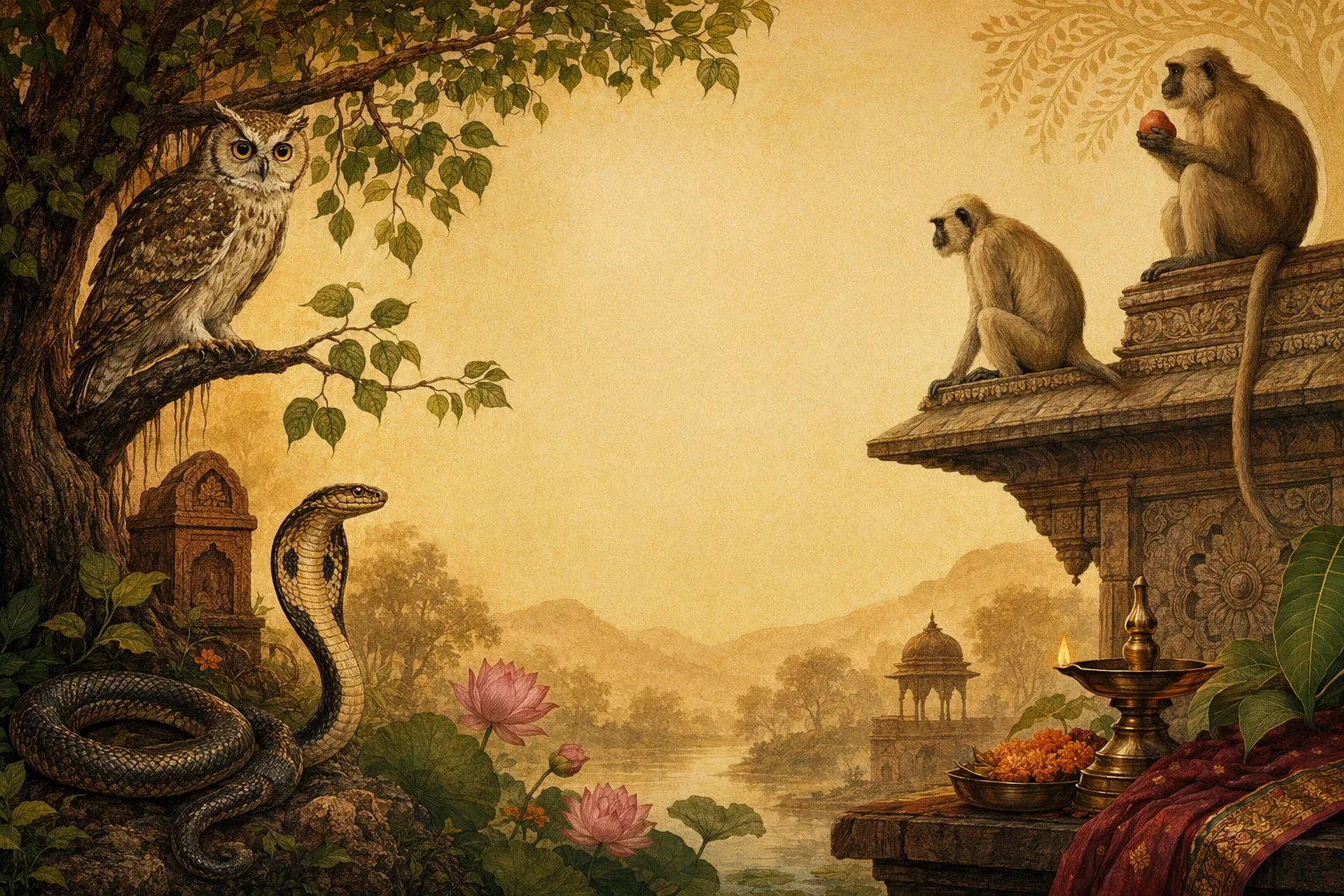
Animals in Indian Folklore: Owls, Snakes, Monkeys, and More
Animals in Indian folklore are more than side characters. They teach caution, wisdom, devotion, ecology, humour, and moral imagination.
Your Path to Bhakti & Beyond
Animals in Indian folklore are more than side characters. They teach caution, wisdom, devotion, ecology, humour, and moral imagination.
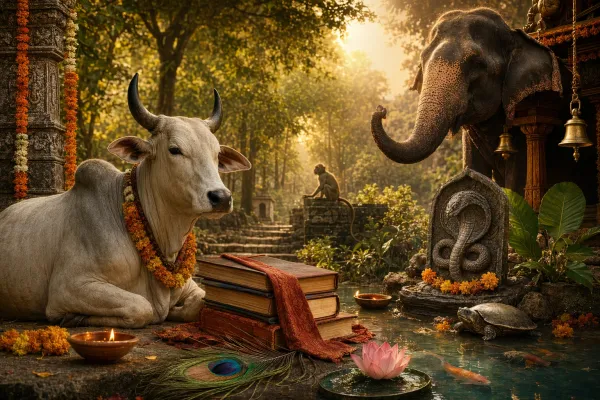
Start with reliable books and source-aware reading. This guide shows how to study India’s sacred animals with context and respect.
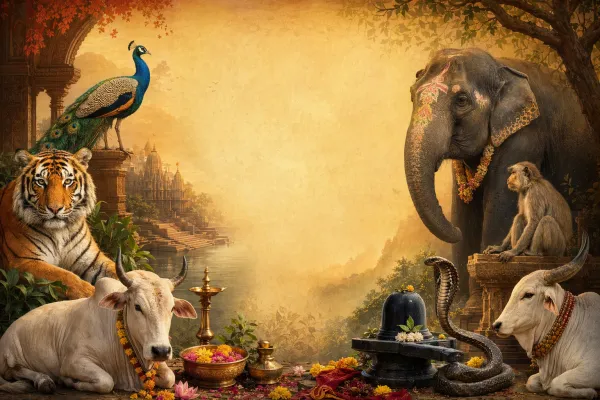
No single animal can carry all of India. The tiger, peacock, cow, elephant, monkey, snake, and bull each represent a different part of Indian culture.

In Indian culture, “lucky” usually means auspicious, protective, prosperous, or connected with a sacred story—not a guaranteed charm.

Hindu mythology uses animals as a visual language. They carry ideas of courage, restraint, devotion, wisdom, protection, and nature’s power.

There is no single official list of sacred animals in India. These five examples show how story, ethics, temple art, and daily life meet.