
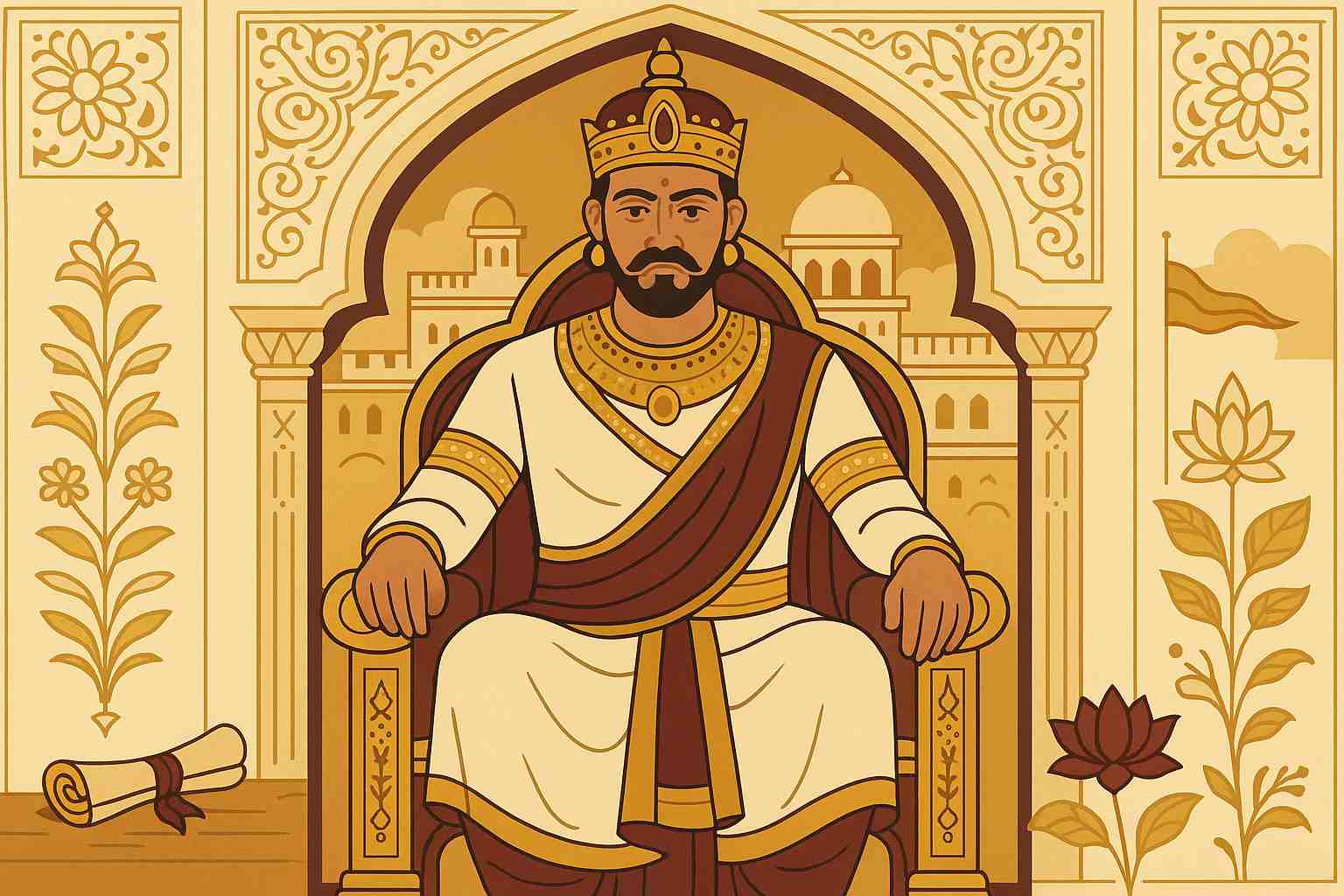
Kumarapala: Explores the Chaulukya Dynasty's Enduring Legacy
Every time you walk through the ancient temple complexes of Gujarat, have you ever felt the stories whispered by the stones? There’s a magic in our land, a history so rich that it feels alive even today. Much of this vibrancy, this deep-rooted culture of peace and artistry, can be traced back to the golden era of the Chaulukya Dynasty, also known as the Solankis. And in the heart of this dynasty's story is a king whose legacy is not just written in history books but is etched into the very soul of Gujarat – King Kumarapala.
His reign, from 1143 to 1172 CE, was more than just a period of political stability; it was a time of profound transformation. It was a time when governance was guided by dharma, when devotion was carved into magnificent temples, and when an entire kingdom was steered towards compassion. Let's journey back in time to understand the man who was both a formidable warrior and a compassionate patron of peace.
A Foundation of Strength: The Visionary Administrator
When Kumarapala ascended the throne, the kingdom was not without its troubles. He faced challenges from within and threats from beyond its borders. But a true leader's mettle is tested in fire. Kumarapala was not just a king who inherited a throne; he was a leader who secured and expanded his kingdom with great political wisdom and military might. He brought regions like Malwa and Chittor under his influence, expanding the Chaulukya empire to its zenith. His reign brought a blanket of peace and security over Western India, allowing trade, art, and daily life to flourish without fear.
But his vision went beyond conquests. He understood that a kingdom's true strength lies in the well-being of its people. He introduced reforms that touched the lives of ordinary farmers, ensuring fair taxation and investing in infrastructure like irrigation canals. This wasn't just policy; it was the king fulfilling his dharma towards his subjects, creating a society where prosperity could take root.
A Spiritual Transformation: The Royal Patron of Jainism
Perhaps the most defining aspect of Kumarapala's story is his deep connection with Jainism. Guided by the profound wisdom of the great Jain scholar Acharya Hemachandra, the king underwent a personal and spiritual transformation. He embraced the core principles of Jainism, especially Ahimsa (non-violence), and made it a cornerstone of his state policy.
Imagine a kingdom where the king himself champions the cause of compassion for all living beings! Kumarapala introduced policies that were revolutionary for their time. He enacted laws against animal slaughter, curbed the sale of alcohol, and discouraged gambling. This wasn't just about religion; it was about creating a more moral, a more compassionate society. His devotion was so complete that Jain texts remember him as the last great royal patron of their faith, a king who ruled not just a kingdom, but the hearts of his people. If you wish to delve deeper into his profound impact, you can explore more about Kumarapala's legacy and the Chaulukya Dynasty's glimpse.
An Era Carved in Devotion: Architectural Grandeur
The peace and prosperity under Kumarapala's rule created the perfect environment for an explosion of art and architecture. His reign is considered a golden age for temple construction, where stone was transformed into prayers. The unique Maru-Gurjara style of architecture, with its intricate carvings and majestic spires, flourished under his patronage.
He didn't just build new temples; he restored old ones to their former glory, understanding the importance of preserving our heritage. He undertook the grand restoration of the revered Somnath Temple in 1169 CE, a testament to his respect for all faiths. The magnificent Jain temples on Taranga Hill and the restoration of Kedareshwar temples are other shining examples of his devotion. These structures are not mere monuments; they are enduring symbols of a time when faith, art, and governance worked in perfect harmony. You can learn more by exploring the legacy of Kumarapala, the influential ruler.
About Bhaktilipi: Your Connection to India's Spiritual Heritage
Stories like that of King Kumarapala are the threads that weave the rich fabric of our culture. At Bhaktilipi, our heart lies in preserving these timeless stories and devotional traditions. We strive to be a digital space where you can connect with the wisdom of the ages, reimagined for today's world.
- Preserving Our Roots: We are dedicated to safeguarding the vast treasure of bhakti literature, ensuring that the legacy of great figures like Kumarapala is never forgotten. We bring you authentic stories that reflect the depth of our traditions.
- Sharing with the World: Our mission is to share this wisdom far and wide. Whether it's through our articles, videos, or social media, we aim to inspire and connect you with the soul of India's devotional heritage.
To continue this journey with us, subscribe to our YouTube channel, and follow our stories on Facebook and Instagram. Let's explore our incredible heritage together.
Frequently Asked Questions About Kumarapala's Legacy
What was Kumarapala’s primary role in the Chaulukya Dynasty?
Kumarapala was one of the most powerful and influential rulers of the dynasty. He is celebrated not just for expanding the kingdom to its greatest extent but for his exceptional administrative skills, his patronage of art and architecture, and for establishing a just and compassionate rule based on Jain principles.
What were Kumarapala’s most significant religious contributions?
A devout follower of Jainism under the guidance of Acharya Hemachandra, Kumarapala made non-violence (Ahimsa) a state policy. He actively promoted the construction of stunning Jain temples, banned animal sacrifice, and fostered an environment of religious harmony, leaving a lasting spiritual impact on Gujarat.
How did Kumarapala influence the architecture of his time?
His reign was a golden age for the Maru-Gurjara architectural style. He commissioned and restored numerous temples, including the great Somnath temple. The structures built under his patronage are renowned for their intricate carvings, detailed pillars, and spiritual grandeur, reflecting the artistic brilliance of the era.
Why is Kumarapala considered such an important ruler in Indian history?
He is remembered as a model king who perfectly balanced military strength with spiritual values. His legacy is one of strong governance, religious tolerance, cultural flourishing, and compassionate leadership. He didn't just build an empire; he nurtured a culture that continues to influence Gujarat even today.
Conclusion: A Legacy That Continues to Inspire
The story of Kumarapala is a powerful reminder that true greatness lies in blending power with piety, and progress with principles. His reign shows us how a visionary leader can shape the identity of a region for centuries to come. The values he championed—compassion, justice, and respect for all life—are as relevant today as they were in the 12th century.
As we look at the magnificent temples he built or reflect on the culture of peace in Gujarat, we are, in essence, looking at the enduring legacy of King Kumarapala. He was truly a king who built not just for his time, but for eternity.
A passionate group of people dedicated to preserving India's knowledge of Dharma, Karma, and Bhakti for ourselves and the world 🙏.
Comments
Related in
Kumarapala: Explores the Chaulukya Dynasty Legacy
In the grand tapestry of Indian history, there are tales of kings and kingdoms that shine a little brighter, not just for their power, but for their purpose. We often hear stories of an ideal rule, a 'Ram Rajya', where peace and prosperity embrace the land. It feels
The Legacy of Kumarapala: Chaulukya Dynasty's Impact Explained
Some stories from our past feel like they are etched not just in stone, but into the very soul of our land. They speak of a time when rulers were not just conquerors, but also protectors of dharma, patrons of art, and true servants of their people. When I think
The Legacy of Kumarapala: Explores the Chaulukya Dynasty
When you wander through the historic landscapes of Gujarat, you can almost feel the echoes of time. The magnificent temples and ancient structures aren't just stone and mortar; they are storytellers. Among the countless tales they hold, the story of one king resonates with exceptional power—the tale