
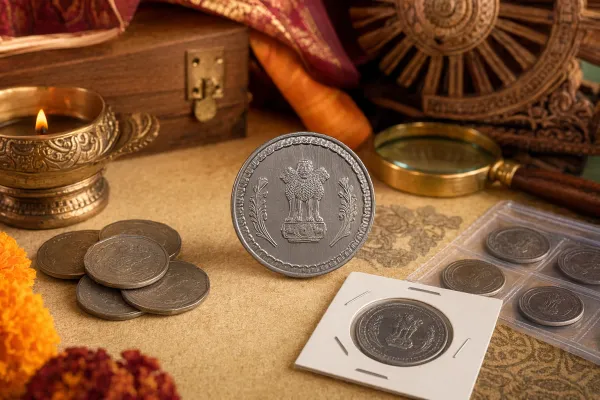
The 1 Rupee Coin in India: History, Material, and Value Explained
The 1 rupee coin is one of India’s most familiar pieces of money. Its design, metal, and size have changed, but its place in everyday life remains memorable.
The 1 rupee coin is one of India’s most familiar pieces of money. Its design, metal, and size have changed, but its place in everyday life remains memorable.
Indian coins are small objects with big histories. This guide explains what coins are, how they changed in India, and what beginners should notice.
If you find or inherit old Indian coins, preserve first and decide later. Document, avoid cleaning, check provenance, ask experts and avoid scams.
Gold and silver Indian coins connect wealth, ritual, sovereignty and collecting. Learn the difference between bullion, historical coins and replicas.
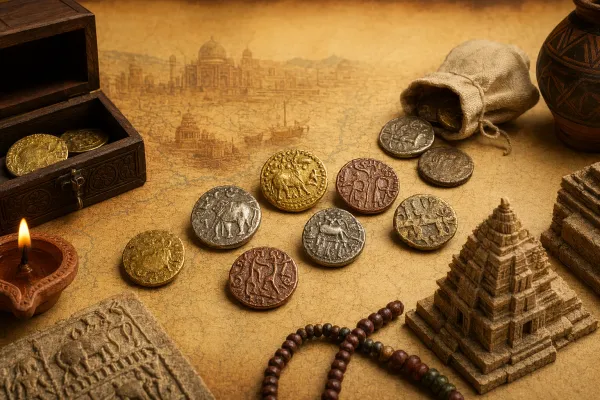
Ancient Indian coins can reveal kings, trade, scripts, symbols and cultural contact. Learn how historians read them without overclaiming.
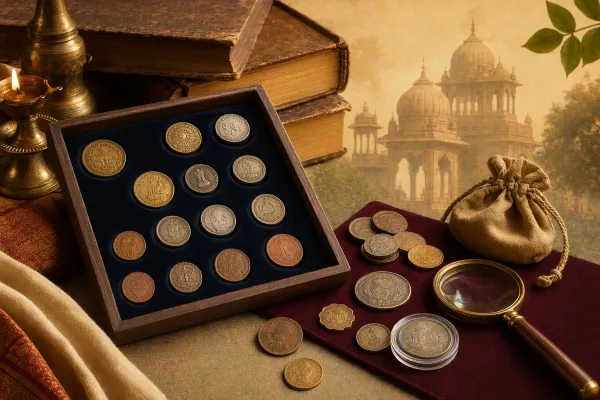
Rare Indian coins are special because of evidence, scarcity, condition, demand and authenticity — not because every old coin is automatically precious.
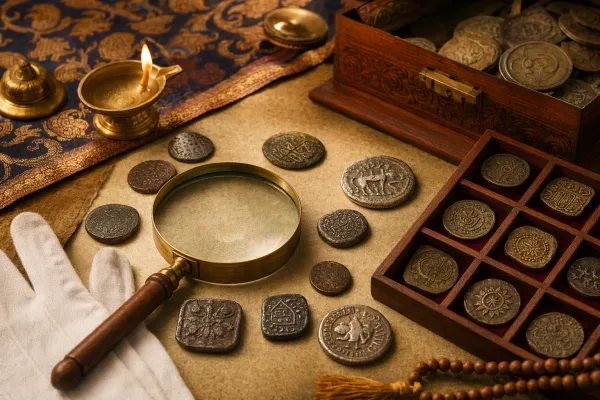
To identify old Indian coins, slow down before asking price. Record the date, script, symbols, metal, weight, size, mint mark, condition and source.
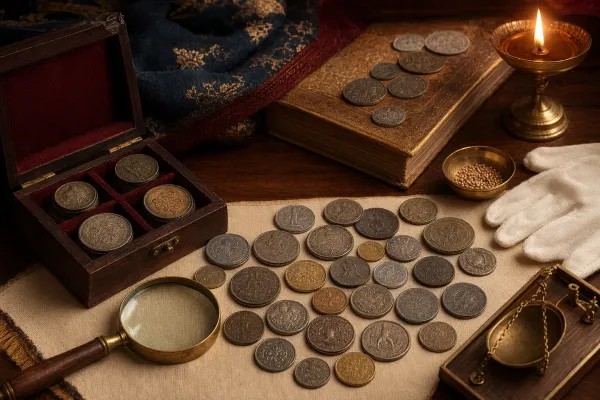
Some old Indian coins are valuable, many are common, and age alone is not enough. Learn the safe factors that affect value before selling or buying.
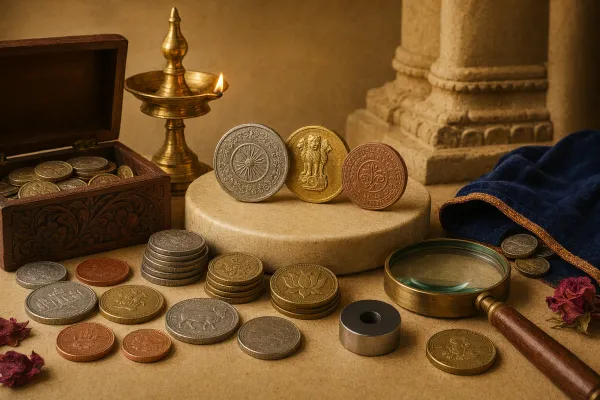
Indian coins have used copper, silver, gold, nickel, steel and many alloys. Metal helps identification, but it should never be judged by colour alone.