
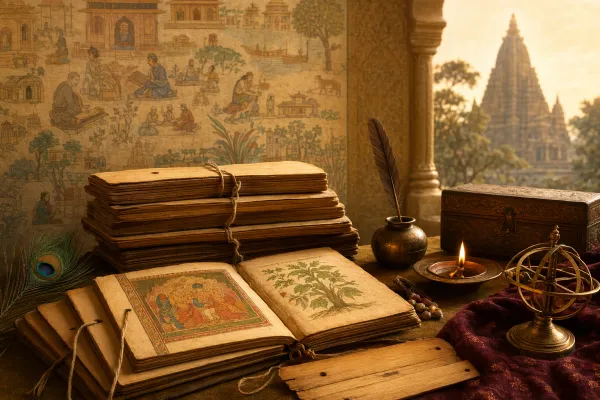
Medieval Indian Manuscripts: What They Reveal About Culture, Knowledge, and Daily Life
Medieval Indian manuscripts are evidence of learning, devotion, courts, temples, monasteries, medicine, art, and daily life across regions.
Medieval Indian manuscripts are evidence of learning, devotion, courts, temples, monasteries, medicine, art, and daily life across regions.
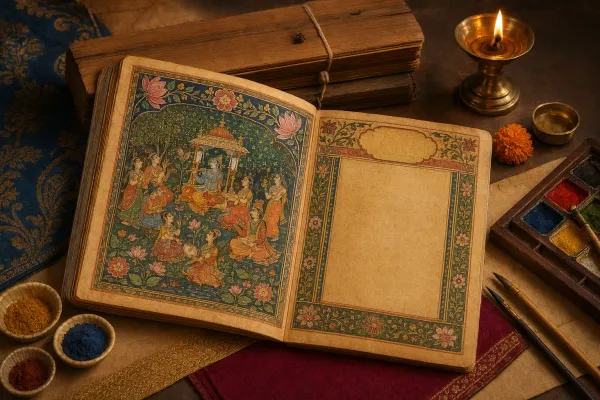
Indian illuminated manuscripts show how image, colour, margin, text, devotion, and storytelling worked together on the handwritten page.
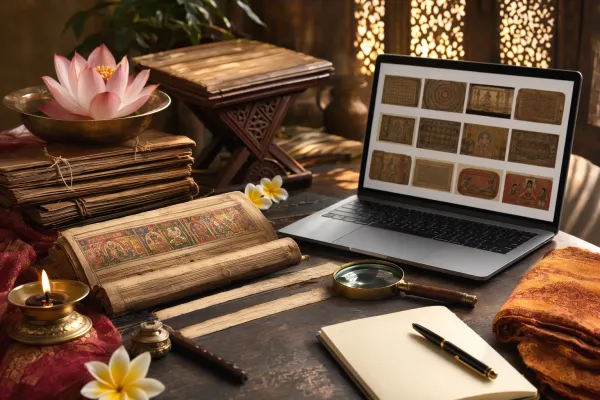
A simple, ethical guide to finding Indian manuscripts online through trusted archives, clear catalogue records, reuse rules, and context-rich source links.
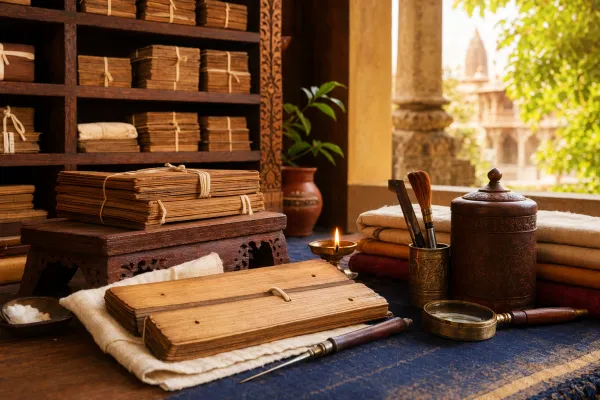
Indian manuscripts survived through careful storage, periodic copying, community libraries, modern conservation, cataloguing, digitisation, and patient handling.
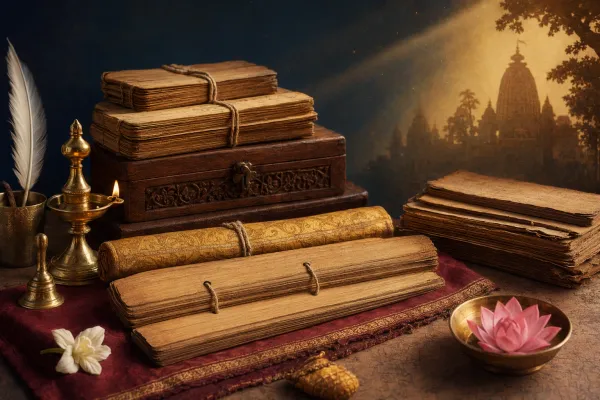
Old Hindu manuscripts preserve sacred, philosophical, ritual, poetic, and devotional traditions, but a text’s age and a surviving copy’s age are not the same.
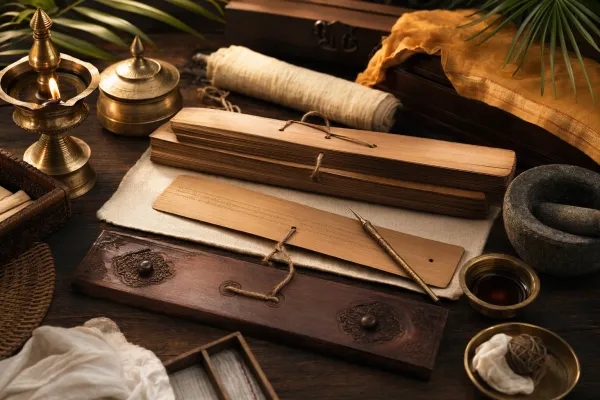
Palm leaf manuscripts show India’s handwritten heritage through prepared leaves, incised letters, thread binding, wooden covers, copying, and careful preservation.
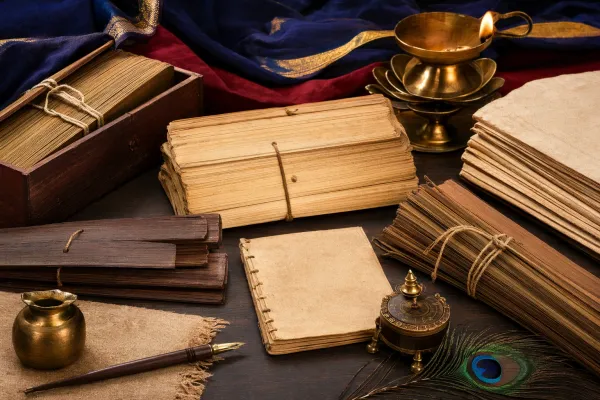
Indian manuscripts used many languages and scripts. This guide explains Sanskrit, Prakrit, Pali, Tamil, Persian and why script is separate.
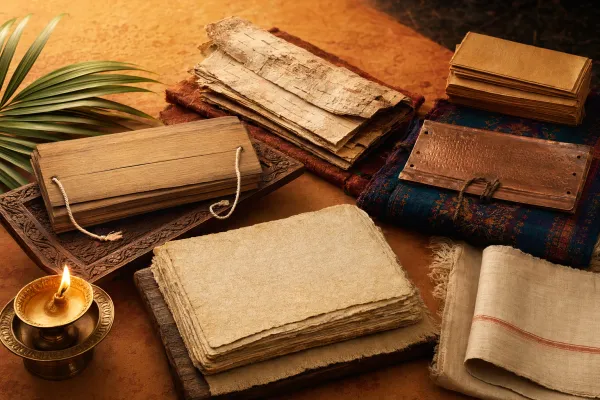
Ancient Indian manuscripts were written on palm leaf, birch bark, paper, copper plates and other materials shaped by region, climate and use.
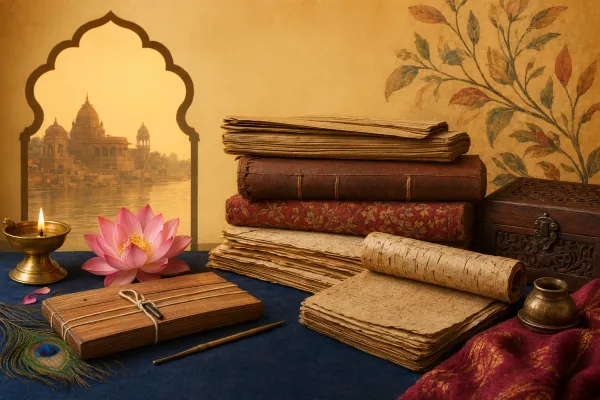
Indian manuscripts are handwritten records of knowledge, devotion, literature, science, art and daily life preserved across India’s many regions.