How to Read the Upanishads for Beginners: Where to Start Without Feeling Lost
Start small, use a good commentary, avoid unauthorized copies, and read the Upanishads as serious wisdom—not quote material.
Start small, use a good commentary, avoid unauthorized copies, and read the Upanishads as serious wisdom—not quote material.
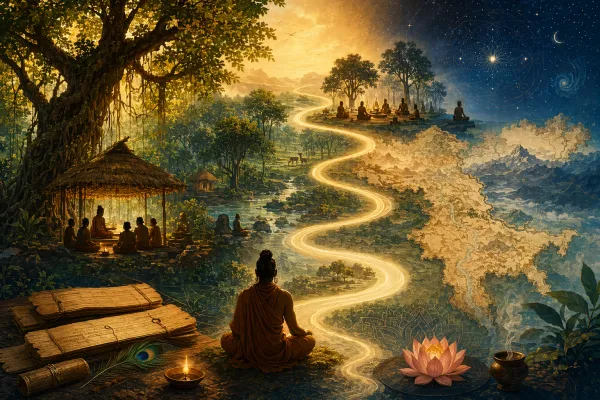
The Upanishads emerged from ancient Indian Vedic traditions, but exact dates and places need careful language.
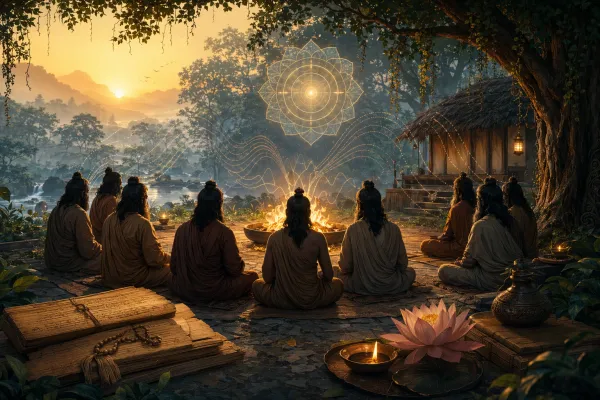
The Upanishads are not the work of one modern author; they come from ancient rishi lineages and oral teaching traditions.
People give different Upanishad counts because “major,” “classical,” and “traditional list” do not mean the same thing.
A beginner-friendly map of the major Upanishads, what they are known for, and how to approach them.
Today, anyone can respectfully learn from translations and teachers, while formal traditions may have their own methods and rules.
The principal Upanishads are Shruti and are also central to Vedanta. They are not Smriti.
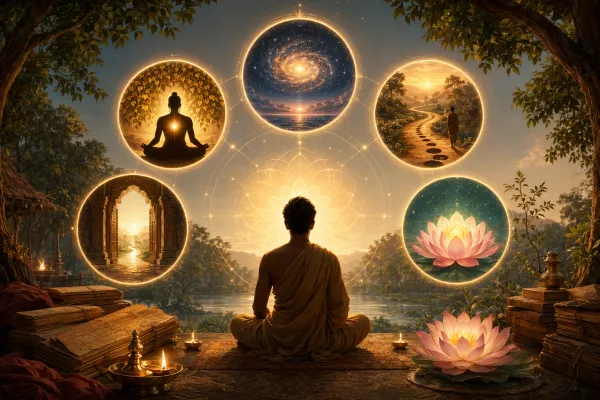
The Upanishads teach that real wisdom begins when we look beyond ego, fear, and surface identity.
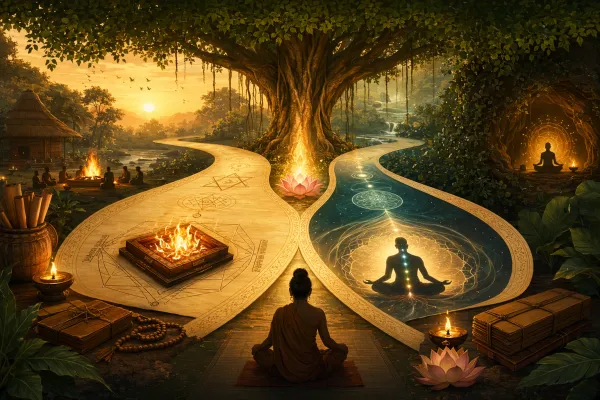
The Upanishads are connected to the Vedas, but they are not the same as the whole Vedic collection.