If you searched for 'who wrote upanishads', this guide is for you. Bhaktilipi will keep it simple, respectful, and beginner-friendly.
Related search angles behind this guide include: upanishads who wrote, who composed upanishads, who created upanishads, who wrote upanishads and vedas, who translated upanishads into english.
Reader questions answered here: Who wrote the Upanishads?; Were the Upanishads composed by one author?; How did oral tradition shape them?.
Quick answer
The Upanishads were not written by one single author. They come from ancient Vedic learning traditions, rishi lineages, and teacher-student dialogues preserved orally before being written down in manuscripts.
In Hindu tradition, the principal Upanishads are part of Shruti, so they are treated as sacred knowledge heard and transmitted, not ordinary books invented by one person.
Why “who wrote it?” is complicated
Modern books usually have one author, a publication date, and a printed edition. The Upanishads belong to an older world where teaching was spoken, memorized, discussed, and preserved across generations.
So asking for one writer can create the wrong picture. It is better to ask: which tradition preserved this text, which teachers appear in it, and how was it transmitted?
Rishis and teachers in the Upanishads
The Upanishads include famous teachers and seekers such as Yajnavalkya, Gargi, Maitreyi, Uddalaka Aruni, Shvetaketu, Nachiketa, and Yama in different dialogues and narratives.
These names matter because the Upanishads often teach through conversation. Wisdom appears through questioning, debate, correction, and reflection.
Oral tradition before manuscripts
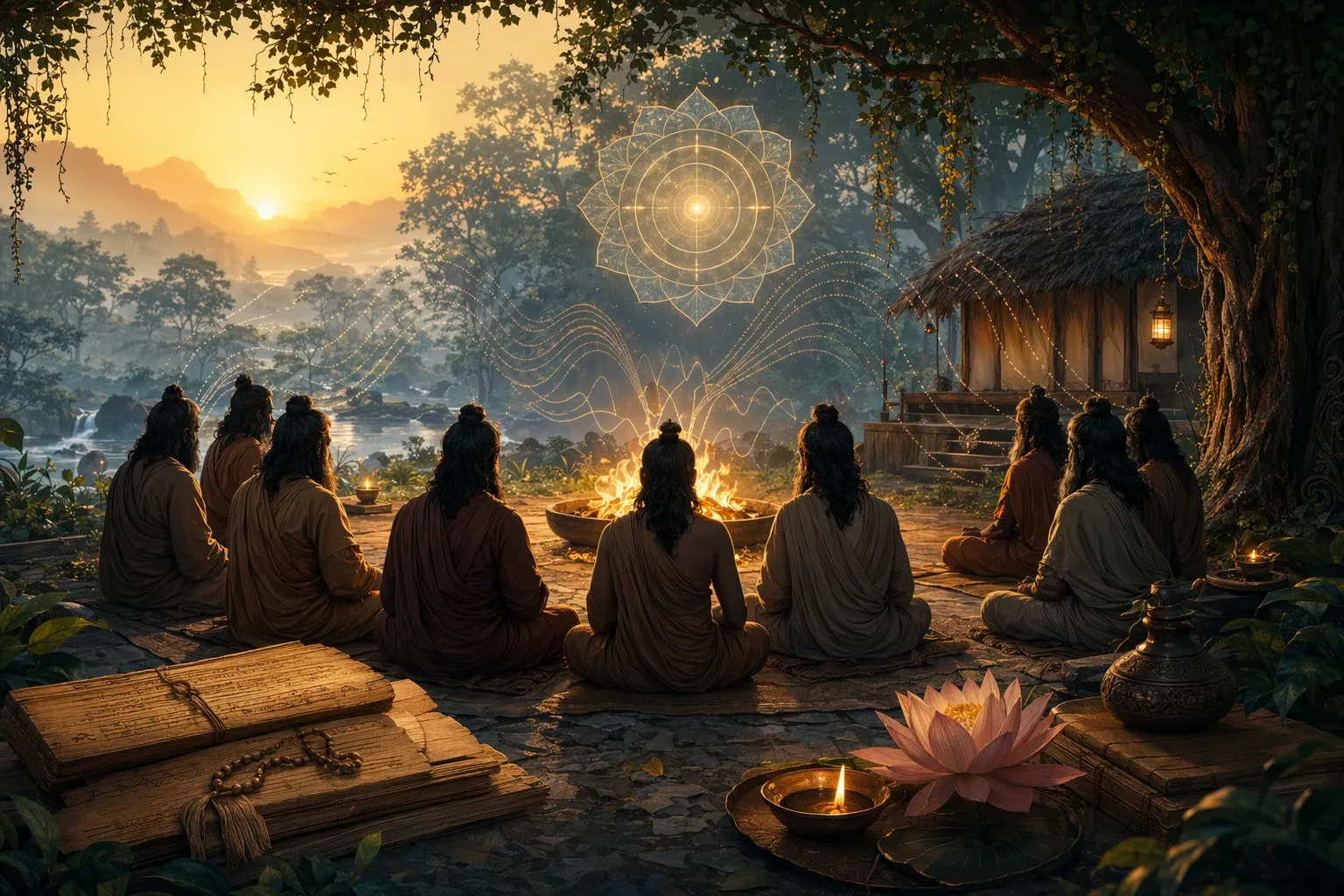
For a long time, sacred knowledge in India was preserved orally. Students learned from teachers through listening and repetition. Writing came later as manuscripts and copies developed.
This means the oldest manuscript we have is not necessarily the “birth date” of the teaching. Oral preservation is central to the story.
Traditional and historical views
Traditionally, the Upanishads are revered as Shruti. Historically, scholars study language, style, references, and comparison to understand how different Upanishads developed over time.
A respectful beginner view can hold both: honour the sacred tradition while also understanding that texts have transmission histories.
A helpful next step is Are the Upanishads Shruti, Smriti, or Vedanta? Simple Terms Explained and Can Anyone Read the Upanishads? Women, Students, and Modern Readers Explained Respectfully.
Simple answer to remember
Say it like this: The Upanishads were preserved by ancient Vedic rishis and teacher-student lineages; they do not have one human author like a modern book.
This answer avoids weak certainty and respects the way the tradition understands sacred knowledge.