Why Do Some Jains Wear Masks and Say “Sorry”? Jain Practices Explained
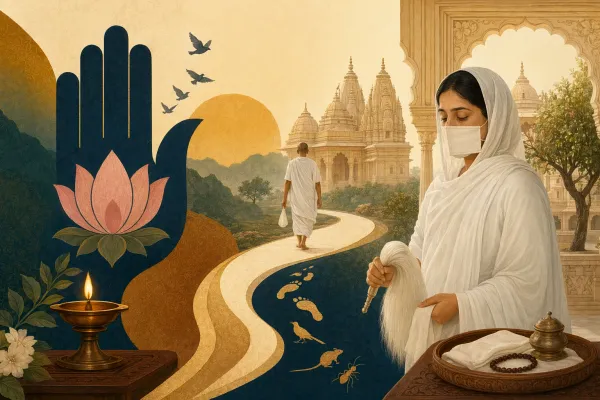
Some Jain practices look unusual from outside, but they express ahimsa, careful speech, forgiveness, and respect for even tiny life forms.
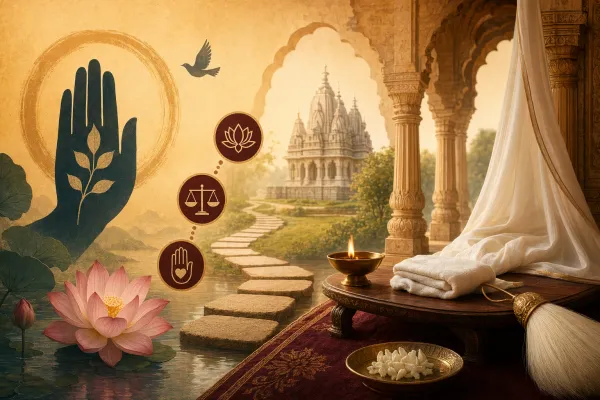
Jainism teaches non-violence, karma, restraint, many-sided truth, and liberation. Here is a simple guide to its core ideas.
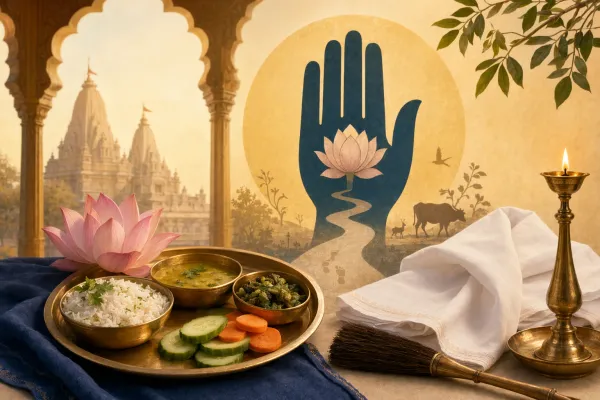
Jain food rules come from ahimsa, restraint, and careful living. Here is a beginner-friendly guide to what many Jains avoid and why.
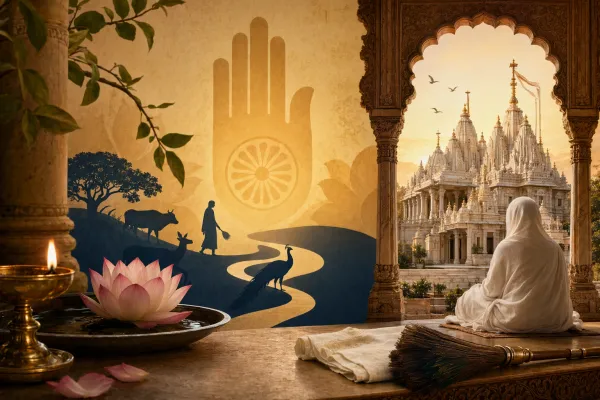
Jain temples and symbols point toward non-violence, self-discipline, liberation, and reverence for the Tirthankaras.
Jainism honours perfected beings and spiritual teachers, but it does not centre on a creator God who controls the universe.
Mahavira is central to Jain history, but Jain tradition understands him as the 24th Tirthankara rather than the only founder.
Jainism is an ancient Indian dharma tradition centred on non-violence, self-discipline, karma, compassion, and liberation.