
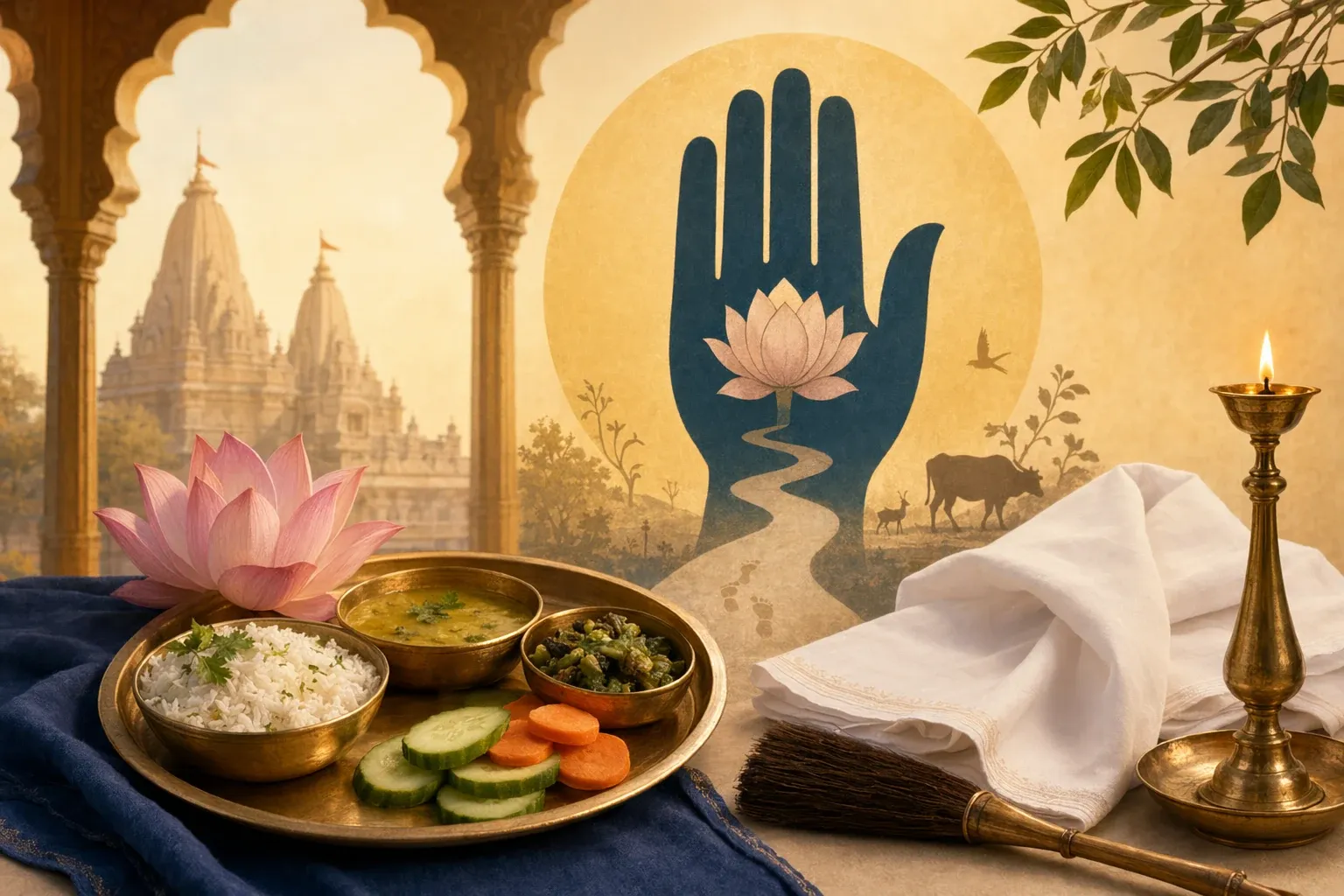
Jain food rules come from ahimsa, restraint, and carefulness. They are not random restrictions, and they are not meant to make Jainism look unusual. The basic idea is that eating should reduce harm as much as possible, train the senses, and remind a person that desire should not rule every choice.
For beginners, the short answer is that most Jains are vegetarian, many avoid root vegetables, some avoid eating after sunset, and stricter practitioners follow additional rules during fasting, festivals, travel, or religious observance. Practice varies by family, sect, region, age, health, and personal commitment.
Food rules come from ahimsa
Ahimsa means non-violence, but Jainism applies it with unusual seriousness. Food is one of the most daily forms of action, so it becomes a practical field for compassion. A Jain diet asks: how much life is harmed for this meal, how much attachment is growing in me, and can I choose a simpler option?
This does not mean every Jain household follows identical rules. Monks and nuns follow far stricter discipline than householders. Some families are very observant, some are moderate, and some are culturally Jain while still learning. The principle remains the same: reduce harm and eat with awareness.
Vegetarianism in Jain life
Jainism is strongly associated with vegetarianism. Meat, fish, and eggs are generally avoided because they involve direct harm to animals or potential life. For many Jains, vegetarian food is not only a health or taste choice; it is a religious and ethical commitment connected with compassion.
Dairy is more complex. Traditional Jain households often use milk, ghee, curd, or paneer, but many modern Jains question dairy because of animal welfare concerns in industrial systems. This is why some Jains today explore veganism. Vegan practice is not universal, but the conversation fits Jain concern for reducing harm.
Why many Jains avoid root vegetables
Many Jains avoid root vegetables such as potatoes, onions, garlic, carrots, radish, beetroot, and similar foods. One reason given is that uprooting the plant destroys the whole organism. Another is that root vegetables may contain many tiny life forms in the soil around them. The rule expresses caution toward hidden harm.
Not every Jain follows this in the same way. Some avoid all root vegetables daily, some observe the rule during festivals or fasts, and some families make practical exceptions. Beginners should avoid mocking the rule as superstition. It comes from a serious ethic of carefulness, even if levels of observance differ.
Fasting and mindful eating
Fasting is important in Jain practice, especially during Paryushan and other observances. Fasts may range from avoiding certain foods to complete fasting under guidance. The aim is not body-shaming or showing off toughness. It is self-discipline, repentance, purification, and remembering that the soul is more than appetite.
Mindful eating also includes not wasting food, avoiding unnecessary indulgence, eating at appropriate times, and sometimes avoiding food after sunset. These habits train restraint. In a world of constant snacking and delivery apps, Jain food discipline asks a very modern question: are you eating with awareness, or just obeying craving?
What foods are usually avoided
Commonly avoided foods include meat, fish, eggs, and in many households root vegetables. Alcohol may also be avoided because it clouds judgement and can involve fermentation concerns. Honey is avoided by many because collecting it may harm bees. Some strict Jains also avoid certain fermented foods, stale food, or foods prepared without attention to cleanliness and non-violence.
The exact list depends on tradition and family practice. If you are hosting Jain guests, do not guess. Ask politely whether they avoid onion, garlic, root vegetables, eggs, dairy, or food cooked after sunset. This small question shows respect and prevents embarrassment.
Jain food is not only about restriction
It is easy to describe Jain food only as “what Jains cannot eat”. That misses the spirit. Jain food culture includes creativity, hospitality, festival dishes, simple sattvik flavours, community meals, and careful cooking. The restrictions create boundaries, but within those boundaries families build rich cuisines.
For a wider ethical background, read our karma meaning guide and dharma guide. Jain food rules are one everyday example of how action, intention, and responsibility are connected.
How to host Jain guests respectfully
If you are cooking for Jain guests, ask clearly and early. A safe menu for many observant Jains avoids meat, fish, eggs, onion, garlic, potatoes, carrots, radish, beetroot, and other root vegetables. But practices vary, so the best question is not “Can Jains eat this?” but “What do you personally avoid?”
Use separate utensils if needed, check packaged ingredients, and avoid sauces or breads that hide egg, gelatin, fish sauce, or onion-garlic paste. Respectful hosting is not about panic; it is about care. A simple, clearly prepared meal is better than a fancy dish with uncertain ingredients.
For young readers, the larger lesson is not to copy a rule without understanding it, or reject a rule because it looks difficult. Jain food discipline asks us to notice invisible harm, hidden desire, and the moral cost of convenience. That question remains powerful even outside Jain homes.
What beginners should remember
Jain food rules are rooted in ahimsa and self-restraint. Most Jains are vegetarian, many avoid root vegetables, some practise fasting and time-based eating, and modern Jains may also discuss veganism. The goal is not to judge others, but to reduce harm and train desire. Food becomes a daily reminder that compassion is not only an idea; it is something placed on the plate.