
If you searched for “are puranas authentic”, this guide is for you. We will keep it simple, respectful, and useful for beginners.
Quick answer
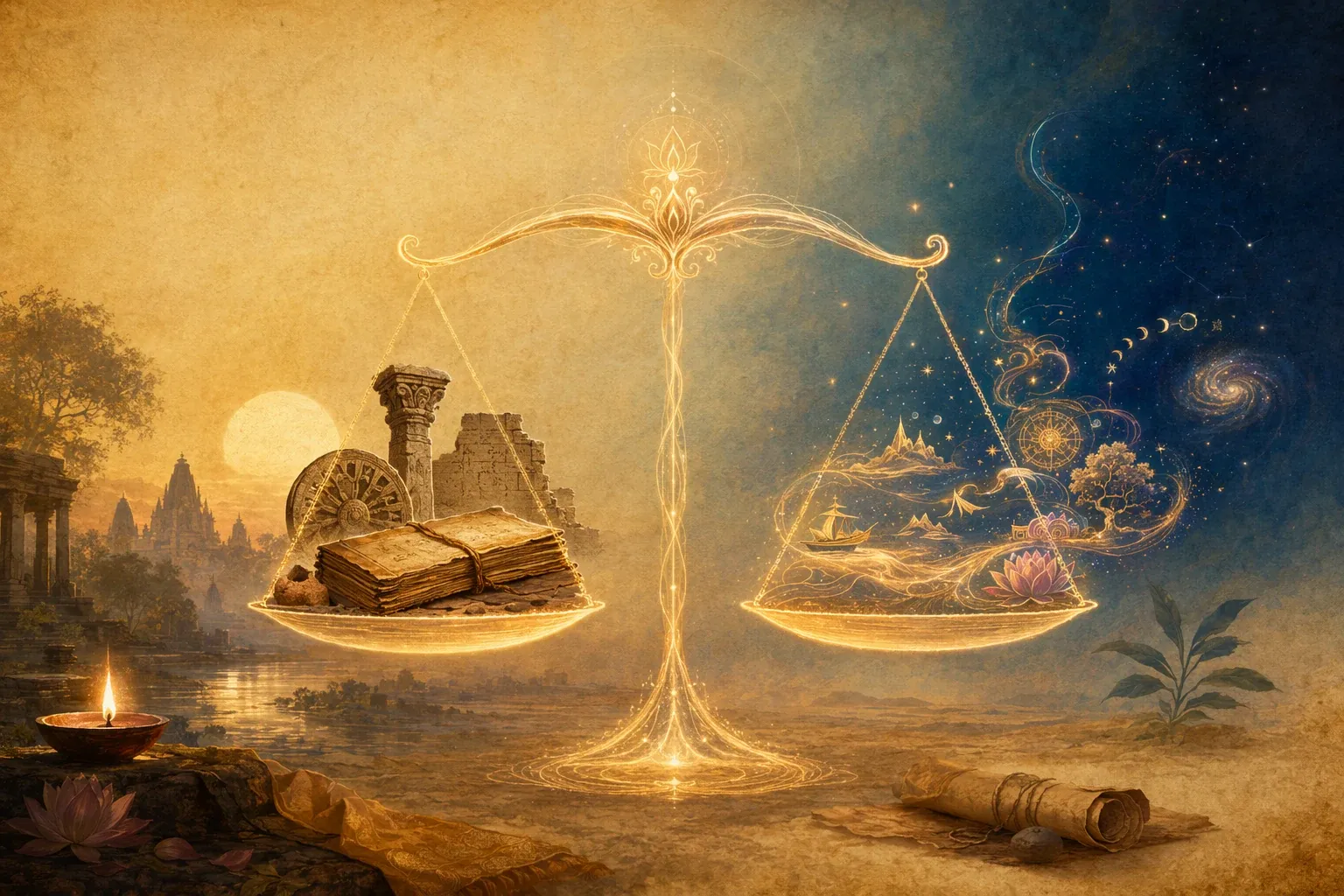
The Puranas can be read through more than one lens. Devotees may see them as sacred truth and living tradition. Cultural readers may see them as memory, symbolism, and storytelling. Historians may use selected material carefully, while not treating every story as modern-style history.
So the best beginner answer is not simply “real” or “fake.” The Puranas are authentic Hindu texts with deep cultural and religious importance, but they should not always be forced into modern categories like newspaper history or fantasy fiction.
Why people ask this question
Puranic stories can include cosmic time cycles, gods, sages, boons, curses, miraculous births, avatars, and worlds beyond ordinary experience. Modern readers naturally ask: did this literally happen, is it symbolic, or is it devotional teaching?
That question is valid. But the tone matters. Asking with curiosity leads to learning. Asking only to mock or only to win an argument usually misses the purpose of the text.
Devotional truth and sacred story
For many devotees, a Puranic story is not “just a story.” It carries the presence of the deity, the power of bhakti, and lessons about surrender, karma, humility, and dharma. The story becomes a path of remembrance.
This kind of truth is different from checking a bus timetable. It works through meaning, worship, identity, and transformation. A respectful reader should recognize that.
Symbolic and moral meanings
Some Puranic stories can also be read symbolically. A battle may represent inner struggle. A demon may represent ego or ignorance. A pilgrimage may represent purification. A boon may show the danger of power without wisdom.
Symbolic reading does not have to insult devotion. Many traditions use layered meanings: literal, ethical, devotional, philosophical, and symbolic can exist together.
How historians use Puranas
Historians may study genealogies, place names, rituals, social ideas, and cultural patterns in the Puranas. But they usually handle this material carefully, comparing it with inscriptions, archaeology, other texts, and historical context.
This means the Puranas can be historically valuable without every episode being treated as a modern court document. Careful use is stronger than overclaiming.
Respectful takeaway
If you are a believer, the Puranas can deepen devotion. If you are a student, they can reveal how Indian culture imagined time, ethics, divinity, and society. If you are unsure, read slowly and ask what each story is trying to teach.
The Puranas deserve neither blind dismissal nor careless sensationalism. They deserve patient, respectful interpretation.