
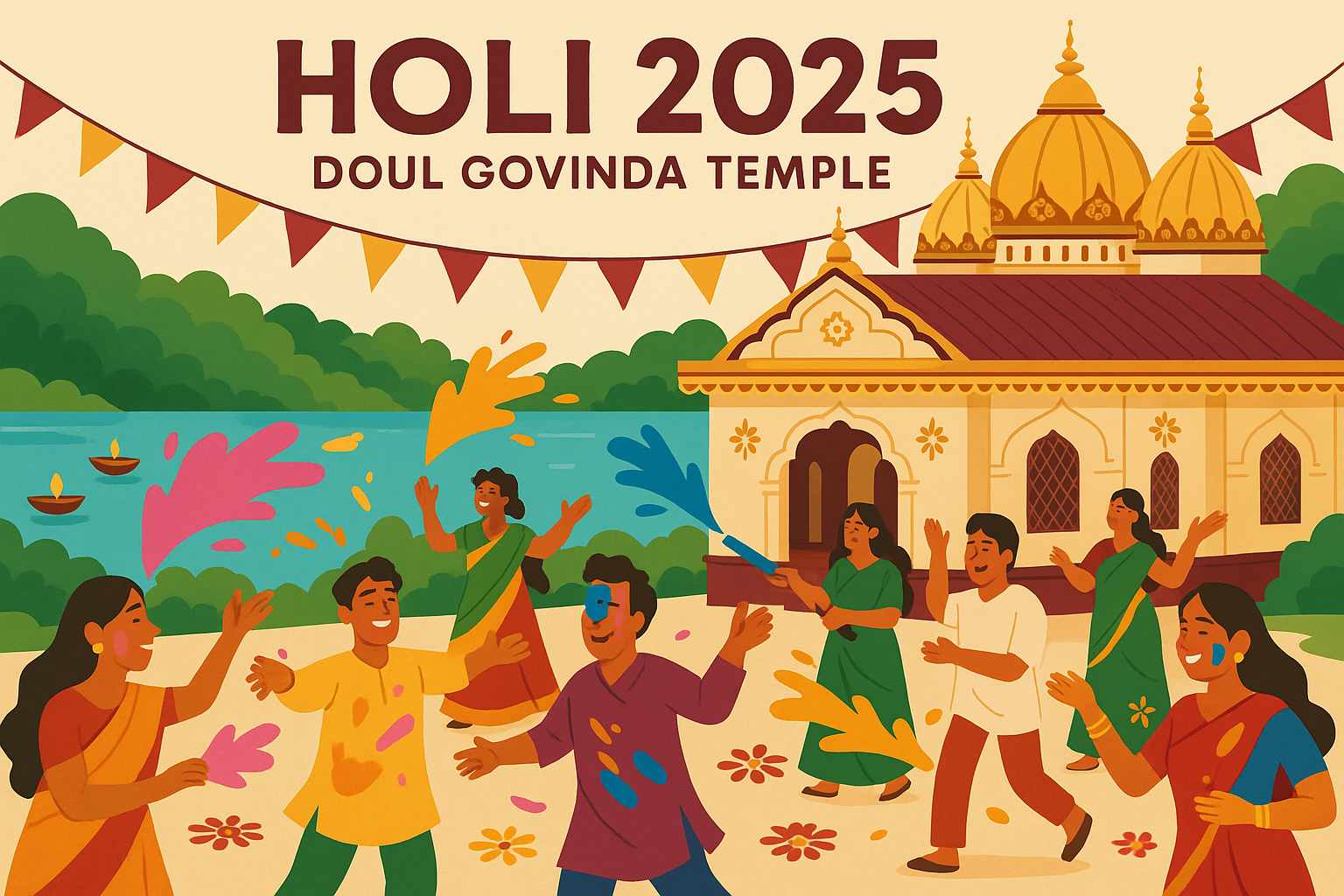
Doul Utsav, also called Doul Yatra or Phakuwa in Assam, is a spring celebration associated with Krishna and Holi. Doul Govinda Temple in North Guwahati is closely identified with Krishna worship, making the festival an important time for devotees. Exact dates and programmes change each year, so this evergreen guide explains the tradition without recycling expired schedules.
What is Doul Utsav?
The Majuli district administration’s festival guide describes Falgutsav, Doul Yatra or Phakuwa as an Assamese spring festival of colours celebrated in Phaguna, usually in February or March. Its account connects the observance with Krishna, a sacred fire, the placing of the deity on a swing, devotional processions and community celebration.
Local practice varies between temples, satras and communities. A general description of Doul in Assam should not be treated as the exact programme for Doul Govinda Temple in a particular year.
Why Doul Govinda Temple is significant
Assam Tourism identifies Lord Govinda and Lord Shyamaray as the temple’s two idols. The Kamrup district administration records regular pilgrimage at the temple and especially strong attendance during Magha and the full-moon day. Together, the Krishna focus and the temple’s living pilgrimage tradition explain why the spring observance has special resonance here.
Before attending
- Confirm the current year’s dates and daily programme with the temple administration.
- Check current road and river transport; festival crowds can change normal access.
- Arrive with time for queues and follow instructions around the shrine and processions.
- Use colours only where permitted and respect people who are worshipping rather than participating in colour play.
- Do not rely on a past article’s claims about entry fees, food, photography or exact ritual times.
Festival dates change every year
Doul follows a religious calendar, so a date printed for 2025 or 2026 should never be copied into a future guide. This page will remain evergreen; Bhaktilipi should publish a dated update only when a current programme can be linked to an authoritative announcement.
Respecting a living tradition
The festival combines devotion, music, procession and colour. Visitors should approach it as a religious observance and community gathering, not merely as a photo opportunity. Follow the temple’s instructions, avoid obstructing rituals, and ask before photographing people at close range.
Related guides
For year-round travel planning, read the Doul Govinda visitor guide. For historical context, see Doul Govinda Temple: history, setting and significance.