
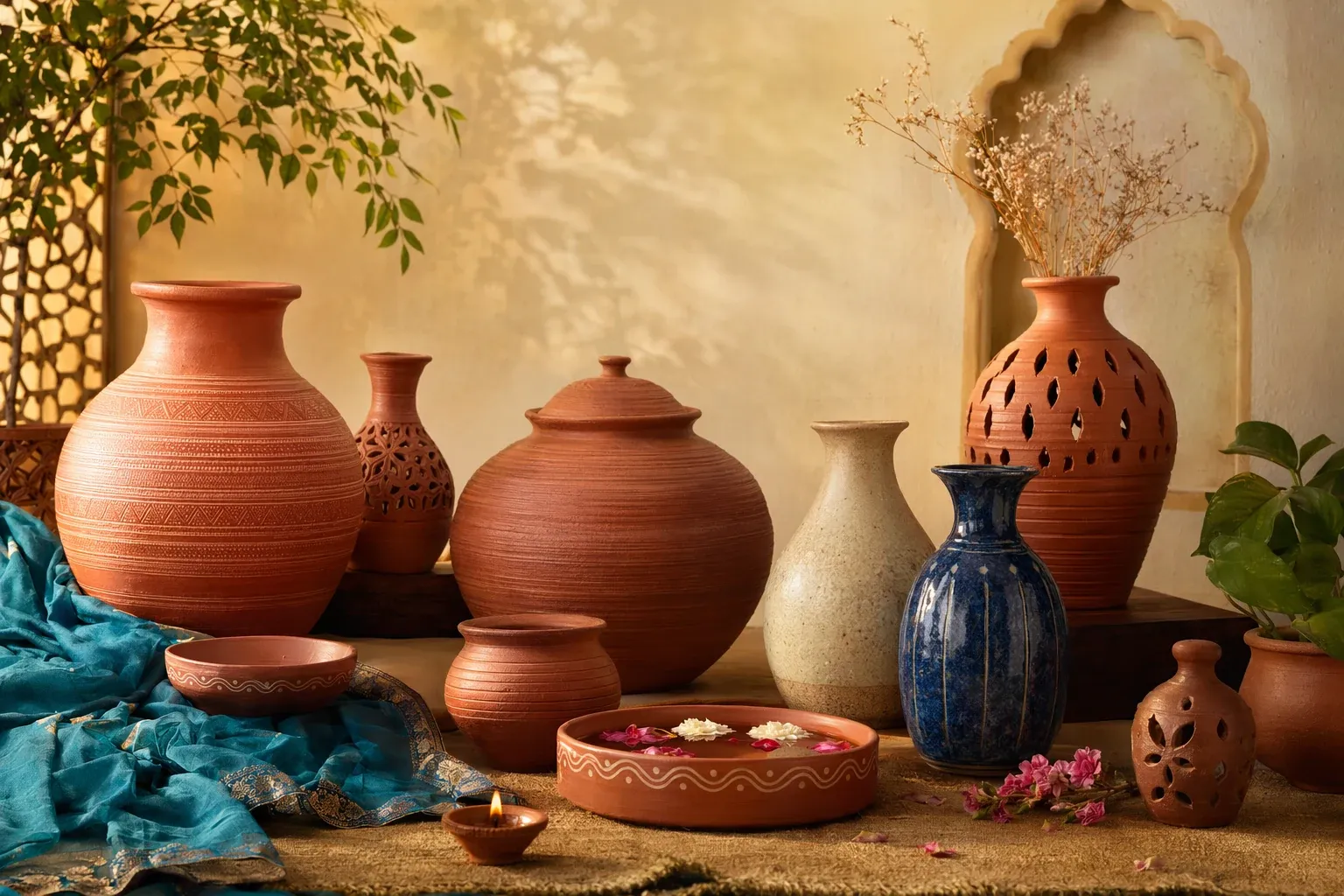
Why Indian homes still love clay vessels
Indian pottery is not only for museums. It sits on balconies as planters, holds water in a matka, appears on dining tables as bowls, becomes a handi for slow cooking, decorates walls as terracotta plaques, and carries light as a diya. A pottery vase can be a simple flower holder or a carefully made craft object from a regional tradition. A clay pot can be practical, ceremonial, decorative, or all three at once.
For the larger pottery tradition behind these objects, start with What Is Indian Pottery? Meaning, History, and Why It Matters. If you want to compare common clay types and finishes, read Indian Terracotta Pottery: Meaning, Uses and Cultural Value and Black Pottery in India: Colour, Craft and Regional Traditions.
Because clay is porous, earthy, and sometimes unglazed, it behaves differently from steel, glass, plastic, or modern non-stick cookware. It can absorb water, smell, oil, colour, and heat. It can also break if shocked by sudden temperature changes. Caring for Indian pottery is therefore not difficult, but it does ask for attention. If you treat every clay piece like a regular bowl, you may shorten its life.
Vases, matkas, handis, diyas, and decorative pieces
The word “pottery vase” usually points to a vessel made for flowers, display, or interior decoration. It may be unglazed terracotta, painted clay, burnished black pottery, blue pottery, glazed Khurja ware, or a modern studio ceramic. A matka is a porous water pot that cools water through evaporation. A handi is a rounded cooking vessel used for slow heat. A diya is a small lamp for oil or ghee. Terracotta figures, horses, plaques, and toys are usually decorative or ritual rather than food vessels.
This difference matters. A decorative vase is not automatically safe for drinking water or food. A cooking pot is not automatically suitable for a gas stove unless it is made and sold for that purpose. A painted craft piece may have colours or finishes meant only for display. Before using any pottery with food, ask: was this made for food contact, for water storage, for cooking, or only for decoration?
Before first use: slow preparation is safer
Unglazed clay cookware often needs soaking before first use. Many makers recommend soaking the pot in water so the clay becomes evenly hydrated. Some households also boil water or cook simple starchy food in it first. These practices vary by maker and region, so the safest rule is to follow the maker’s instructions when available. If there are no instructions, begin gently: wash with plain water, soak if appropriate, dry slowly, and use low heat at first.
Never place a cold empty clay pot directly on high flame. Sudden heat can break it. Add water, oil, or food before heating, and begin with low heat. Avoid moving a hot clay pot onto a cold wet surface. Use a wooden board, cloth pad, or trivet. Thermal shock is one of the most common reasons clay vessels break. The pot is strong in its own way, but it does not like sudden extremes.
Cooking safely in clay pots
Clay cooking works best for slow, moist cooking: dal, rice, khichdi, kadhi, curries, vegetables, and some biryani-style dishes. The vessel warms gradually and holds heat. Use wooden or silicone spoons rather than sharp metal scraping. Do not use a damaged pot for cooking, because damage can worsen and trap food. If a pot smells strongly of chemicals, paint, fuel, or mould, do not use it for food.
Food safety also includes glazes and colours. Some ceramic glazes in the world have historically used lead compounds to create shine or bright colour. Properly made food-safe ceramics are tested so harmful metals do not leach into food. But old, unknown, damaged, imported, or decorative pottery should be treated with caution, especially for acidic foods such as tamarind, tomato, lemon, vinegar, or curd. “Traditional” does not automatically mean “safe for every use”. Ask for food-safe assurance from the seller, especially for glazed or brightly painted pieces.
Cleaning without damaging the clay
Unglazed clay absorbs soap more easily than steel or glass. For everyday cleaning, rinse with warm water and use a soft brush, coconut fibre scrubber, or sponge. Avoid harsh detergent soaking unless the maker says it is safe. For light smell, sunlight and air drying help. For stubborn oil, many households use warm water with a little baking soda, rice flour, gram flour, or salt as a gentle scrub. Rinse well and dry completely.
Do not put unglazed clay cookware in the dishwasher. Do not leave it closed while damp, because mould can grow. Store it with the lid slightly open or separate. If mould appears, clean thoroughly, dry in sunlight, and check whether the smell remains. If a cooking pot continues to smell musty or has deep fractures, retire it from food use and use it as a planter or decorative piece instead.
Using clay pots for water
A matka cools water because moisture slowly evaporates through tiny pores in the clay. This is why the outside can feel damp in hot weather. Keep it on a stand or plate so the surface below does not get damaged. Wash it regularly, especially around the mouth and lid. Use a clean ladle or tap rather than dipping hands or used cups into it. If the water tastes earthy in the beginning, rinse and soak the pot again.
Do not store milk, juice, or acidic drinks in an unknown unglazed vessel for long periods. Clay can absorb smell and may not be suitable for every liquid. For drinking water, buy from a reliable maker and avoid pieces with questionable paint inside. If the pot has a shiny inner coating, ask whether it is food-safe and meant for water storage.
Caring for vases and decorative pottery
For flower vases, first check whether the inside is sealed. Some terracotta vases seep water unless they are lined or glazed. Use a glass insert if needed. Keep painted pottery away from long direct sunlight if colours may fade. Dust with a soft dry cloth. Avoid aggressive scrubbing on painted or burnished surfaces. If a piece is handmade, small asymmetries are not defects; they are often signs of handwork.
When buying, look beyond decoration. Ask where it was made, what material was used, whether it is food-safe, whether it can go on flame, and how it should be cleaned. Supporting artisans also means using their work correctly. A cooking pot should be cooked in; a ritual lamp should be used respectfully; a display vase should not be forced into kitchen duty.
A simple care checklist
Use clay slowly, clean it gently, dry it completely, and store it with air. Separate food-safe pieces from decorative pieces. Avoid sudden temperature changes. Retire damaged cookware from cooking. Be extra cautious with unknown glazes, bright paint, antique pieces, or vessels sold without clear use instructions. These small habits protect both your health and the craft object.
Indian pottery carries the warmth of earth and handwork. When we care for it properly, it lasts longer and teaches us a quieter way of living with objects. Not everything needs to be disposable, shiny, or instant. A good clay pot asks for patience, and in return it brings beauty, usefulness, and a small reminder of how close Indian culture has always been to the soil.
Questions people ask about this topic
Indian pottery vase?
An Indian pottery vase may be terracotta, glazed ceramic, blue pottery, black pottery, or a modern studio piece. Some are only decorative, while others can hold water or flowers.
Indian pottery vases?
Indian pottery vases vary by shape, clay body, glaze, paint, region, and purpose. Always check whether the inside is sealed before filling with water.
Indian pottery vase types?
Common vase types include unglazed terracotta vases, painted clay vases, glazed Khurja-style pieces, blue pottery pieces, and contemporary handmade ceramics.
How to clean Indian pottery?
Clean unglazed pottery with warm water and gentle scrubbing, then dry fully. Avoid harsh detergent soaking and dishwashers unless the maker says the piece can handle it.
How to use Indian pottery for cooking safely?
Use only cookware made for cooking, begin on low heat, avoid thermal shock, check for food-safe glaze, and do not cook in damaged or unknown decorative pieces.
Related reading
For broader context on Bhaktilipi, continue with Indian Terracotta Pottery: Meaning, Uses, and Cultural Importance and Ancient Indian Pottery: What Clay Vessels Tell Us About History.