Why these searches are popular
Prana Mudra, chakra mudra, and heart chakra content are very popular online because they sound deep, personal, and hopeful. Many people search them when they want energy, emotional balance, or a more meaningful meditation routine. That curiosity is understandable. But it is also an area where exaggerated claims spread quickly.
A balanced approach is better. Learn the cultural language, practise gently, and avoid treating mudras as guaranteed solutions. Mudras can support reflection and attention; they should not be sold as cures.
What is Prana Mudra?
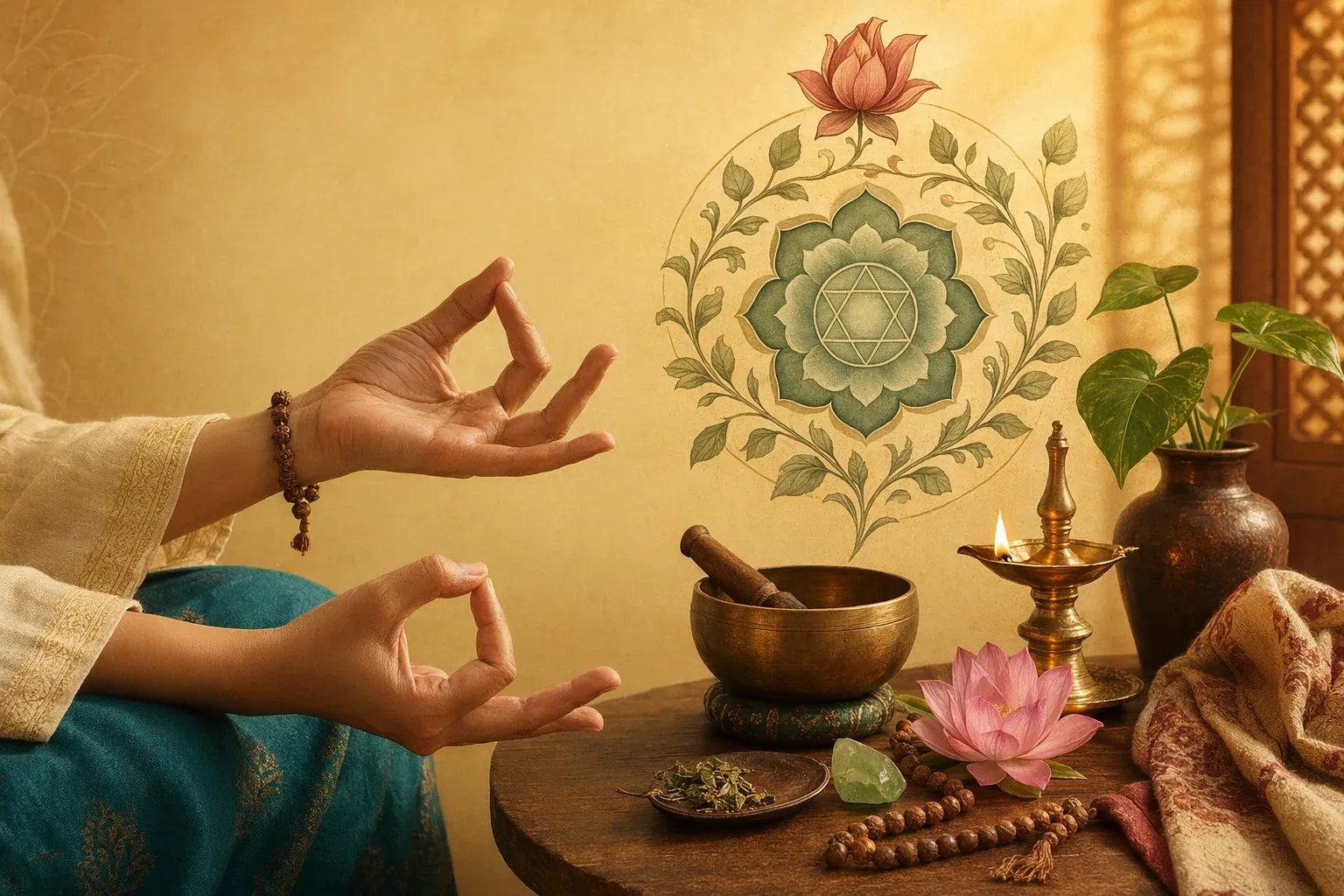
Prana is often translated as life force, vital energy, or breath-linked vitality in Indian thought. Prana Mudra is commonly shown by touching the tips of the ring finger and little finger to the thumb, while the index and middle fingers remain extended. You may see small variations in different yoga sources.
For a beginner, the safest way to understand Prana Mudra is as a symbolic and meditative hand gesture connected with vitality and inward awareness. If you practise it, keep the touch light. Sit comfortably. Breathe naturally. Notice whether the gesture helps you feel more attentive or settled.
What do people mean by chakra mudra?
Chakra means wheel or centre in many Indian spiritual contexts. Online, “chakra mudra” may refer to mudras linked with different energy centres, such as root, heart, throat, or crown. However, not every post uses traditional sources carefully. Some mix yoga, tantra, wellness marketing, and personal invention without saying so.
This does not mean you must reject everything. It means you should read with care. Ask: Who is teaching this? Which tradition are they referencing? Are they making huge promises? Are they respectful toward the source culture?
Heart chakra searches: what to keep in mind
Heart chakra content often speaks about love, compassion, forgiveness, and emotional openness. These are beautiful themes. A hand gesture, prayer, journaling, or meditation can support reflection on them. For example, Anjali Mudra near the chest can be a simple way to practise gratitude or compassion.
But be careful with emotional claims. If someone says a mudra will heal heartbreak, remove trauma, or fix relationships, that is too much. Human emotions are complex. Supportive practices can help you sit with feelings, but serious emotional pain may need trusted people, therapy, counselling, or professional care.
A gentle heart-centred practice
Sit comfortably. Bring the palms together in Anjali Mudra near the chest. Take three natural breaths. Think of one person you appreciate. Then think of one way you can be kinder today, without ignoring your boundaries. Release the hands and sit quietly for a few seconds.
This practice does not claim to open anything instantly. It simply uses a mudra to focus attention on gratitude and kind action. That is practical and respectful.
How long to hold Prana Mudra
If you are new, try 2 to 5 minutes. There is no need to chase long timings. If the hand feels tired, release. If you are adding it to meditation, let it be part of a broader routine that includes posture, breath, and quiet attention.
Some teachers may suggest longer practice. If you trust the teacher and your body feels comfortable, you can explore slowly. But do not measure your worth by minutes.
Avoid these common traps
Do not believe every chart that maps one mudra to one guaranteed result. Do not diagnose yourself through chakra posts. Do not blame yourself by thinking, “My heart chakra is blocked, so everything is my fault.” That kind of thinking can become heavy and unfair.
Also avoid mixing too many practices at once. Prana Mudra, affirmations, crystals, breath holds, intense visualisations, and fasting all in one day may create confusion rather than clarity. Keep it simple.
Example: using Prana Mudra before study
A student may sit for three minutes with Prana Mudra before opening books. The intention is not to magically become energetic. The intention is to pause, breathe, and begin with attention. After releasing the mudra, the student still needs sleep, planning, revision, and breaks. The mudra supports the start; it does not replace effort.
A journaling prompt
After a short practice, write one honest line: “Right now I feel…” Do not judge the answer. This keeps chakra-related practice grounded in self-awareness instead of fantasy. Over time, these small notes may show patterns in mood, rest, and attention.
Cultural respect matters
Words like prana and chakra come from Indian knowledge systems with deep histories. They should not be stripped into trend labels only. If you use them, learn pronunciation, meaning, and context. Be open about what you know and what you are still learning.
FAQ
Is Prana Mudra safe for beginners?
For most people, a gentle hand gesture for a few minutes is simple. If you have hand pain or medical concerns, keep it brief or ask a professional.
Can a mudra balance chakras?
Different traditions explain this differently. For beginners, it is safer to say mudras can support mindful attention and symbolic reflection, not promise guaranteed balancing.
Which mudra is linked with the heart?
Many people use Anjali Mudra for gratitude, devotion, and heart-centred reflection. Learn the meaning rather than chasing dramatic claims.
Where to go next
For timing, read `how-long-hold-mudra-best-time-practice`. For beginner meditation mudras, read `mudra-yoga-meditation-best-for-beginners`. For careful sleep and stress guidance, read `which-mudra-good-sleep-stress-safe-explanation`.