
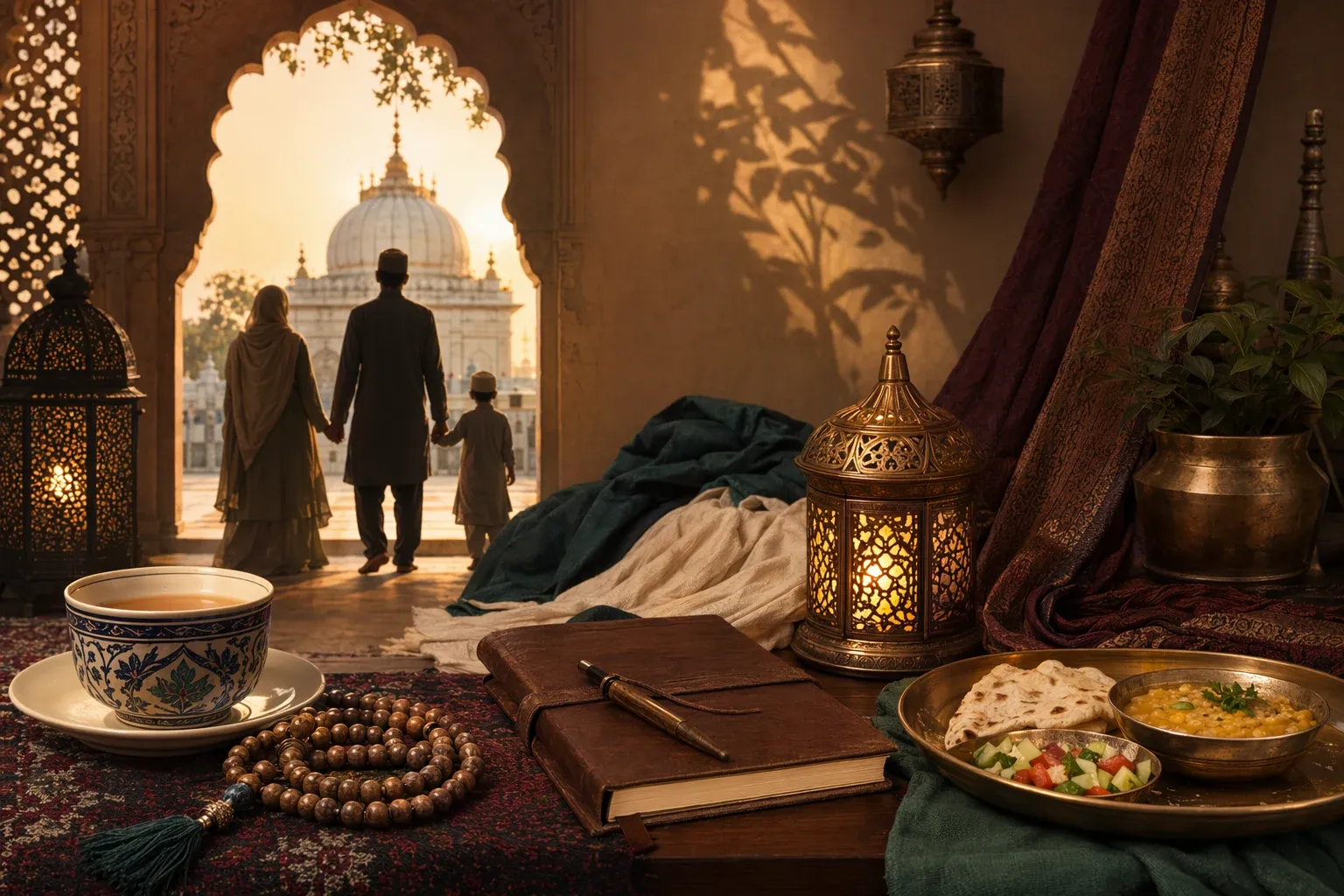
Sufi life is often imagined in extremes. Some people picture a saint who has renounced everything, lives outside family life, and spends every moment in prayer. Others picture Sufism as a free, musical, rule-free spirituality where ordinary Islamic boundaries do not matter. Both pictures are incomplete. Sufism, or tasawwuf, is an inward spiritual path within Islam. It usually aims to deepen religious life, not escape from it.
That is why questions like “Are Sufis allowed to marry?” or “Do Sufis drink alcohol?” need careful answers. Sufis are not a separate legal community with one global rulebook. They belong to Muslim societies, follow Islamic law through different schools and local traditions, and may also take guidance from a spiritual teacher or order. For the basic background, start with Bhaktilipi’s beginner guide to Sufism in India.
Are Sufis allowed to marry?
Yes, many Sufis marry. Sufism is not usually a monastic path. In Islam, family life, work and social responsibility are not treated as automatically lower than spiritual life. Many famous Sufi teachers lived with families, worked, taught students and handled ordinary social duties. A person can seek inward purification while also being a spouse, parent, worker, neighbour and citizen.
There have been ascetic Sufis who lived simply, travelled widely, or avoided marriage for personal reasons. But that does not make celibacy the default Sufi rule. The more common idea is balance: live in the world without letting the world own your heart. Marriage, when lived with honesty, patience and responsibility, can itself become part of spiritual discipline.
Do Sufis drink alcohol?
In mainstream Islam, alcohol is prohibited, and Sufi traditions generally do not override that. Confusion often comes from poetry. Sufi poets may use words like wine, tavern, intoxication and cupbearer as metaphors for divine love, spiritual ecstasy or being overwhelmed by remembrance. These images are poetic language, not a simple permission slip for drinking.
Readers should be especially careful with translated poetry on social media. A line about “wine” may not be talking about a bottle at all. It may be part of a symbolic vocabulary used by Persian, Urdu, Punjabi, Sindhi or Turkish-influenced devotional literature. The metaphor points to loss of ego and absorption in love; it should not be flattened into lifestyle advice.
What does daily Sufi practice look like?
Daily practice varies by order, teacher and region, but some themes are common. Zikr, or remembrance of God, is central. It may be silent or spoken, individual or collective. There may be regular prayer, recitation, ethical self-examination, service to others, listening to teachings, visiting a teacher, or joining gatherings connected with a khanqah or dargah. The outer form can vary, but the goal is usually a more sincere heart.
In India, public Sufi culture is often visible through dargahs. People may visit to offer flowers, sit quietly, seek blessings, feed others or attend an urs, the death-anniversary festival of a saint understood as union with God. Bhaktilipi’s guide to Sufi saints and dargahs in India explains this world in more detail.
Is music required in Sufism?
No. Music is important in some Sufi contexts, but it is not universal. In India, qawwali is strongly linked with Chishti devotional culture and with shrine spaces such as Delhi and Ajmer. For many listeners, qawwali carries longing, praise, surrender and spiritual emotion. But other Sufi orders or scholars may be more cautious about music, or may emphasize silent remembrance and discipline instead.
So it is better to say that music is a powerful expression within some Sufi traditions, not a compulsory rule for all Sufis. If the musical side interests you, read Bhaktilipi’s explainer on Sufi music and qawwali. It gives context without reducing Sufism to performance.
Do Sufis follow Islamic law?
Many Sufi teachers would say that the inner path and the outer path belong together. The outer path includes prayer, fasting, lawful conduct, honesty and community responsibility. The inner path asks whether those actions are done with sincerity, humility and love. In that view, Sufism is not a shortcut around religious discipline; it is an attempt to give that discipline a living heart.
That said, Muslim communities differ, and Sufi orders also differ. Some emphasize strict legal observance. Some are known more through devotional gatherings, poetry and shrine service. Some practices are debated within Islam. A respectful explainer should acknowledge that variety instead of issuing a fatwa-style answer. Bhaktilipi is explaining culture and tradition here, not giving religious rulings.
How should beginners understand “rules”?
When people ask for Sufi “rules,” they may be looking for a simple yes-or-no list. But Sufi life is better understood through three layers: Islamic ethical boundaries, guidance from a teacher or tradition, and the inner work of becoming less ego-driven. Marriage is generally allowed and often ordinary. Alcohol is generally prohibited in mainstream Islamic practice, even when poetry uses wine as metaphor. Music may be central in some Indian Sufi settings but not in all.
One more point helps beginners avoid confusion: Sufi practice is usually measured less by dramatic experiences and more by adab, meaning refined conduct. A person may attend a dargah, enjoy qawwali, or read mystical poetry, but the deeper question is whether the heart becomes more truthful, patient and merciful. Marriage, food, work and friendship are not distractions from that test; they are where the test happens. Everyday Sufi discipline asks a person to remember God while speaking fairly, earning honestly, caring for family, restraining anger and serving people without turning service into pride.
The everyday lesson is simple: Sufism is not usually about running away from human life, and it is not about doing whatever feels mystical. It is about bringing remembrance, humility and love into ordinary life — family, work, food, speech, grief, celebration and service. That ordinary discipline is less dramatic than the stereotype, but it is closer to how many spiritual traditions actually survive.