
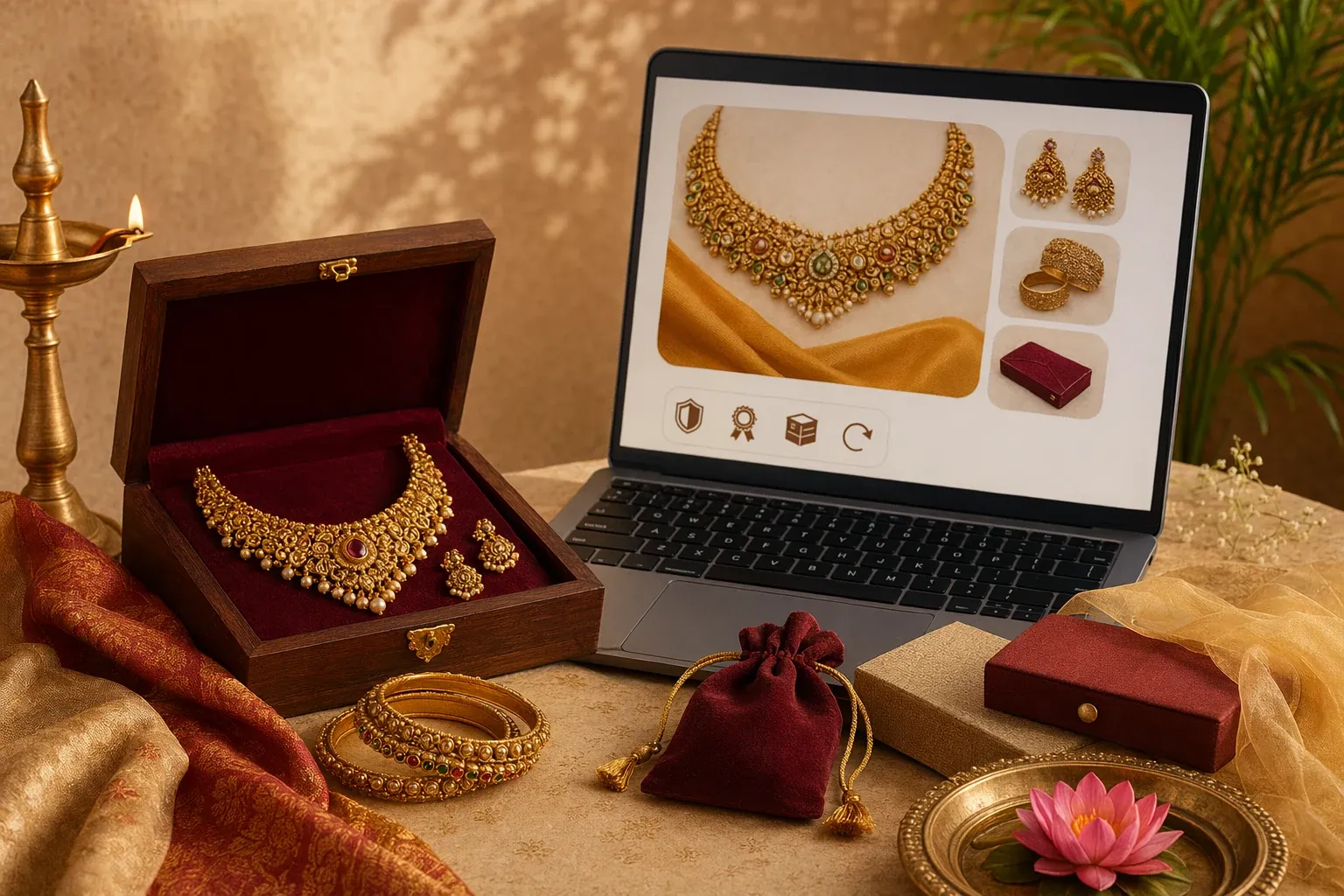
Buying Indian jewellery online can feel exciting and risky at the same time. One screen may show temple necklaces, kundan sets, silver anklets, oxidised jhumkas, mangalsutra designs, meenakari bangles, nose rings, and bridal chokers from many regions of India. But a beautiful photo does not prove material, purity, weight, comfort, or seller honesty. The safest place to buy is not always the flashiest store; it is the seller that gives clear information and leaves a paper trail.
This checklist is for beginners who want Indian jewellery without falling for vague claims. It is not an affiliate list and it does not rank shops. Instead, it teaches you how to judge any website, marketplace listing, Instagram store, or brand page before you spend money.
Before comparing shops, it helps to know the vocabulary. Use this checklist with traditional Indian jewellery basics, types of Indian jewellery, what a kundan necklace is, Indian temple jewellery, and traditional Indian necklace types so product names, materials and styles are easier to judge before checkout.
Begin with the type of jewellery you really need
Before choosing a store, decide what kind of piece you are buying. Real gold jewellery, sterling silver jewellery, gold-plated fashion jewellery, kundan-style bridal sets, temple-style ornaments, and imitation oxidised pieces should not be judged by the same checklist. A ₹500 oxidised earring and a 22K gold necklace are different purchases, with different levels of proof needed.
If you want everyday fashion jewellery, comfort, nickel safety, plating quality, return policy, and honest photos matter most. If you want silver, look for metal details such as 925 sterling silver, not only words like ethnic or tribal. If you want gold, hallmarking, purity, weight, making charges, invoice, and seller identity become non-negotiable. If you want bridal kundan or polki-style jewellery, ask whether it is fine jewellery, silver with gold plating, brass, alloy, glass stones, natural stones, or synthetic stones.
Choose sellers who explain materials clearly
A trustworthy listing should name the base material. Good descriptions say things like 22K gold, 18K gold, 925 silver, gold-plated brass, gold-plated silver, imitation alloy, glass stones, cultured pearls, or enamel. Weak descriptions only say premium, royal, authentic, ethnic, or real look. Those words may describe style, but they do not tell you what touches your skin.
Indian jewellery names can also confuse buyers. Temple jewellery may mean deity-inspired South Indian design, but it can be made in gold, silver, plated metal, or imitation metal. Kundan can refer to a traditional setting technique, but in online retail it may also describe a look made with glass stones and fashion materials. Antique finish usually means a darkened polish, not necessarily an old heirloom. Read material details before falling in love with the design name.
For gold in India, check hallmarking and HUID
For gold jewellery sold in India, BIS hallmarking is the most important official consumer clue. A hallmarked gold article is expected to carry the BIS mark, purity or fineness mark, and HUID, a Hallmark Unique Identification code. For a beginner, the practical habit is simple: if a seller says a gold item is hallmarked, ask where the hallmark details are shown and whether the HUID can be checked after delivery.
Common purity language includes 22K or 916, 18K or 750, and 14K or 585. These numbers matter because the colour gold alone proves nothing. A product photo can look rich even when the material is plated or imitation. For expensive gold, keep the listing screenshot, invoice, HUID information, packaging, and delivery record until you are sure the item matches the claim.
Study the seller before studying the discount
A safe seller gives a legal name, address or business identity, reachable support, secure payment options, return and exchange rules, shipping terms, and invoice policy. Established jewellery brands usually make this easy. Small independent sellers may also be honest, but they should still provide clear details in writing. A chat-only seller asking for instant bank transfer and refusing a proper bill is a risk.
Discounts deserve calm maths. Real gold prices cannot fall magically below the value of gold weight and purity. Handmade craft can have high making charges. Heavy bridal pieces may include stones, lac, pearls, enamel, or beads, so gross weight is not always net gold weight. If a price looks impossibly low, pause and ask what exactly is being sold.
Photos are evidence, not decoration
Good online jewellery photos show the front, back, clasp, chain, earrings from the side, stone setting, scale on a model or hand, and sometimes a video under normal light. For bangles and rings, size photos matter. For necklaces, check length in inches or centimetres, not only model styling. A choker, princess-length necklace, long haar, or mangalsutra chain will sit differently on different necklines.
Be careful when every image looks like a heavily edited catalogue shot and no real product angle is visible. Reverse-image style copying is common online. Ask for a current photo or short video if the item is costly. For handmade pieces, small variation is normal, but the seller should tell you if the exact piece may differ from the image.
Read return rules before you pay
Jewellery return policies can be strict, especially for customised rings, nose pins, engraved pendants, bridal sets, and hygiene-sensitive items. That is not automatically unfair, but the rules must be visible before payment. Check the return window, exchange option, resizing policy, cancellation rules, shipping cost, refund method, and what happens if the item is damaged or misdescribed.
For international buyers, also check customs duty, import taxes, hallmark recognition, delivery insurance, and repair support. A necklace shipped from India to the US or UK may be beautiful, but returns can become expensive. Buy high-value pieces only when the seller’s paperwork and after-sales support are strong enough for cross-border problems.
Match the jewellery to your body and occasion
Safety is not only about scams. It is also about buying something you can actually wear. Heavy jhumkas may pull on the ear. A broad choker may feel tight during a long wedding. A nose ring may need correct piercing placement. Bangles must pass over the knuckles but not slip off. Anklets and toe rings should not cut into the skin. If you are styling with a saree, lehenga, kurta, or Indo-western outfit, measure before ordering.
Indian jewellery is meant to move with the body during namaste, dancing, sitting for rituals, touching elders’ feet, eating, travelling, and greeting relatives. Comfort is part of respect for the ornament. A piece that hurts will sit in a box, no matter how pretty the photo looked.
Warning signs that should slow you down
Pause if the seller hides material, refuses invoices, avoids hallmark questions, uses only stolen-looking photos, pushes instant payment, claims impossible discounts, has many complaints about wrong items, or says all sales are final even when the product is misdescribed. Also pause when jewellery is marketed with fake royal claims, miracle protection claims, or pressure lines like last chance in ten minutes.
A good buying decision feels clear, not rushed. Indian jewellery carries craft, memory, region, and personal joy. Buying it safely means honouring that value with patient questions, written proof, and a seller who respects your right to know what you are paying for.
FAQs
Where can I buy Indian jewellery online safely?
Buy from sellers that clearly state material, purity, size, weight, invoice details, return rules, and customer support. For gold in India, prefer hallmarked jewellery with HUID information. Avoid sellers who hide basic details or pressure you into fast untraceable payment.
Is Indian jewellery on social media safe to buy?
It can be safe if the seller has a real business identity, clear invoices, transparent materials, secure payments, and written return terms. It is risky when the sale happens only through chat, with vague product details and no proper records.