
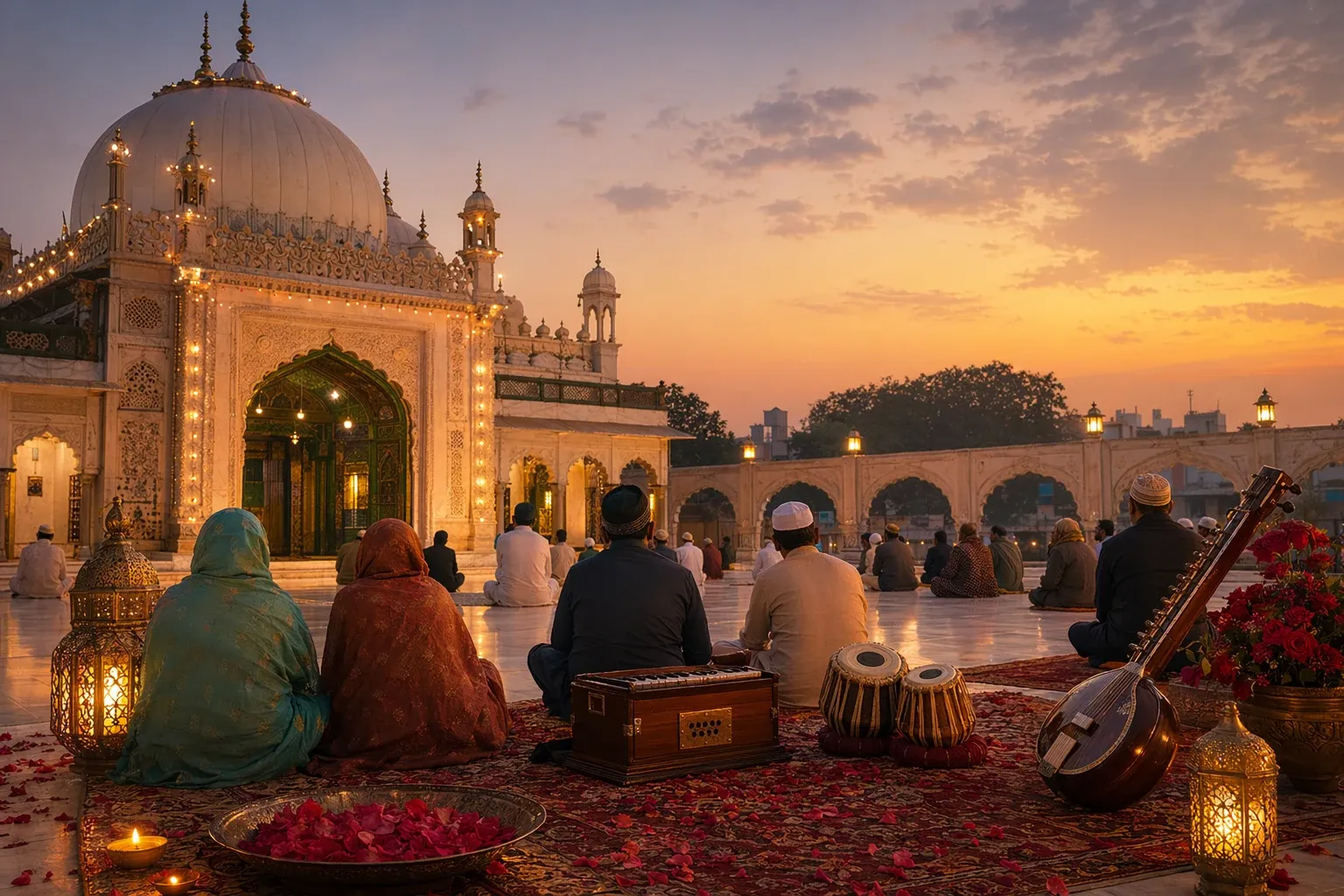
Are Indian Muslims Sufi? The honest answer is: some are, many are shaped by Sufi culture in some way, and many are not Sufi at all. “Indian Muslim” is a broad religious and social identity with many regions, languages, families, schools of thought, reform movements, devotional habits and personal choices inside it. “Sufi” is more specific. It usually points to tasawwuf, the inward spiritual path within Islam that emphasizes remembrance of God, purification of the self, humility, love, service and guidance through teachers or lineages.
This distinction matters because the question is often asked from outside the community, sometimes with sincere curiosity and sometimes with stereotypes. India has famous dargahs, qawwali gatherings, Chishti saints and stories of shared devotion. These are real parts of India’s cultural landscape. But they do not mean every Muslim in India belongs to a Sufi order, visits shrines, or agrees with shrine practices. A careful answer should hold both truths together: Sufi traditions have deeply influenced Indian Islam, and Indian Muslims themselves are diverse.
What “Sufi” means in India
In simple terms, Sufism is a spiritual current within Islam. It is not a separate religion from Islam, and it is not just poetry, music or shrine culture. Sufi practice can include zikr, ethical discipline, service, companionship with a teacher, love for the Prophet, and training the heart away from ego and arrogance. In India, Sufi orders such as the Chishti, Suhrawardi, Qadiri and Naqshbandi traditions became influential over many centuries. For a beginner-friendly foundation, read Bhaktilipi’s guide: What Is Sufism in India? It explains the basic ideas without assuming prior knowledge.
Because Sufism is lived through teachers, lineages, shrines, poetry, music and everyday manners, it often becomes visible in public culture. A dargah may welcome Muslims and non-Muslims. A qawwali may be enjoyed by people who do not identify as Sufi. A family may keep a saint’s urs in memory while also following very ordinary mosque-based religious life. These layers are why “Sufi influence” and “Sufi identity” are not the same thing.
Why many people associate Indian Islam with Sufism
The association is understandable. Some of the most visited Muslim sacred sites in India are linked to Sufi saints, especially figures such as Khwaja Moinuddin Chishti of Ajmer and Nizamuddin Auliya of Delhi. Their shrines are not only religious spaces; they are also part of India’s music, language, architecture, food charity and popular memory. If you want a deeper look at this public devotional world, Bhaktilipi’s Sufi saints and dargahs guide is the most relevant next read.
Sufi poetry and music also shape the imagination. Qawwali, sama gatherings, the poetry associated with Amir Khusrau, and later Punjabi and Sindhi Sufi traditions helped make love, longing and surrender familiar cultural themes. Even people who know little theology may recognize a song, a shrine story or a phrase about ishq-e-haqiqi, divine love. That cultural reach is powerful, but it should not be confused with a census category.
Why not every Indian Muslim is Sufi
Indian Muslims are not a single cultural block. A Muslim family in Kerala, Kashmir, Uttar Pradesh, Bengal, Gujarat, Hyderabad or Assam may have very different languages, caste-community histories, legal traditions, reform influences and local devotional customs. Some people may actively belong to a Sufi silsila. Some may respect saints and visit dargahs without calling themselves Sufi. Some may avoid shrine practices because of their religious understanding. Some may simply not organize their identity around the question at all.
This is why it is better to say: Sufism is one major strand within the history of Indian Islam, not the identity of all Indian Muslims. The Chishti presence is important; the dargah culture is important; qawwali and saintly memory are important. But Indian Muslim life also includes mosque scholarship, family customs, law, reformist movements, trade communities, regional languages, modern education, politics, art and many ordinary forms of faith that are not neatly described as Sufi.
A sensitive way to ask the question
A respectful question is not “Are Indian Muslims basically Sufis?” but “How has Sufism shaped Muslim life and wider culture in India?” That wording avoids flattening people into one label. It also opens a richer answer: Sufi saints helped create spaces of devotion and service; dargahs became important local institutions; qawwali carried spiritual language into popular culture; and shared reverence sometimes connected Muslims, Hindus, Sikhs and others in everyday cultural life.
At the same time, the respectful answer must allow disagreement. Within Islam, views on shrine visitation, music, saint veneration and devotional practice differ. These differences are not new, and they are not unique to India. A good cultural explainer should not pretend that everyone agrees, and it should not turn living communities into a romantic symbol of “syncretism” for outsiders.
The balanced answer
So, are Indian Muslims Sufi? A balanced answer is: Sufi traditions are deeply woven into Indian Muslim history and public culture, especially through saints, dargahs, poetry, service and music. Many Indian Muslims respect or participate in these traditions. Many others are influenced by them culturally without claiming a Sufi identity. And many Indian Muslims are not Sufi in belief, practice or self-description.
That nuance is the point. Sufism is not a costume placed over all Indian Muslims, and Indian Islam is not understandable without Sufism either. The more accurate view is layered: Sufi heritage is a major river in India’s religious and cultural landscape, while Indian Muslim identity remains much wider than any one river.