
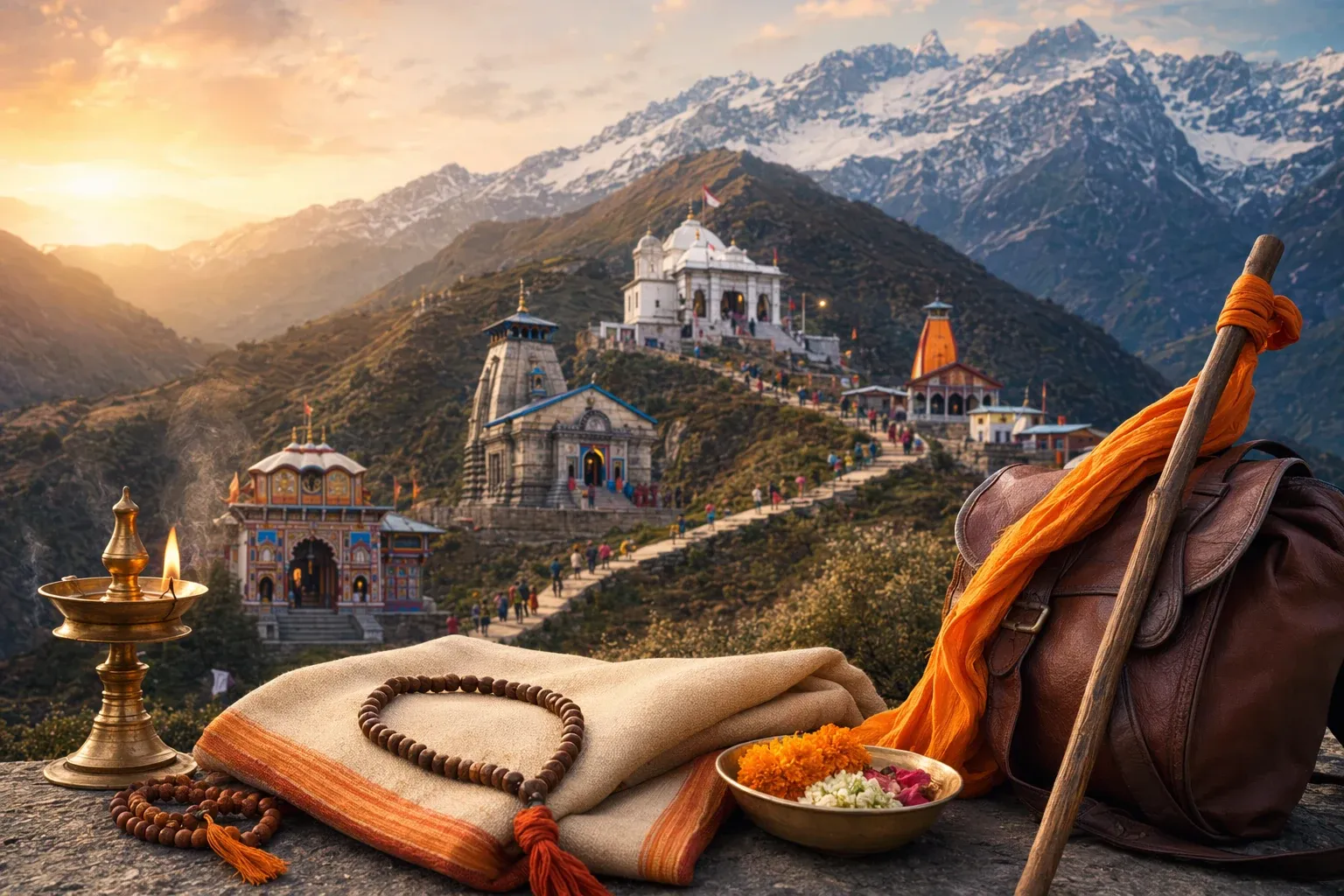
The commonly followed Char Dham Yatra order in Uttarakhand is Yamunotri, Gangotri, Kedarnath, and Badrinath. Many pilgrims begin from the west and move eastward through the Himalayan route. In simple terms, the journey usually starts with Yamunotri, continues to Gangotri, then Kedarnath, and ends at Badrinath.
This order is not only a travel sequence. It also creates a spiritual movement through sacred rivers, mountain shrines, and forms of devotion connected with Devi, Shiva, and Vishnu. Beginners should understand the order, the meaning of each dham, and the practical reality that weather, health, local rules, and route conditions can affect the plan.
The usual Char Dham order
The common order is:
Yamunotri first, associated with the Yamuna river and Goddess Yamuna.
Gangotri second, associated with the Ganga river and Goddess Ganga.
Kedarnath third, one of the most revered Shiva shrines in the Himalayas.
Badrinath fourth, dedicated to Lord Vishnu in the form of Badri Narayan.
This route is widely followed because it moves from west to east and fits the geography of the pilgrimage circuit. Many journeys begin from Haridwar, Rishikesh, Dehradun, or nearby base points, then proceed toward the mountain routes.
Why Yamunotri is often first
Yamunotri is commonly treated as the first dham of the circuit. The shrine is linked with the source region of the Yamuna river and the presence of Goddess Yamuna. Pilgrims often see this as a beginning with purity, blessing, and the life-giving power of water.
The journey to Yamunotri also prepares pilgrims for the Himalayan rhythm. It reminds them that this is not a casual checklist. Walking, altitude, weather, and patience are part of the experience.
Why Gangotri comes next
Gangotri is connected with the Ganga, one of India’s most sacred rivers. The Ganga is not only a river in the religious imagination. She is mother, purifier, life-giver, and a presence in countless rituals from birth to death.
Visiting Gangotri after Yamunotri keeps the river sequence alive: Yamuna first, Ganga next. It helps pilgrims reflect on water as sacred, not merely useful. The mountains, river sound, and temple setting make the visit deeply memorable.
Why Kedarnath is third
Kedarnath is dedicated to Lord Shiva and is one of the most powerful pilgrimage sites in the Himalayas. It is also one of the twelve Jyotirlingas, which gives it special importance for Shiva devotees.
Kedarnath is physically demanding for many pilgrims because of altitude, weather, and the trek or assisted route. Placing it third allows the journey to build gradually, though every pilgrim must still judge health and safety carefully.
For related Shiva context, you may read Shakti Peeth list: names, places, and body parts to understand how sacred geography works across Indian traditions.
Why Badrinath is usually last
Badrinath is dedicated to Lord Vishnu and is commonly treated as the final dham of the Uttarakhand Char Dham circuit. Ending with Badrinath gives the yatra a sense of completion. The shrine is associated with Narayana, tapasya, protection, and the Himalayan sacred landscape.
Many pilgrims experience Badrinath as a closing blessing after the river shrines and Kedarnath. The journey moves from water to Shiva to Vishnu, creating a devotional arc rather than a random route.
Is this the same as the original Char Dham?
Beginners often get confused because “Char Dham” can refer to two related but different ideas. The all-India Char Dham traditionally refers to Badrinath, Dwarka, Puri, and Rameswaram, located in four directions of India. The Uttarakhand Char Dham, often called Chota Char Dham, refers to Yamunotri, Gangotri, Kedarnath, and Badrinath.
When people ask about yatra order in the Himalayan route, they usually mean the Uttarakhand Char Dham circuit.
Can the order change?
Yes, practical order can change because of weather, road conditions, health, crowd management, permits, local advice, or travel starting point. The traditional order is helpful, but safety is more important than forcing a plan.
Pilgrims should check current official guidance, medical fitness, route updates, and seasonal conditions before travelling. Mountain pilgrimage requires humility. Nature cannot be rushed.
How to prepare spiritually
Char Dham Yatra is not only about reaching four locations. It is about travelling with the right attitude. Pilgrims often prepare through prayer, simple living, charity, respect for elders, and mindful speech. Even if someone travels with modern transport, the inner mood should remain humble.
Respect local communities, avoid littering, do not treat temples like photo props, and give yourself enough time. A yatra becomes meaningful when devotion and responsibility travel together.
A beginner-friendly memory line
Remember the order like this: Yamuna, Ganga, Shiva, Vishnu. Yamunotri, Gangotri, Kedarnath, Badrinath.
That memory line keeps both the geography and the devotion clear. The first two are river shrines, the third is Shiva’s Himalayan presence, and the fourth is Vishnu’s sacred seat at Badrinath.
For wider beginner reading on sacred travel and practice, how to start reading the Mahabharata can help you approach Indian tradition patiently and respectfully.
The simple takeaway is that the usual Char Dham Yatra order is Yamunotri, Gangotri, Kedarnath, and Badrinath. Follow that order when practical, but keep safety, official guidance, and devotion above rigid planning.
What if someone visits only one dham?
Not every devotee can complete all four shrines. Age, health, money, time, landslides, weather, and family duties can limit the journey. Visiting one dham with sincerity is still meaningful. Indian pilgrimage traditions often value bhava, the inner feeling of devotion, alongside physical travel.
If you cannot complete the whole circuit, do not treat the journey as failed. Offer prayers honestly, respect the place you can reach, and keep the remaining shrines in your heart for another time.