
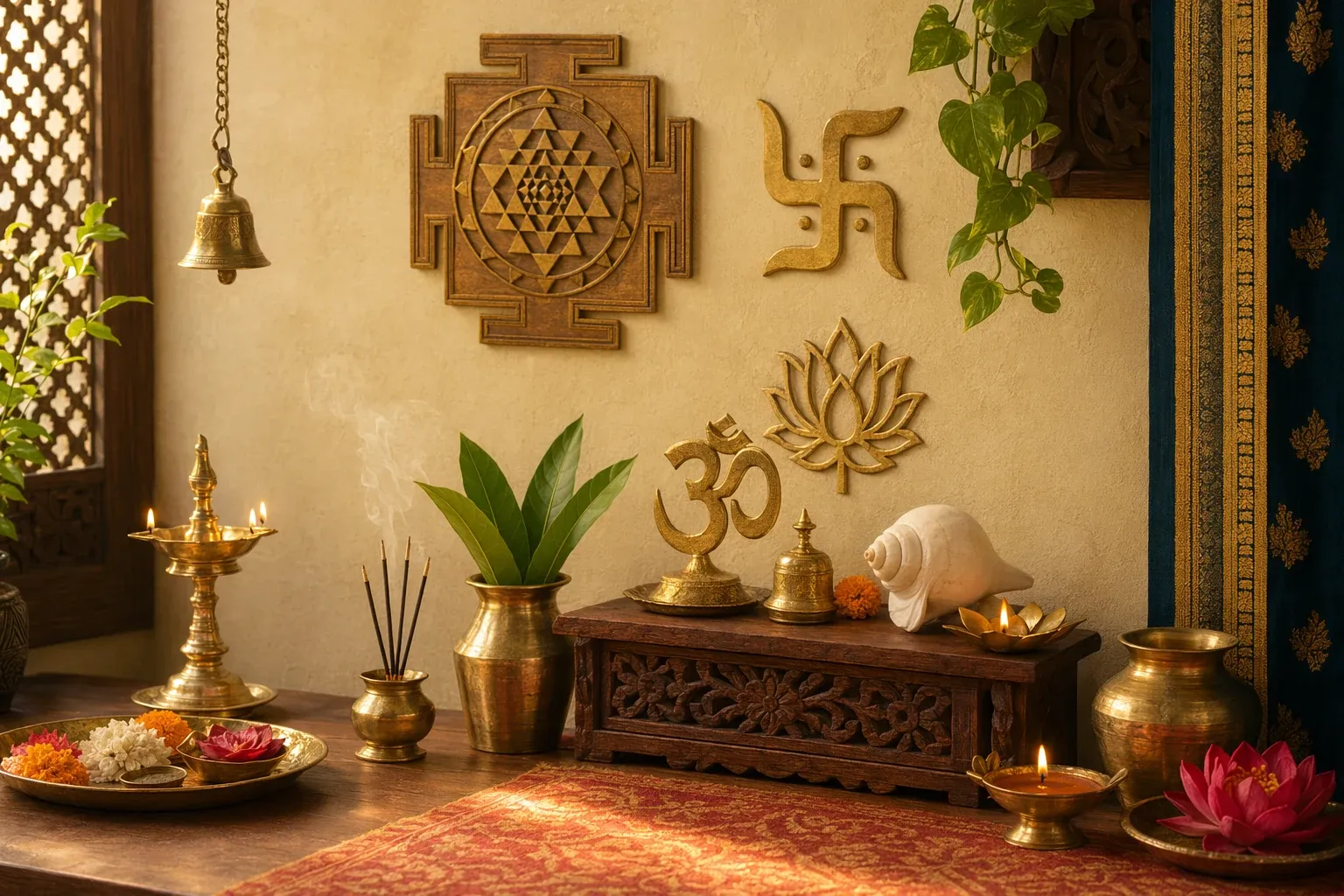
Hindu symbols in home decor and puja spaces can bring beauty, memory, devotion, and focus when they are used with understanding. Om, swastika, lotus, lamps, yantras, bells, and deity images should not be treated as random aesthetic objects. This guide explains how to understand them respectfully in a home setting.
Simple answer
Hindu symbols in homes and puja spaces can bring beauty, memory, and devotion when they are used with understanding and respect.
In Hindu culture, a symbol is a visual doorway into a larger idea. A mark, sound, colour, object, animal, weapon, or gesture can remind a devotee of dharma, protection, knowledge, cosmic order, divine presence, or a family tradition.
Readers may search for this topic using phrases such as What are the most popular Hindu symbols used in home decor?, hindu religious symbols, hindu symbols images, diya. Those phrases are useful, but the real goal is to understand the meaning with context.
Why it matters
For young readers, symbols are easiest to understand as memory tools. They help people remember what matters even when a long philosophy book is not open in front of them.
Meanings are not always one-size-fits-all. A symbol may be used differently in Shaiva, Vaishnava, Shakta, Smarta, folk, regional, Jain, or Buddhist contexts, so a respectful explanation leaves room for living variation.
In a puja space, symbols are usually part of worship, memory, and daily attention. A lamp, kalash, bell, conch, lotus, Om, swastika, or deity image can help the home feel connected to sacred rhythm.
In home decor, intention matters. A sacred symbol placed cleanly and respectfully is different from using it carelessly on floors, shoes, bathrooms, or throwaway packaging.
Families often inherit their own ways of arranging symbols. The best beginner rule is simple: keep sacred items clean, elevated when appropriate, and connected with reverence rather than trend-chasing.
Key ideas in this topic
- A symbol is a visual reminder, not just a design.
- Meaning changes by temple, family, sampradaya, region, and use.
- Sacred symbols deserve clean and thoughtful placement.
- Comparison with Jain or Buddhist contexts should be careful, not competitive.
Why Hindu homes use symbols
In a puja space, symbols are usually part of worship, memory, and daily attention. A lamp, kalash, bell, conch, lotus, Om, swastika, or deity image can help the home feel connected to sacred rhythm.
The safest beginner rule is to ask what idea the symbol is trying to hold. Is it reminding people of wisdom, protection, purity, prosperity, devotion, self-control, or the presence of a deity?
A symbol can be sacred, cultural, artistic, and personal at the same time. The meaning depends on setting: temple, home, classroom, festival, jewellery, digital design, or casual conversation.
Entrance symbols: Om, Swastika, rangoli, toran
In home decor, intention matters. A sacred symbol placed cleanly and respectfully is different from using it carelessly on floors, shoes, bathrooms, or throwaway packaging.
The safest beginner rule is to ask what idea the symbol is trying to hold. Is it reminding people of wisdom, protection, purity, prosperity, devotion, self-control, or the presence of a deity?
A symbol can be sacred, cultural, artistic, and personal at the same time. The meaning depends on setting: temple, home, classroom, festival, jewellery, digital design, or casual conversation.
Puja symbols: diya, kalash, shankha, bell, lotus
Families often inherit their own ways of arranging symbols. The best beginner rule is simple: keep sacred items clean, elevated when appropriate, and connected with reverence rather than trend-chasing.
The safest beginner rule is to ask what idea the symbol is trying to hold. Is it reminding people of wisdom, protection, purity, prosperity, devotion, self-control, or the presence of a deity?
A symbol can be sacred, cultural, artistic, and personal at the same time. The meaning depends on setting: temple, home, classroom, festival, jewellery, digital design, or casual conversation.
Festival and seasonal variations
This part helps answer the reader’s main question about Hindu Symbols in Home Decor and Puja: How to Understand Them Respectfully. A beginner should connect the phrase “Festival and seasonal variations” with meaning, lived practice, and respectful context.
The safest beginner rule is to ask what idea the symbol is trying to hold. Is it reminding people of wisdom, protection, purity, prosperity, devotion, self-control, or the presence of a deity?
A symbol can be sacred, cultural, artistic, and personal at the same time. The meaning depends on setting: temple, home, classroom, festival, jewellery, digital design, or casual conversation.
Respectful use vs aesthetic-only decoration
This part helps answer the reader’s main question about Hindu Symbols in Home Decor and Puja: How to Understand Them Respectfully. A beginner should connect the phrase “Respectful use vs aesthetic-only decoration” with meaning, lived practice, and respectful context.
The safest beginner rule is to ask what idea the symbol is trying to hold. Is it reminding people of wisdom, protection, purity, prosperity, devotion, self-control, or the presence of a deity?
A symbol can be sacred, cultural, artistic, and personal at the same time. The meaning depends on setting: temple, home, classroom, festival, jewellery, digital design, or casual conversation.
For the foundation of respectful action, read our beginner guide to dharma.
Common misunderstandings
- Do not assume every Hindu symbol has only one meaning everywhere.
- Do not treat sacred signs as random aesthetic stickers.
- Do not explain Indic symbols only through modern Western assumptions.
- Do not compare traditions in a way that erases their differences.
Simple answers to common questions
What are the most popular Hindu symbols used in home decor?
Hindu symbols in homes and puja spaces can bring beauty, memory, and devotion when they are used with understanding and respect.
Why do homes use Om, Swastika, diya, kalash, lotus, or shankha symbols?
For young readers, symbols are easiest to understand as memory tools. They help people remember what matters even when a long philosophy book is not open in front of them.
How can beginners use Hindu symbols respectfully at home?
Use sacred symbols in clean, thoughtful, non-mocking settings. If a community treats a symbol as sacred, do not use it only for shock, trend, or decoration.