
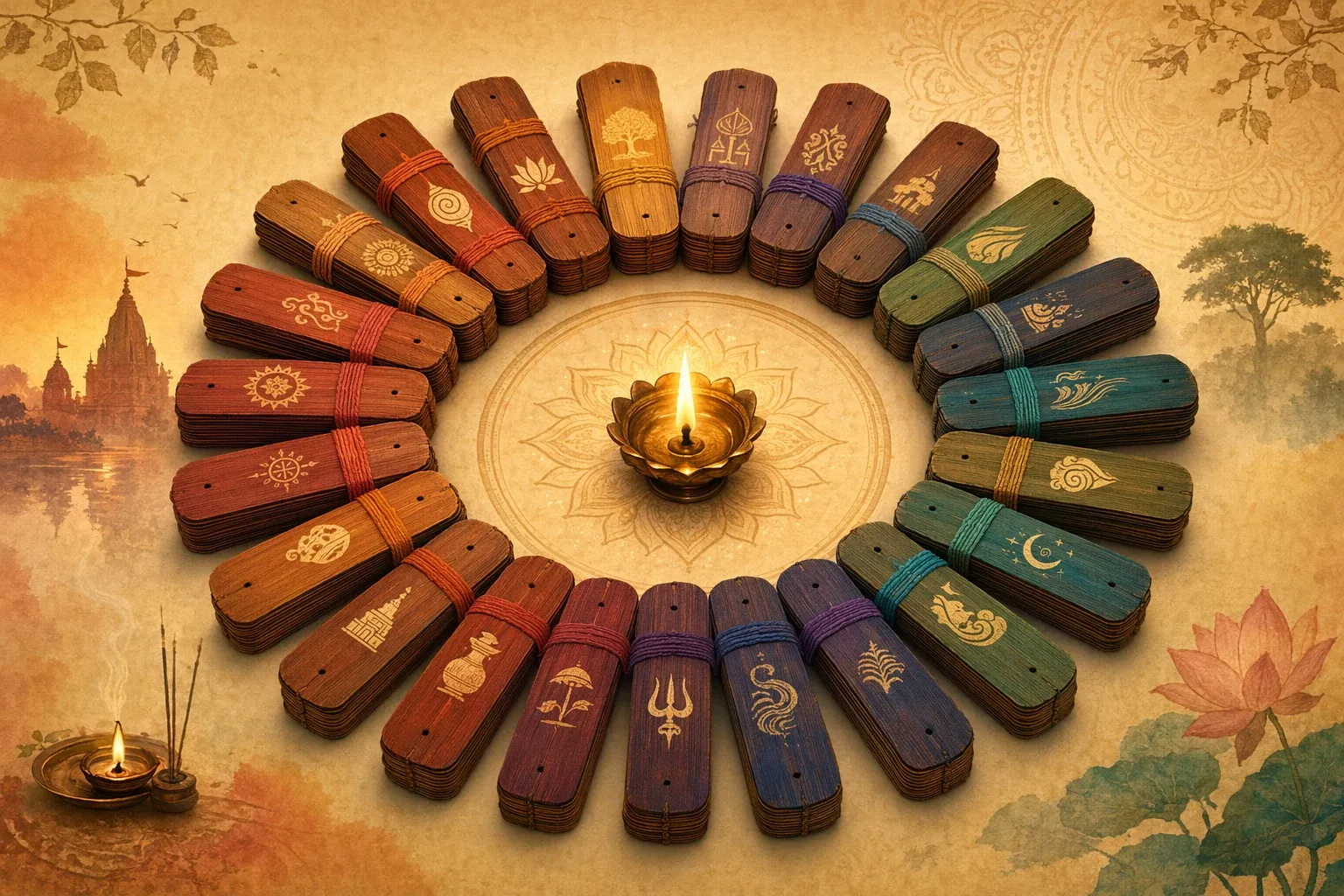
If you searched for “how many puranas are there”, this guide is for you. We will keep it simple, respectful, and useful for beginners.
Quick answer
The traditional answer is that there are 18 Mahapuranas, or “great Puranas.” Along with these, many traditions also speak of Upapuranas, local Puranic texts, and related stories, so the Puranic world is bigger than one simple list.
The famous number “18” usually refers to the Mahapuranas. Beginners should remember this distinction: 18 is the standard list of major Puranas, not a limit on every Puranic text or story ever told.
The 18 Mahapuranas names
A commonly given list includes: Brahma Purana, Padma Purana, Vishnu Purana, Shiva Purana, Bhagavata Purana, Narada Purana, Markandeya Purana, Agni Purana, Bhavishya Purana, Brahmavaivarta Purana, Linga Purana, Varaha Purana, Skanda Purana, Vamana Purana, Kurma Purana, Matsya Purana, Garuda Purana, and Brahmanda Purana.
Different books may spell the names slightly differently in English. For example, Brahmanda may appear as Brahmāṇḍa in a more precise transliteration. Do not worry at first; learn the names and themes, then refine pronunciation slowly.
One-line feel for the list
Some titles point toward deities or avatars, such as Vishnu, Shiva, Varaha, Vamana, Kurma, Matsya, and Garuda. Some point toward broader cosmic or traditional themes, such as Brahma, Padma, Skanda, Linga, Agni, and Brahmanda.
This does not mean each Purana contains only one topic. A Purana named after one deity may still include stories, rituals, geography, philosophy, genealogies, and teachings connected with many parts of Hindu life.
Why can lists differ?
The main names are widely recognized, but order and classification can differ. Some traditions organize Puranas by qualities, deity focus, or teaching emphasis. Manuscripts also developed over time, so the exact contents of a Purana may not be identical in every edition.
This is normal for a long oral and manuscript tradition. Instead of treating every difference as a contradiction, beginners can see it as a sign that these texts lived in communities, temples, storytelling spaces, and regions across centuries.
Mahapuranas and Upapuranas
Mahapurana means “great Purana.” Upapurana means a secondary or lesser-known Purana, though “secondary” does not mean worthless. Many Upapuranas are important to particular traditions, regions, or forms of worship.
So if someone asks, “Are there only 18 Puranas?” the careful answer is: there are traditionally 18 Mahapuranas, but Puranic literature includes more than that.
A helpful next step is Sacred River of Many Names: Satluj's Ancient Identity Explained and 12 Jyotirlingas in India: Complete List with Locations Explained Simply.
What should beginners do next?
Do not try to memorize the entire list as a dry exam chart. Pick a few names and connect them with themes: Vishnu Purana for Vaishnava tradition, Shiva Purana for Shaiva devotion, Bhagavata Purana for Krishna bhakti, Markandeya Purana for Devi Mahatmya, and so on.
Once the names become meaningful, the list stops looking like a burden and starts looking like a map of Hindu cultural memory.