
If you searched for “who wrote puranas”, this guide is for you. We will keep it simple, respectful, and useful for beginners.
Quick answer
In traditional Hindu understanding, the Puranas are associated with Vyasa, especially as the great compiler and arranger of sacred knowledge. But “Vyasa wrote all the Puranas” should be understood with nuance. These texts also passed through oral storytelling, recitation lineages, regional transmission, and later manuscript traditions.
So the careful beginner answer is: Vyasa is the traditional compiler figure, while the Puranas as we have them reflect a long history of preservation, narration, expansion, and editing.
Who is Vyasa?
Vyasa, also called Veda Vyasa or Krishna Dvaipayana Vyasa, is one of the most important figures in Hindu tradition. He is traditionally connected with arranging the Vedas, composing or compiling the Mahabharata, and transmitting Purana knowledge.
The name Vyasa itself is linked with arranging or compiling. That is why many teachers explain his role not like a modern single author sitting with one final manuscript, but like a great organizer of sacred memory.
What does “compiled” mean?
To compile means to gather, arrange, and present material. In a tradition where knowledge was often heard, memorized, retold, and taught, compilation can be as important as authorship. It gives structure to a large body of stories and teachings.
This matters because modern readers often ask, “Who wrote it?” as if every ancient text must have one author and one publication date. Puranic literature does not always work like a modern book.
Sages, Sutas, and storytelling
Many Puranic narratives are framed as conversations. A sage asks a question, and another sage or storyteller answers. The Suta tradition, especially figures like Romaharshana or Ugrashrava in some narratives, is connected with preserving and reciting sacred stories.
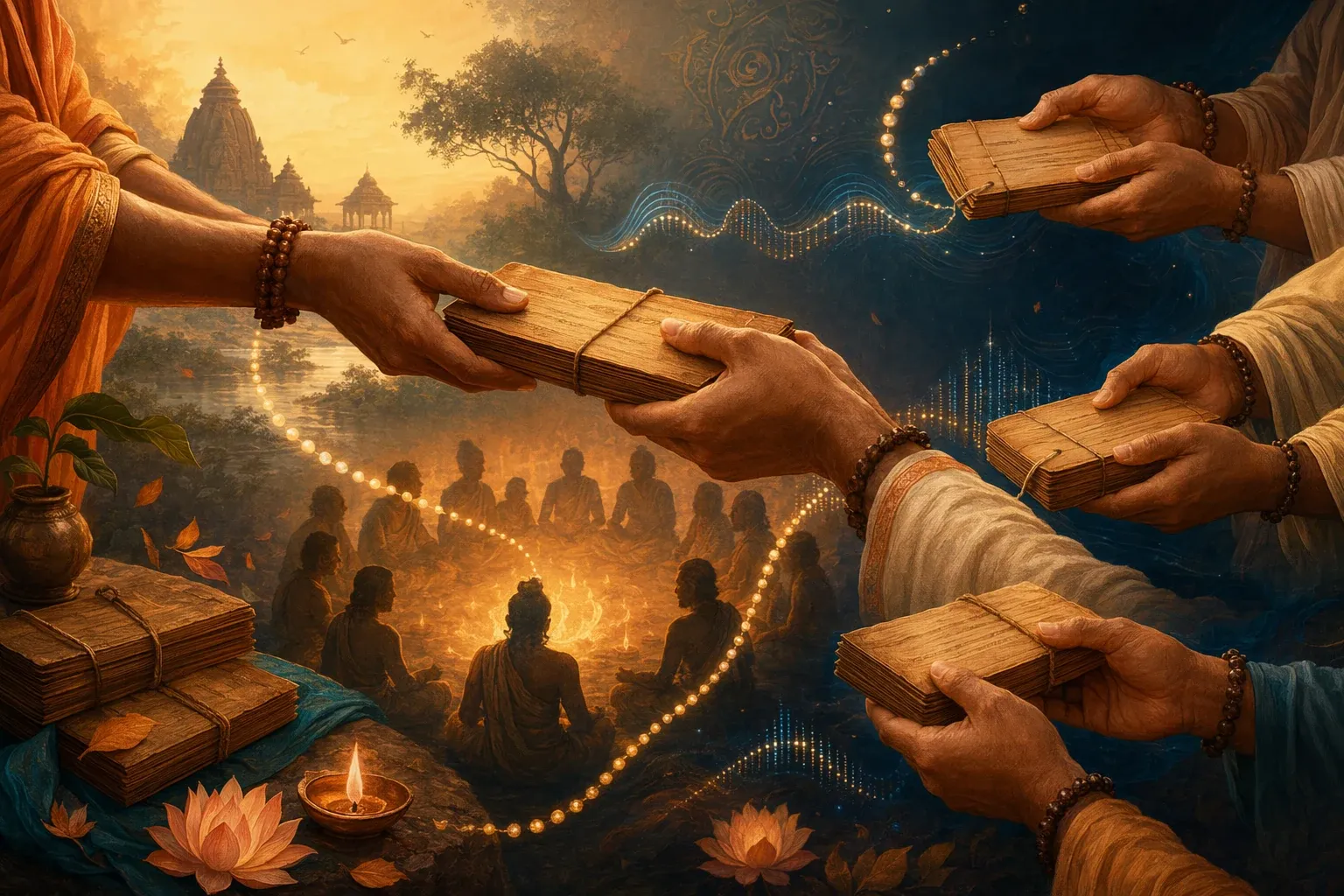
This storytelling frame reminds us that Puranas were not only silent reading material. They were heard in gatherings, recited in sacred spaces, explained by teachers, and remembered by communities.
Why did texts change over time?
Manuscripts were copied by hand. Stories were retold in different regions. Devotional communities emphasized different themes. Because of this, Puranic texts may show layers and variations. Scholars study these layers carefully, while devotees may focus on the living spiritual message.
Both facts can be held together respectfully: the tradition honors sacred transmission, and history shows a long process of textual growth.
If this topic interests you, continue with Who Wrote the Mahabharata? Vyasa, Ganesha, and Oral Tradition Explained and A Taste of Tradition: Burdwan Sweets and Foods Define Bengal.
Beginner takeaway
If someone asks “Who wrote the Puranas?”, answer: traditionally, they are linked with Vyasa as compiler, and they were preserved through sages, storytellers, and communities over a long time.
This answer protects both reverence and honesty. It avoids reducing the Puranas to anonymous confusion, but also avoids pretending they are simple modern single-author books.