
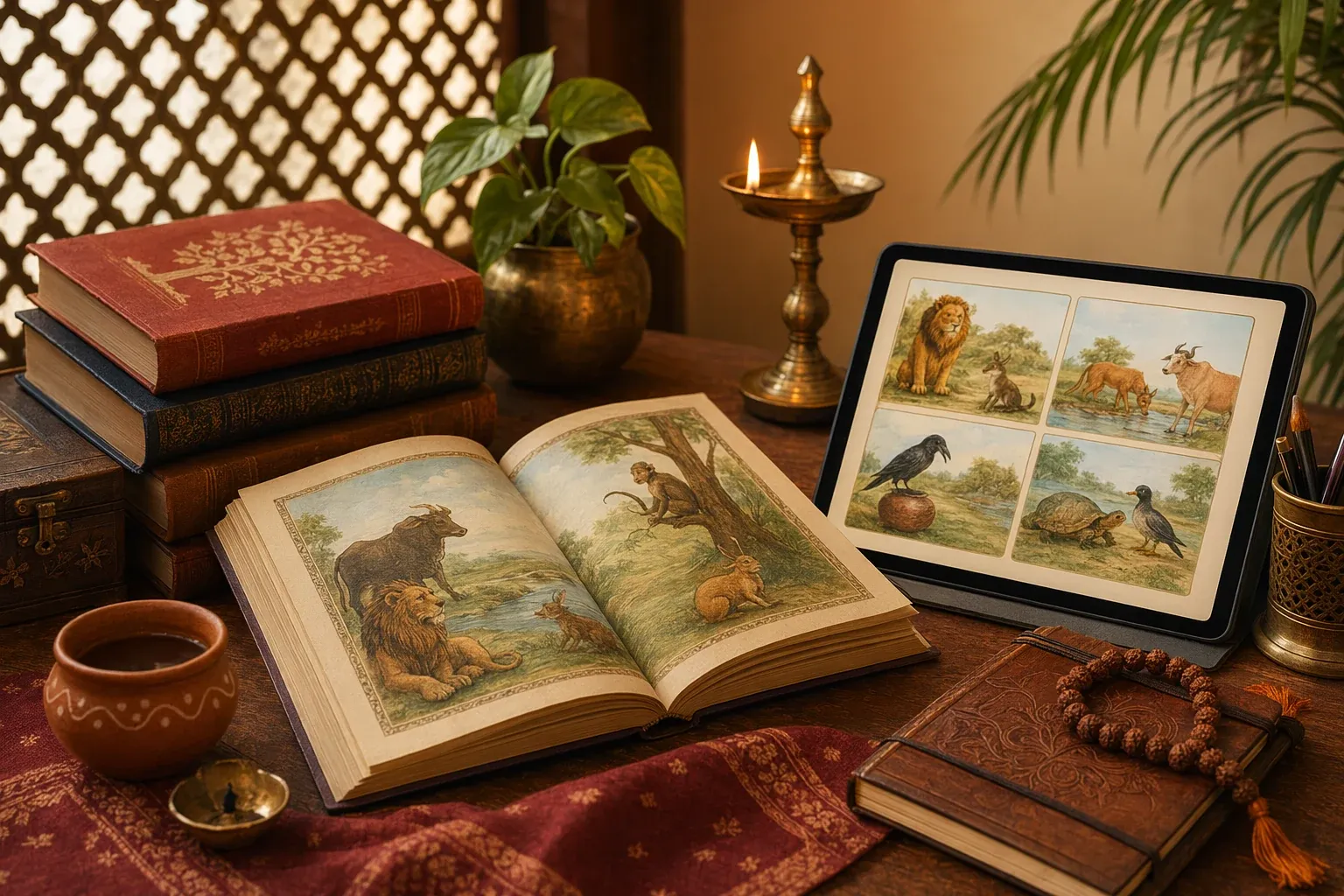
The Panchatantra is one of India’s best-loved story collections, so it is natural to search for a simple way to read it. But the internet can be confusing. Some pages offer unclear copies, suspicious files, or editions with no publisher information. A better approach is to read the Panchatantra through legal, reliable, and reader-friendly sources.
This guide does not point you toward unsafe downloads. Instead, it explains how to choose a good edition, where legal online reading may be available, and what to check before trusting a source. The goal is simple: enjoy the stories while respecting writers, translators, publishers, libraries, and cultural heritage.
Start with the kind of reader you are
Before choosing an edition, decide what you want from the Panchatantra. A young child may need a colourful retelling with short stories and gentle language. A teenager may enjoy a fuller version with notes. An adult reader may prefer a translation that keeps the frame stories, verses, and sharper political lessons. A researcher may want a scholarly edition with source details.
This matters because “Panchatantra” is not one single modern book. Many editions retell, simplify, rearrange, or translate the material. Some are wonderful for children but leave out parts that adult readers may expect. Some are accurate but too dense for casual reading. The right choice depends on purpose.
Use libraries first when possible
Public libraries, school libraries, college libraries, and digital library services are excellent places to begin. A library copy is legal, safe, and often better edited than a random file online. Many libraries also provide ebook lending through official apps or catalogues. If a local library does not have the edition you want, you can ask whether they can suggest a related collection of Indian fables or moral stories.
Libraries are also useful because you can compare editions. Read the first story in two or three versions. Which one explains names clearly? Which one keeps the story lively? Which one has respectful illustrations? That small comparison can save you from buying an edition that does not fit your needs.
Check public-domain sources carefully
Some older translations of the Panchatantra may be in the public domain in certain countries. Legal public-domain sites usually identify the translator, publication date, source edition, and terms of use. That information is a good sign. If a page gives only a vague title and a large download button, be cautious.
Public-domain availability depends on copyright law, country, translator, and publication history. A Sanskrit story collection may be ancient, but a modern translation, introduction, illustration set, or children’s retelling can still be protected. The safest habit is to use reputable archives, official library platforms, publisher previews, or educational repositories that clearly state rights information.
Prefer trusted bookshops and publishers
If you want a printed book, choose a known publisher, a reliable bookshop, or the publisher’s own page. Look for the translator or reteller’s name, age suitability, page count, and sample pages if available. For children, check whether the edition is abridged. For older readers, check whether it includes all five tantras or only selected stories.
A good edition should not need exaggerated claims. It should tell you what it is: a retelling, a translation, a children’s version, a school edition, or a scholarly edition. Clear description is better than a flashy cover.
Avoid suspicious file pages
Be careful with pages that push unknown files, ask for unnecessary permissions, hide the publisher, or mix the Panchatantra with unrelated advertisements. Also avoid pages that promise every book for free without explaining rights. Apart from legal concerns, such sources may contain poor scans, missing pages, misleading titles, or unsafe links.
You do not need those risks. The Panchatantra is widely available through legitimate routes. A clean children’s retelling, a library ebook, a public-domain archive, or a paid edition from a known seller will give a better reading experience.
Choose editions with context
The best Panchatantra editions explain that the stories are part of a long Indian narrative tradition. They may mention Sanskrit sources, later translations, global travel of the tales, and related collections such as Hitopadesha. Context helps readers avoid treating the stories as random animal jokes. It also helps parents and teachers explain why some endings may feel sharper than modern children’s stories.
For a broader comparison, you may enjoy Bhaktilipi’s guide to Panchatantra, Jataka tales, Aesop and Hitopadesha. Comparing traditions makes the reading richer.
Tips for parents and students
If you are choosing for children, read one or two stories first. Some old fables include trickery, danger, punishment, or political lessons. That does not make them bad, but it means adults may want to discuss them. Ask simple questions: What mistake did the character make? Who spoke honestly? What would you have done differently?
Students can keep a small story notebook. Write the story title, main animals or characters, the problem, the decision, and the lesson. This turns reading into active understanding without making it boring.
A respectful reading path
Begin with a legal and readable edition. Notice whether it covers all five sections or selected tales. Read slowly enough to enjoy the storytelling. If a story feels strange, remember that it comes from an older teaching world where animals, kings, ministers, merchants, forests, and courts were used to explain human behaviour.
Reading legally is not only about avoiding trouble. It is about supporting careful translation, clean editing, and responsible access. The Panchatantra has survived because generations preserved, retold, and taught it. Choosing good sources is one small way to honour that chain.
More context for careful readers
Common misunderstandings to avoid
A common mistake is to treat How to Read Panchatantra Legally: Books, Online Sources and Tips as only one sentence or one social-media definition. In reality, Bhakti tradition topics usually carry many layers: language, practice, regional memory, family tradition, teacher explanation, and modern interpretation. A beginner guide should simplify the entry point, but it should not erase that depth.
Another mistake is to assume that one version explains every community. Indian traditions often travel through many regions and languages, so examples may differ. That does not make the topic confused; it means the tradition is alive and has been remembered in more than one way.
The safest reading habit is to keep the main idea clear and hold details gently. Start with what the word means, then notice where it appears, who practices or discusses it, and what value it is trying to teach. This makes How to Read Panchatantra Legally: Books, Online Sources and Tips easier to remember without forcing a narrow answer.
Why this matters today
This topic still matters because young readers are meeting Indian culture through school, family stories, social media, travel, music, health conversations, and festival posts. Without context, the same idea can look either too mysterious or too casual. A clear explanation helps readers respect the subject without feeling lost.
For Bhaktilipi readers, the practical value is not just information. The goal is better cultural literacy: knowing enough to ask good questions, avoid lazy stereotypes, and recognise why earlier generations preserved these ideas through stories, songs, rituals, debates, art, and daily habits.
Good learning also means knowing the limits of a short article. This guide gives a reliable starting point, but deeper study can come from teachers, trusted books, temple or community elders, museums, performances, and careful reading of primary traditions where possible.
Simple takeaway
If you remember only one thing, remember this: How to Read Panchatantra Legally: Books, Online Sources and Tips becomes meaningful when the definition, the cultural setting, and the human purpose are read together. That balanced view protects the topic from both blind rejection and blind romanticisation.
Use this article as a first map. Revisit the key words, compare them with real examples, and keep learning patiently. Dharma-oriented learning is not about collecting facts quickly; it is about understanding what those facts ask us to value and practice.