Why mudras are used in yoga and meditation
In yoga and meditation, mudras are often used to bring steadiness to the body and attention to the mind. When the hands rest in a clear shape, the practice can feel less scattered. The gesture becomes a quiet reminder: sit, breathe, notice, return. For beginners, this is more useful than chasing complicated meanings.
Mudras also connect modern practice with older Indian traditions. A simple finger position may carry ideas about awareness, humility, balance, or devotion. You do not need to become an expert on day one, but you should approach the practice with respect.
Best beginner mudras to start with
Anjali Mudra
Anjali Mudra is the folded-hands gesture used in namaste, prayer, and gratitude. In a yoga class, it often appears at the beginning or end. It is a good beginner mudra because the meaning is easy to feel: respect, centering, and sincerity.
Try it before practice. Bring the palms together near the chest, soften the shoulders, and take three calm breaths. You may silently set a simple intention such as “I will practise with attention.”
Dhyana Mudra
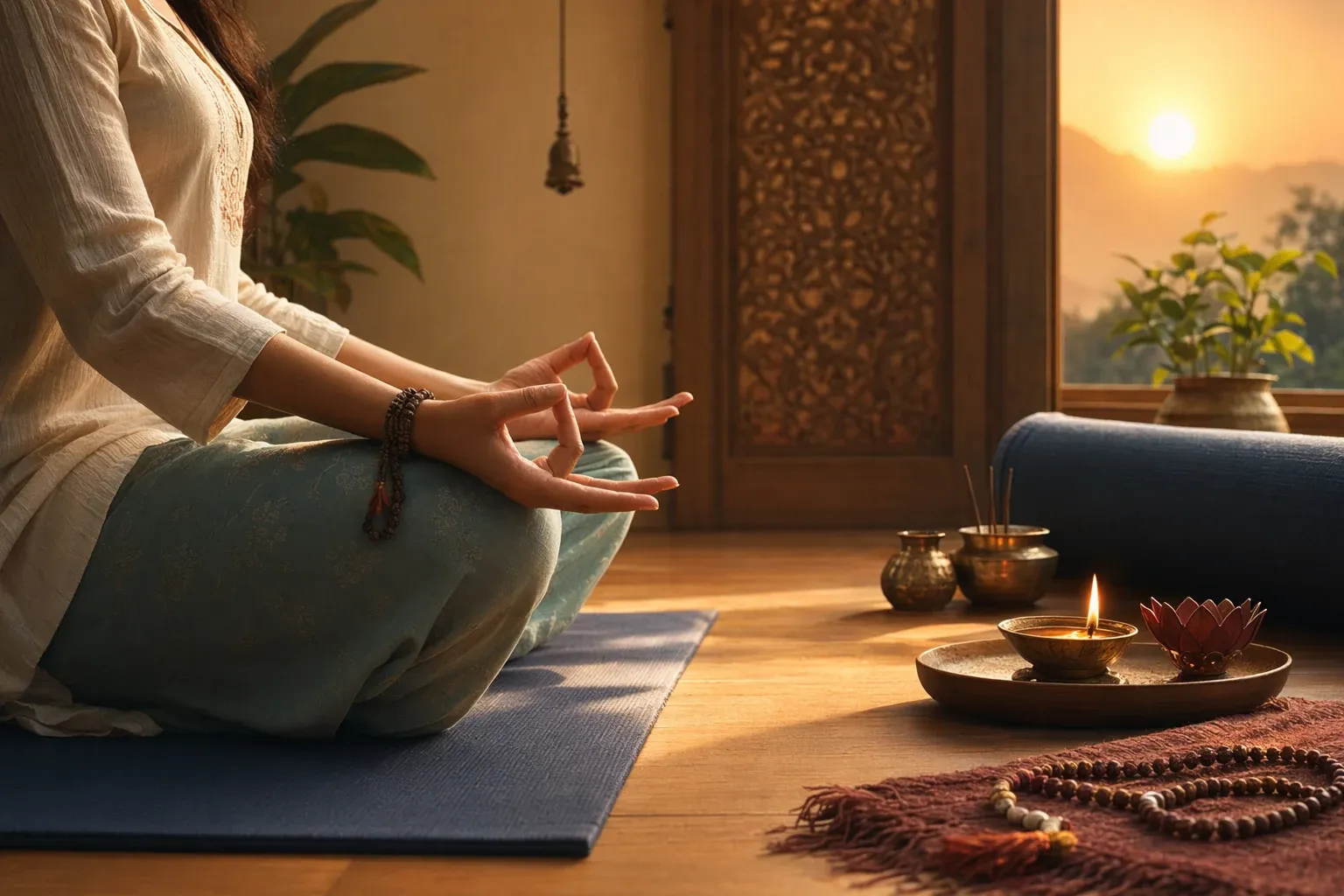
Dhyana Mudra is commonly linked with meditation. The hands rest in the lap, usually one palm over the other, with thumbs lightly touching or relaxed depending on the tradition. It helps the arms settle so the body can sit quietly.
This mudra is useful for beginners who do not know what to do with their hands during meditation. Keep it gentle. If the shoulders pull forward, place a cushion under the hands.
Chin Mudra
Chin Mudra usually has the thumb and index finger touching, with the other fingers extended or relaxed. Many yoga teachers use it during pranayama or seated meditation. The contact point gives the mind a small place to notice.
Do not pinch the fingers. Let the circle be soft. Rest the backs of the hands on the thighs if that feels natural.
Jnana Mudra
Jnana Mudra is closely related in popular practice and is often explained as a gesture of knowledge or awareness. Some teachers distinguish it from Chin Mudra by palm direction or intention. If your teacher gives a specific version, follow that class method. If you practise alone, keep it simple and comfortable.
Which one is best for beginners?
If you want one answer, begin with Anjali Mudra. It is culturally familiar, emotionally clear, and safe for short practice. For meditation, choose Dhyana Mudra because it gives the hands a resting place. For breath practice, Chin Mudra is common, but it is best learned from a teacher if you are also doing pranayama techniques.
The “best” mudra is the one you can hold without tension and understand without fantasy. A sincere three-breath Anjali practice may be more meaningful than a difficult hand position copied from a random post.
How to include mudras in a simple routine
Start small. Sit comfortably for two minutes. Choose one mudra. Breathe naturally. Notice the body and the mood. If thoughts come, return attention to the touch of the fingers or the position of the palms. End by releasing the hands and observing how you feel.
You can also use mudras around your existing routine. Before studying, Anjali Mudra can mark a clean beginning. During quiet sitting, Dhyana Mudra can help the hands stay still. After yoga, folded hands can become a moment of gratitude instead of just a class ending.
Choosing between similar mudras
If two teachers explain a mudra differently, do not panic. Yoga lineages sometimes use names and palm directions in different ways. Follow one reliable teacher at a time, and keep notes on what that teacher means. Clarity grows through patient practice, not argument.
What mudras can and cannot do
Mudras can support focus, prayer, self-reflection, and a calm routine. They can make practice feel more embodied. They can help you remember a value like patience or respect. But they should not be treated as guaranteed shortcuts for health, success, sleep, marks, or relationships.
If you are struggling with serious stress, panic, depression, trauma, or sleep problems, mudras are not enough by themselves. Please reach out to a qualified professional, trusted adult, counsellor, or doctor. A gentle practice may sit beside proper help, not replace it.
Example: a five-minute beginner practice
Minute one: sit comfortably and bring the hands into Anjali Mudra. Take a few breaths and settle.
Minutes two to four: place the hands in Dhyana Mudra or Chin Mudra. Breathe naturally. When distracted, return to the feeling of the hands.
Minute five: release the mudra. Notice the face, shoulders, and breath. End with one thought of gratitude.
FAQ
Can I do mudras while lying down?
Some people do, but beginners usually learn better while sitting because the body stays alert. If sitting is uncomfortable, choose a supported position and keep the hands relaxed.
Do I need mantra with mudra?
No. Some traditions combine mantra and mudra, but beginners can practise quietly. If you use a mantra, learn it respectfully from a reliable source.
How many mudras should I practise daily?
One is enough at first. Learn it well for a week before adding another.
Where to go next
For timing and duration, read `how-long-hold-mudra-best-time-practice`. For hand shapes, read `mudra-hands-hand-signs-types-explained`. For sleep and stress questions, read `which-mudra-good-sleep-stress-safe-explanation`.