Namaste is a respectful Indian salutation used when meeting or parting. A clear English rendering is “I bow to you” or “respectful greetings to you.” It comes from Sanskrit, but its tone in everyday life depends on the speaker, setting, region and community.
What does Namaste mean?
The Sanskrit expression is conventionally analysed as namas, a bow or respectful salutation, plus te, “to you.” Sandhi, the way sounds change when Sanskrit words meet, produces the familiar form namaste. The safest beginner definition is therefore “I bow to you” or “salutations to you.”
This direct meaning is more dependable than treating one poetic translation as universal. Some people attach devotional or philosophical meaning to the greeting, while others use it as ordinary courtesy.
Which language does Namaste come from?
Namaste comes from Sanskrit and has long circulated through Indian languages and social practice. A Press Information Bureau transcript identifies it as a Sanskrit word, while the Embassy of India’s customs guide describes Namaskar or Namaste as a widely recognised Indian greeting.
No single modern person “invented” Namaste. It is an inherited expression, not a branded phrase or a word created by modern yoga studios. Global yoga helped many people outside India encounter it, but its Indian linguistic and cultural history is much broader.
What do the folded hands mean?
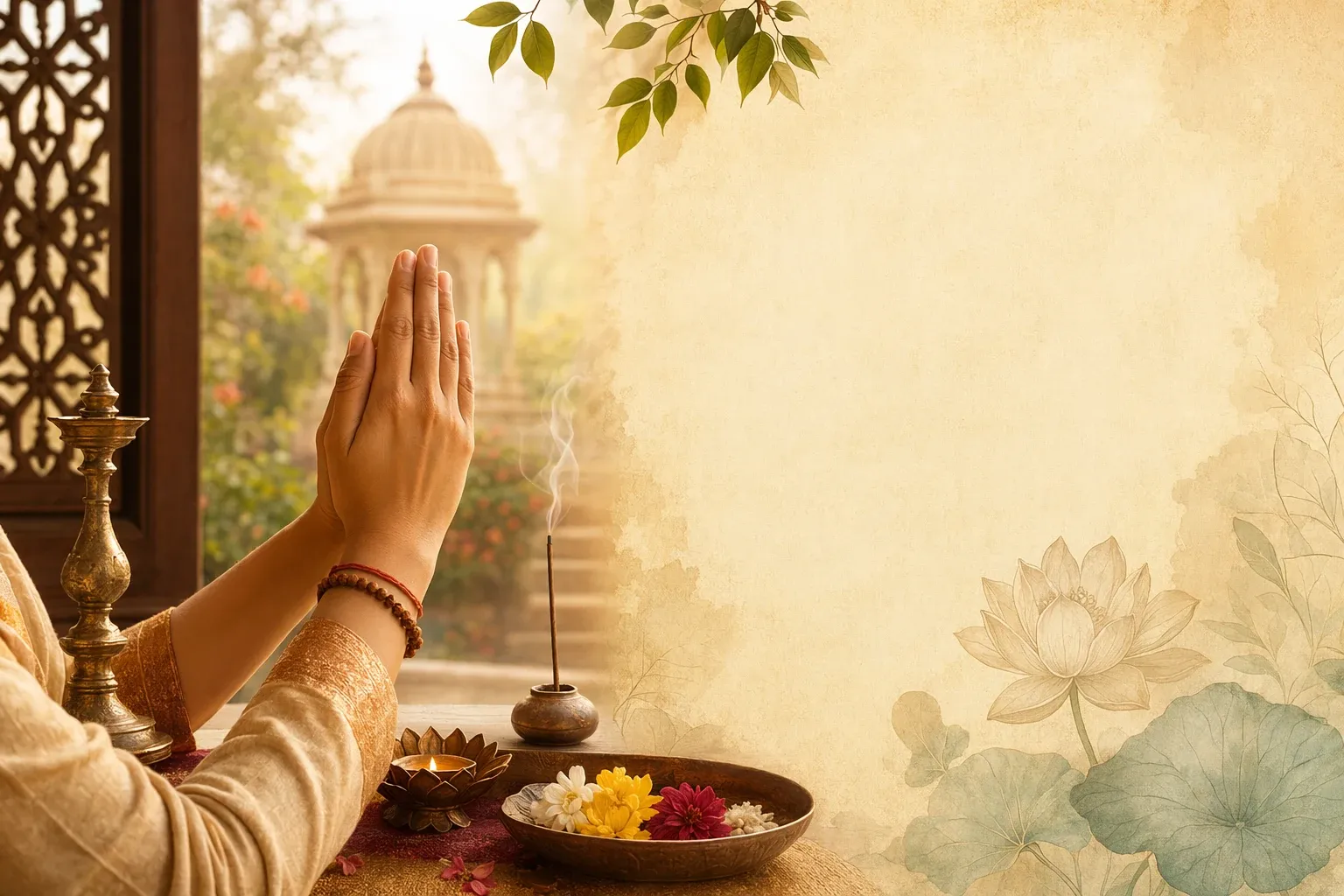
Namaste is often accompanied by palms placed together below the face or near the chest and a slight bow. The spoken word and the gesture commonly appear together, but they are not identical: someone can say Namaste without an elaborate gesture, and folded hands can appear in prayer, greeting and other contexts.
The gesture communicates respect and non-intrusiveness. It may also carry devotional meaning for a practitioner. There is no need to perform it theatrically; a natural posture and considerate tone matter more.
Is Namaste religious or secular?
It can be either, depending on context. In everyday social use it may simply welcome a guest, greet an elder, open a formal address or mark a courteous farewell. In devotional settings, a speaker may understand the bow as honouring the divine or the dignity of the other person.
Translations such as “the divine in me honours the divine in you” express a popular spiritual interpretation. They should not be presented as the word’s only literal translation. The grammatical core is the simpler salutation “I bow to you.”
Is Namaste the greeting used everywhere in India?
No single greeting represents every Indian language, religion or region. Namaskar, Pranam, Vanakkam, Sat Sri Akal, Salaam, Aadab and English greetings may be more natural in different settings. Many people switch greetings according to whom they are speaking with.
This diversity does not make Namaste inauthentic; it means the word should not be used to stereotype more than a billion people. Listen to how people introduce themselves and follow their lead.
How to use Namaste respectfully
- Use a normal voice and a small, natural gesture if folded hands feel appropriate.
- Do not imitate an accent or turn the greeting into a joke.
- Do not assume every Indian person wants to be greeted this way.
- In a religious or ceremonial setting, follow the host’s practice.
- Remember that attentive behaviour matters more than displaying a culturally marked word.
Common questions
Does Namaste mean hello or goodbye?
It can function as a greeting when meeting and as a courteous salutation when parting.
Is Namaste Japanese?
No. The word is Sanskrit in origin and belongs to Indian linguistic and cultural contexts, although respectful bows and joined-hand gestures also exist elsewhere.
Is Namaskar the same as Namaste?
They are closely related forms of respectful salutation. Usage and preference vary by language, region and situation.
Do I have to say Namaste in a yoga class?
No. Follow the teacher and setting, but participation should not be forced. A quiet acknowledgement or another courteous closing is also possible.